Pharm'Up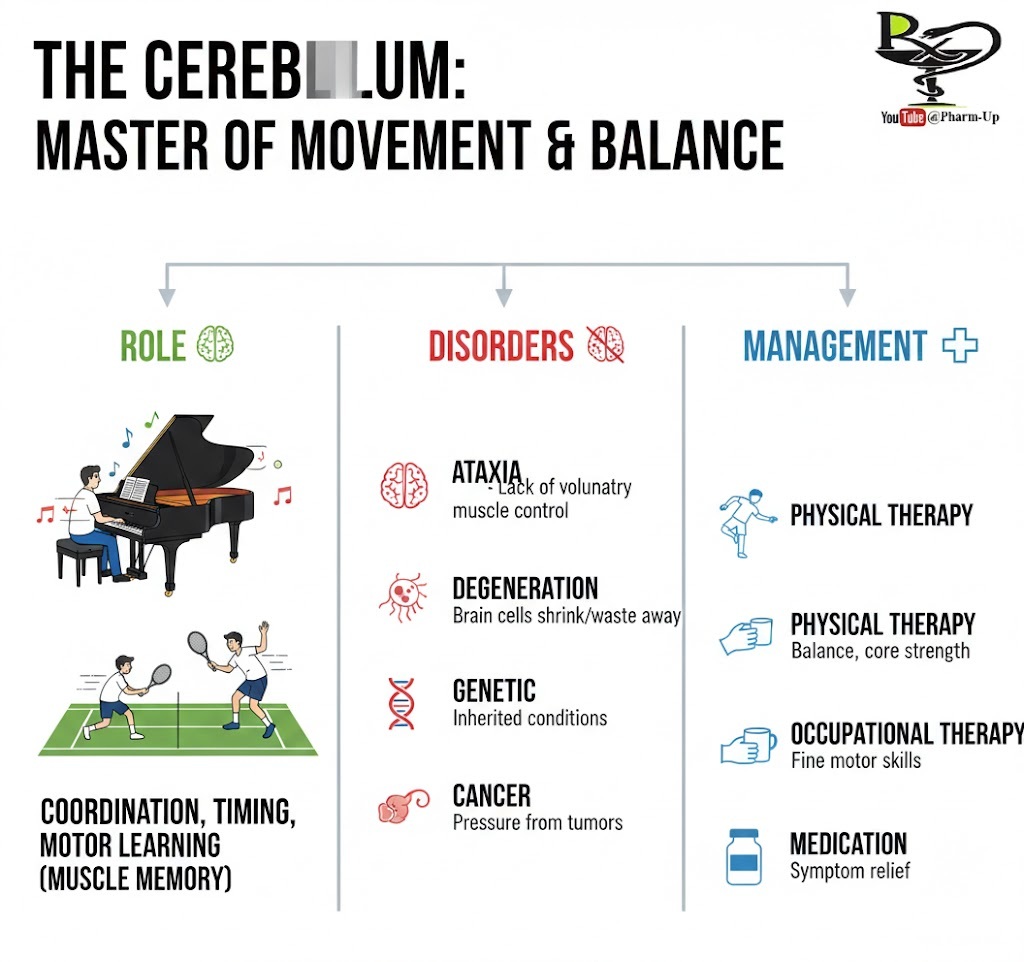
The cerebellum, often referred to as the “little brain,” is located at the back of the skull. While it represents only about 10% of the brain’s weight, it is vital for performing complex physical tasks—whether you are playing a delicate concerto on the piano or serving an ace on the tennis court.
The Role of the Cerebellum
The primary function of this region is to regulate coordination and balance. It does not initiate movement, but it acts as a “fine-tuner” that ensures your actions are smooth, timed correctly, and accurate.
Disorders and Challenges
When the cerebellum is compromised, the body loses its ability to perform fluid movements. Common problems include:
- Ataxias: A failure of muscle control in the arms and legs. This often results in a lack of voluntary coordination and can affect speech and eye movement.
- Degeneration: This involves disorders where brain cells decrease in size or waste away (atrophy), often due to long-term health issues or injury.
- Genetic Disorders: Inherited conditions that can cause progressive damage to the nervous system.
- Cancer: Tumors in the posterior fossa can apply pressure to the cerebellum, disrupting its signaling.
Treatment and Outlook
Management of cerebellar disorders is highly dependent on the underlying cause. While some forms of damage are permanent and have no known cure, many patients find relief and improved quality of life through:
- Physical Therapy: To strengthen core muscles and improve balance.
- Occupational Therapy: To assist with fine motor skills and daily living activities.
- Medication: To manage specific symptoms like tremors or muscle stiffness.
About the Author