Pharm'Up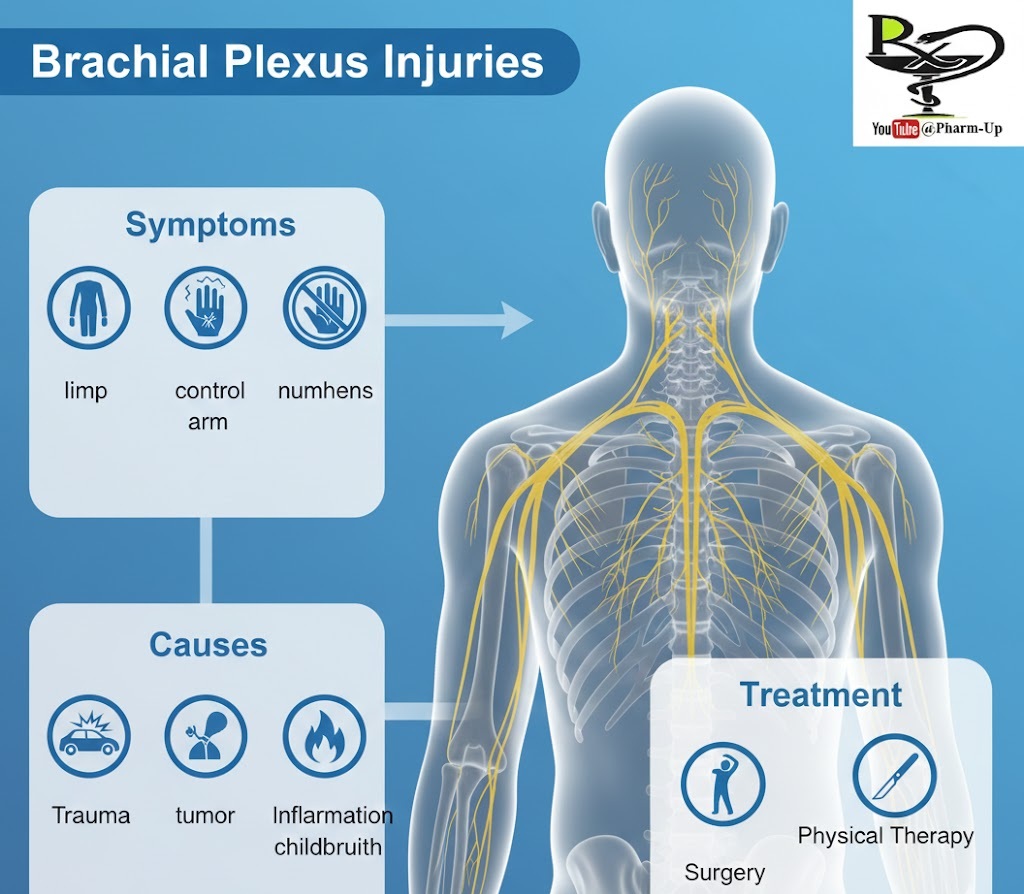
What is the Brachial Plexus?
The brachial plexus is a complex network of nerves that originates at the spinal cord and extends through the neck into the shoulder. These nerves act as a communication highway, sending vital signals from the spine to the shoulder, arm, and hand to control both movement and sensation.
Symptoms of Nerve Damage
When these nerves are stretched, compressed, or torn, it can disrupt the signals to the upper limb, leading to:
- Loss of Movement: A limp or paralyzed arm.
- Coordination Issues: A significant lack of muscle control in the arm, hand, or wrist.
- Sensory Loss: A lack of feeling or sensation in the arm or hand.
Common Causes
Brachial plexus injuries can occur across all age groups due to various factors:
- Trauma: Physical injury to the shoulder is a primary cause.
- Medical Conditions: Pressure from tumors or local inflammation can damage the nerve fibers.
- Childbirth: This is a common site of injury during difficult deliveries, especially if a baby’s shoulders become stuck in the birth canal, causing the nerves to stretch or tear.
Recovery and Treatment
The prognosis for a brachial plexus injury depends on the severity of the nerve damage.
- Natural Healing: Some injuries may heal on their own without medical intervention.
- Infant Recovery: Many children injured during birth show significant improvement or full recovery by the time they are 3 to 4 months old.
- Medical Intervention: For injuries that do not resolve naturally, treatment typically involves physical therapy to maintain muscle function and, in more severe cases, surgery to repair the damaged nerves.
About the Author