Pharm'Up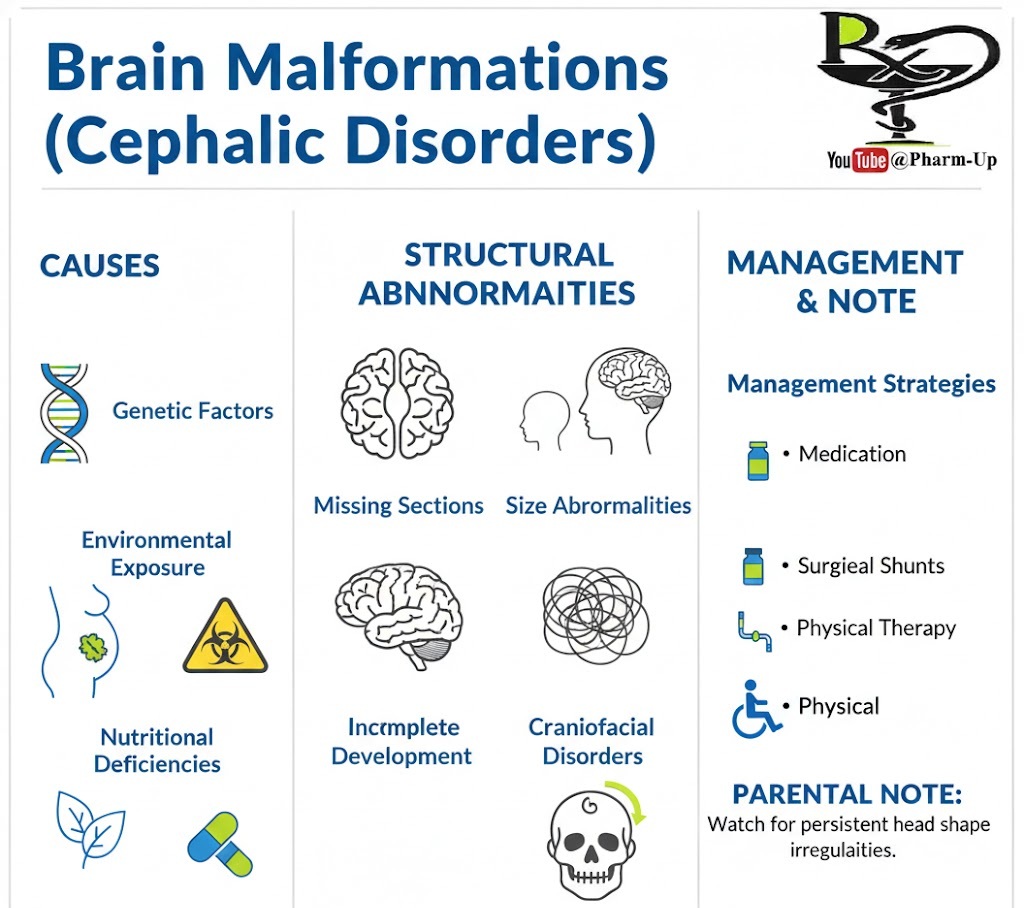
Brain malformations, also known as cephalic disorders, occur when the nervous system is damaged or develops abnormally during early fetal growth. Because the brain is the blueprint for all bodily functions, these structural issues can have a wide-ranging impact on a child’s health and development.
Causes of Malformation
Most brain malformations begin long before birth. The disruption to the developing nervous system is typically caused by one of the following:
- Genetic Factors: Inherited traits or spontaneous gene mutations.
- Environmental Exposure: Maternal contact with certain infections, radiation, or specific medications during pregnancy.
- Nutritional Deficiencies: A lack of essential nutrients (like folic acid) during the early stages of gestation.
Types of Structural Abnormalities
When the brain develops abnormally, the physical structure of the organ is altered. Common presentations include:
- Missing Sections: Parts of the brain (like the corpus callosum) fail to form entirely.
- Size Abnormalities: The brain or head may be abnormally small (microcephaly) or abnormally large (macrocephaly).
- Incomplete Development: Brain structures may be present but fail to reach full maturity or complexity.
- Craniofacial Disorders: Unlike cephalic disorders, these involve abnormal growth of the soft tissues and bones in the face and skull rather than the brain tissue itself.
Diagnosis and Treatment
While the structural damage is often permanent, medical interventions focus on managing symptoms and improving quality of life.
Management Strategies
- Medication: Antiseizure drugs are commonly prescribed if the malformation causes epilepsy.
- Surgical Shunts: Used to drain excess cerebrospinal fluid from the brain to reduce pressure.
- Physical Therapy: Helps children reach developmental milestones and improve motor coordination.
Parental Note: It is normal for newborns to have slightly uneven heads due to the birth process, but persistent or extreme irregularities in head shape should be evaluated by a pediatrician.
About the Author