Pharm'Up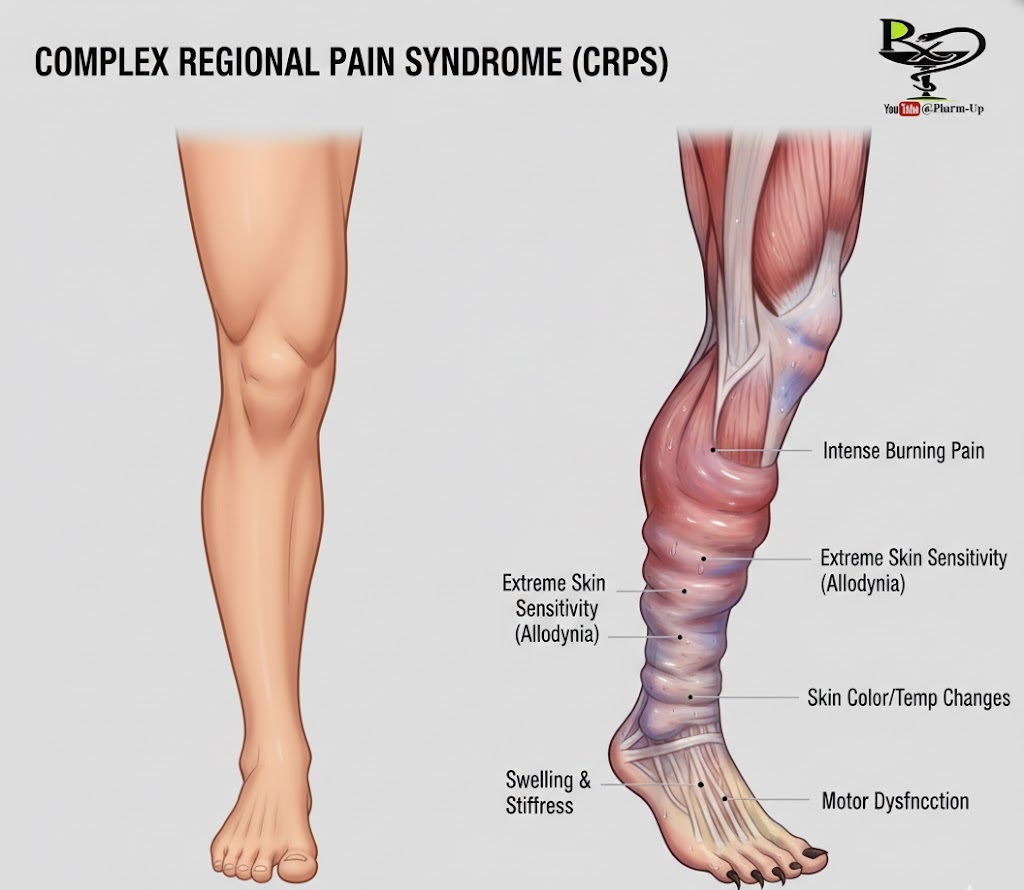
Complex Regional Pain Syndrome (CRPS) is a high-intensity chronic pain condition that typically affects a single limb (arm, leg, hand, or foot), usually following an injury. It is considered one of the most painful long-term conditions, often rated higher than amputation or childbirth on the McGill Pain Index.
Key Symptoms
CRPS is distinct because the pain is often much more severe than would be expected from the original injury. Common signs include:
- Intense Burning Pain: A “pins and needles” sensation or a deep, aching burn.
- Allodynia: Extreme sensitivity where even a light touch (like clothing or a breeze) is agonizing.
- Skin Changes: The affected area may change color (turning red, blue, or mottled) and temperature (feeling significantly hotter or colder than the rest of the body).
- Swelling and Stiffness: Joints in the affected limb often become swollen and difficult to move.
- Texture Changes: Skin may become shiny, thin, or excessively sweaty in the localized area.
Understanding the Cause
The exact cause of CRPS is still being researched, but it is generally believed to be an abnormal response of the central and peripheral nervous systems.
- CRPS Type I: Occurs after an injury (like a fracture or sprain) where no direct nerve damage is found. This was formerly known as Reflex Sympathetic Dystrophy (RSD).
- CRPS Type II: Occurs after a distinct, identifiable nerve injury.
Essentially, the nervous system sends constant pain signals to the brain, even after the original physical tissue has healed.
Diagnosis and Treatment
Because there is no single “blood test” or “scan” to confirm CRPS, doctors use a clinical diagnosis based on the Budapest Criteria, which looks for a combination of the symptoms listed above.
Management Strategies: Since there is currently no cure, treatment focuses on functional recovery and pain reduction:
- Physical Therapy: Specialized exercises to keep the limb moving and prevent muscle atrophy.
- Psychotherapy: To help manage the mental toll of living with severe, debilitating chronic pain.
- Medications: Including nerve pain relievers, topical anesthetics, or anti-inflammatories.
- Interventional Procedures: Nerve blocks or spinal cord stimulators for severe cases.
About the Author