Pharm'Up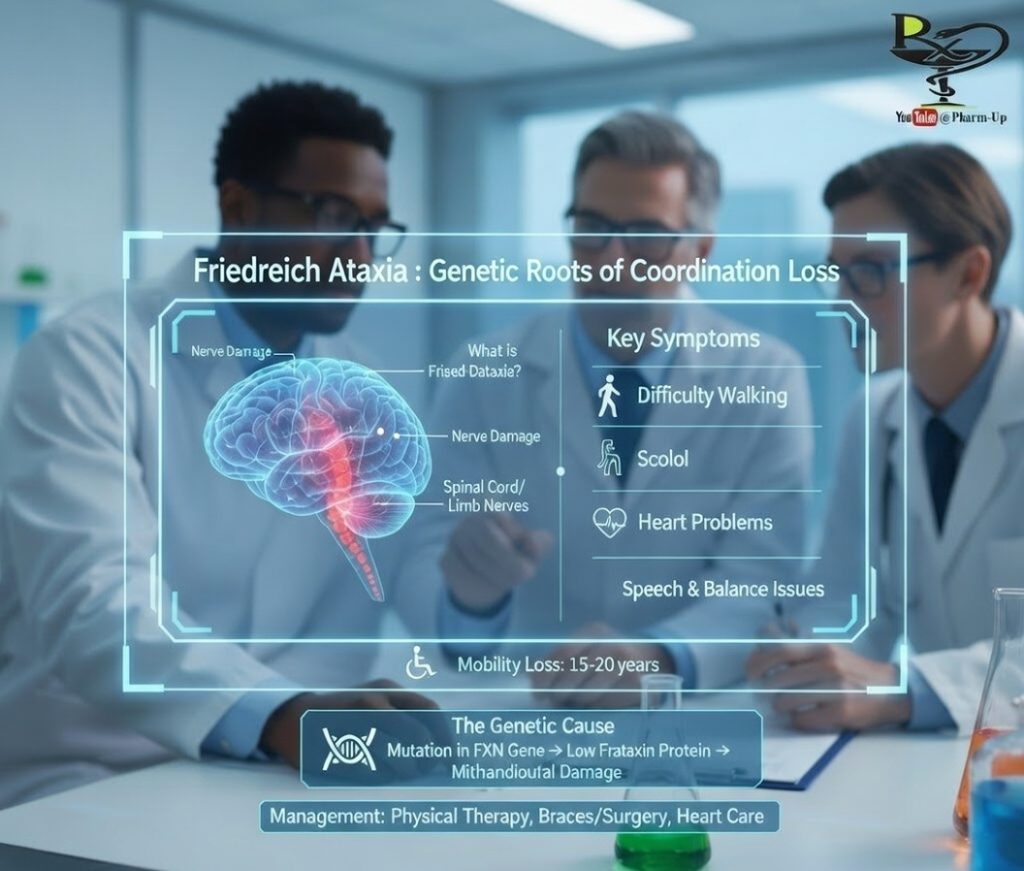
What is Friedreich Ataxia?
Friedreich Ataxia (FA) is a rare, inherited degenerative disorder that progressively damages the nervous system. The disease specifically targets the spinal cord and the peripheral nerves that connect the brain to the muscles in the arms and legs.
Unlike many other neurodegenerative conditions that appear in late adulthood, FA symptoms typically emerge in childhood or adolescence—usually between the ages of 5 and 15.
Key Symptoms and Progression
The hallmark of this condition is ataxia, a term used to describe a lack of muscle coordination and control. As the disease progresses, several physical challenges arise:
- Mobility Issues: Difficulty walking and persistent muscle weakness in the extremities.
- Coordination Loss: Challenges with fine motor skills and involuntary eye movements (nystagmus).
- Communication: Slurred or slow speech (dysarthria).
- Skeletal Changes: Many patients develop scoliosis (a sideways curvature of the spine) due to muscle imbalances.
- Cardiac Concerns: FA is often accompanied by heart conditions, which can manifest as chest pain or heart palpitations.
The Timeline: Due to the progressive nature of the nerve damage, most individuals with FA require a wheelchair within 15 to 20 years after the initial onset of symptoms.
The Genetic Root
FA is an autosomal recessive genetic disease. This means a child must inherit one copy of the defective gene from each parent to develop the condition. It is caused by a mutation in the FXN gene, which leads to a deficiency in a protein called frataxin. Without enough frataxin, the mitochondria (the energy producers) in nerve and muscle cells become damaged by oxidative stress.
Management and Quality of Life
While there is no known cure for Friedreich Ataxia, a multidisciplinary approach to treatment can help manage symptoms and maintain independence for as long as possible:
- Physical & Occupational Therapy: Crucial for maintaining muscle strength and adapting to changes in mobility.
- Orthopedic Intervention: Use of braces or surgery to treat scoliosis or foot deformities.
- Cardiology Monitoring: Regular check-ups to manage heart-related complications.
- Speech Therapy: Techniques to help improve communication and swallowing.
About the Author