Pharm'Up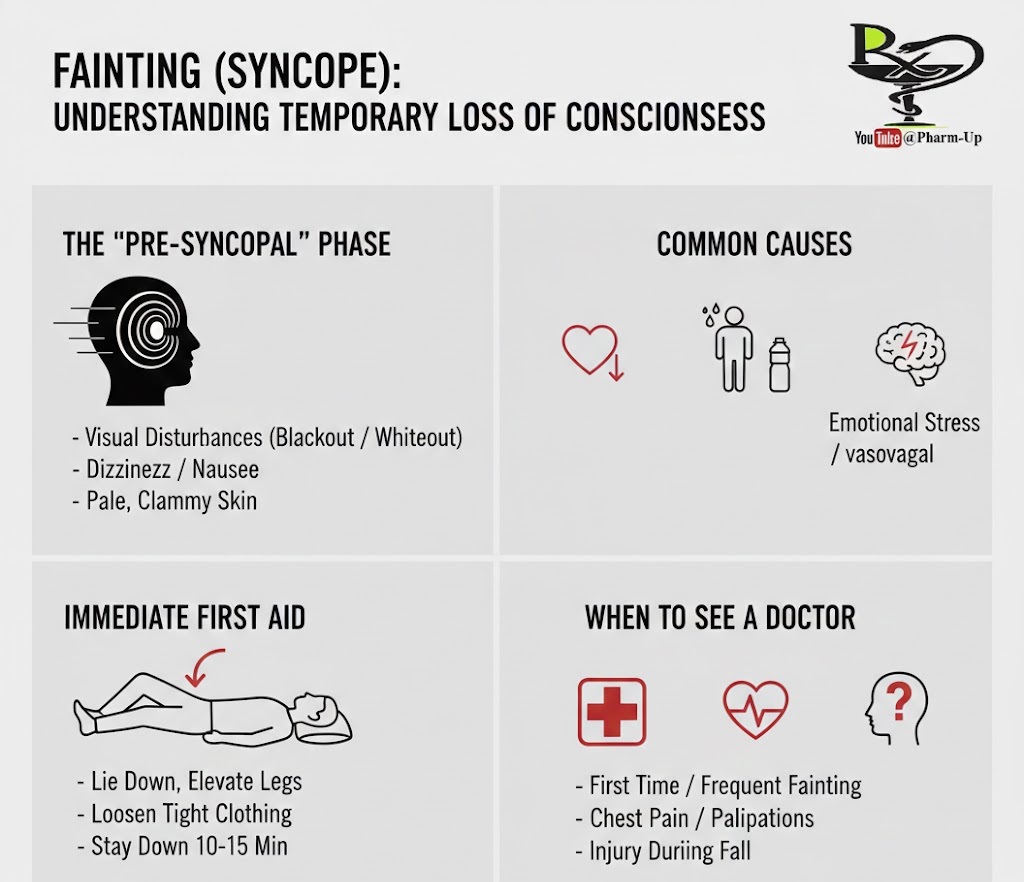
Fainting, medically known as syncope, is a sudden, temporary loss of consciousness followed by a full recovery. It occurs when the brain is momentarily deprived of adequate blood flow, oxygen, or glucose.
The “Pre-Syncopal” Phase
Before losing consciousness, most people experience warning signs known as “pre-syncope.” Recognizing these can help you sit or lie down before a fall occurs:
- Visual Disturbances: Vision “blacking out” (darkness) or “whiting out” (blurry/bright).
- Physical Sensations: Dizziness, sudden nausea, or feeling lightheaded.
- Skin Changes: Becoming pale and feeling cold or clammy to the touch.
Common Causes and Triggers
Fainting is often triggered by a sudden drop in blood pressure or heart rate. Common factors include:
- Vasovagal Syncope: The most common type, triggered by emotional stress, pain, or the sight of blood.
- Orthostatic Hypotension: A drop in blood pressure that happens when standing up too quickly from a sitting or lying position.
- Dehydration and Heat: Low fluid levels decrease blood volume, making it harder for the heart to pump blood to the brain.
- Situational Triggers: Coughing, swallowing, or even gastrointestinal strain.
- Underlying Conditions: Low blood sugar (hypoglycemia), heart rhythm disorders (arrhythmias), or the side effects of certain medications.
Immediate First Aid
If you feel like you are going to faint, lie down immediately and lift your legs to help blood flow back to the heart and brain.
If you are assisting someone who has fainted:
- Check Airway and Breathing: Ensure they are breathing clearly.
- Positioning: Keep the person lying down on their back. Elevate their feet about 12 inches if possible.
- Recovery Time: The person should remain lying down for 10–15 minutes after regaining consciousness to prevent a second episode.
- Loosen Clothing: Ease tight collars, belts, or restrictive clothing.
When to See a Doctor
While most fainting episodes are harmless, they can occasionally indicate a serious heart or neurological issue. You should consult a healthcare provider if:
- This is your first time fainting.
- You faint frequently.
- You are pregnant.
- The faint was accompanied by chest pain or a racing heart.
- You injured yourself during the fall.
About the Author