Pharm'Up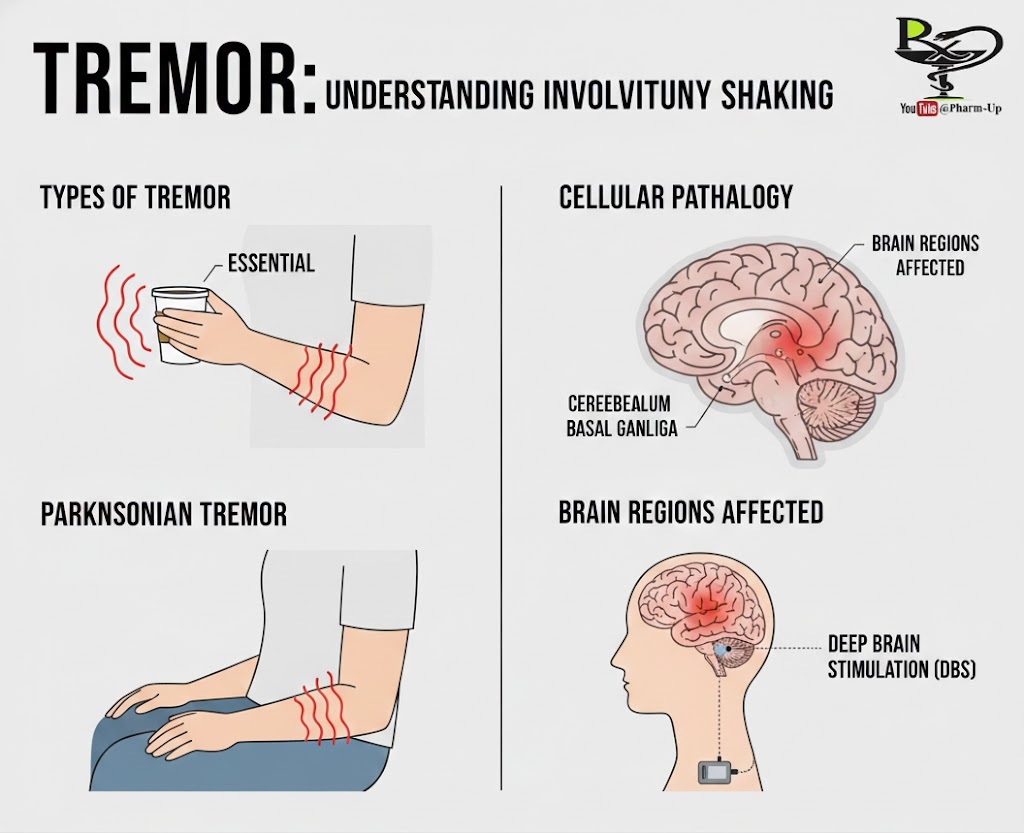
A tremor is an involuntary, rhythmic muscle contraction that leads to shaking in one or more parts of the body. While it most commonly affects the hands, it can also manifest in the arms, head, vocal cords, torso, and legs. Tremors are not life-threatening, but they can significantly interfere with daily activities like writing, eating, or getting dressed.
Types of Tremor
Tremors are categorized based on when they occur and their underlying cause:
| Type | Characteristics |
| Essential Tremor | The most common form; usually an action tremor (occurs during movement like holding a cup). Often hereditary. |
| Parkinsonian Tremor | Typically a resting tremor (shaking occurs when the limb is relaxed). A hallmark sign of Parkinson’s disease. |
| Dystonic Tremor | Associated with dystonia (involuntary muscle twisting). The tremor often disappears if the muscle is fully relaxed or moved in a specific way. |
Root Causes
Most tremors result from issues in deep parts of the brain that coordinate movement (such as the cerebellum or basal ganglia). Common triggers and causes include:
- Neurological Disorders: MS, stroke, or traumatic brain injury.
- Metabolic Issues: Overactive thyroid (hyperthyroidism), liver, or kidney failure.
- Substances: Excessive caffeine, alcohol withdrawal, or side effects from asthma and psychiatric medications.
- Emotional States: High anxiety, stress, or panic.
Diagnosis and Evaluation
Because a tremor is often a symptom of an underlying issue, doctors perform a comprehensive “work-up”:
- Physical Observation: Checking if the shaking is rhythmic and whether it happens at rest or during a task (like the “finger-to-nose” test).
- Neurological Exam: Assessing balance, speech, and muscle tone.
- EMG (Electromyogram): Measuring the electrical activity of muscles to see how they respond to nerve signals.
- Imaging: MRI or CT scans to look for structural brain damage.
Management and Treatment
While many tremors cannot be “cured,” they can be effectively managed:
- Medications: Beta-blockers, anti-seizure meds, or Botox injections (which can paralyze specific small muscles to stop the shaking).
- Therapy: Occupational therapy provides adaptive tools (like weighted utensils) to make daily tasks easier.
- Deep Brain Stimulation (DBS): For severe cases, surgeons implant electrodes into specific brain regions. These electrodes act like a “pacemaker for the brain,” blocking the irregular signals that cause shaking.
About the Author