Pharm'Up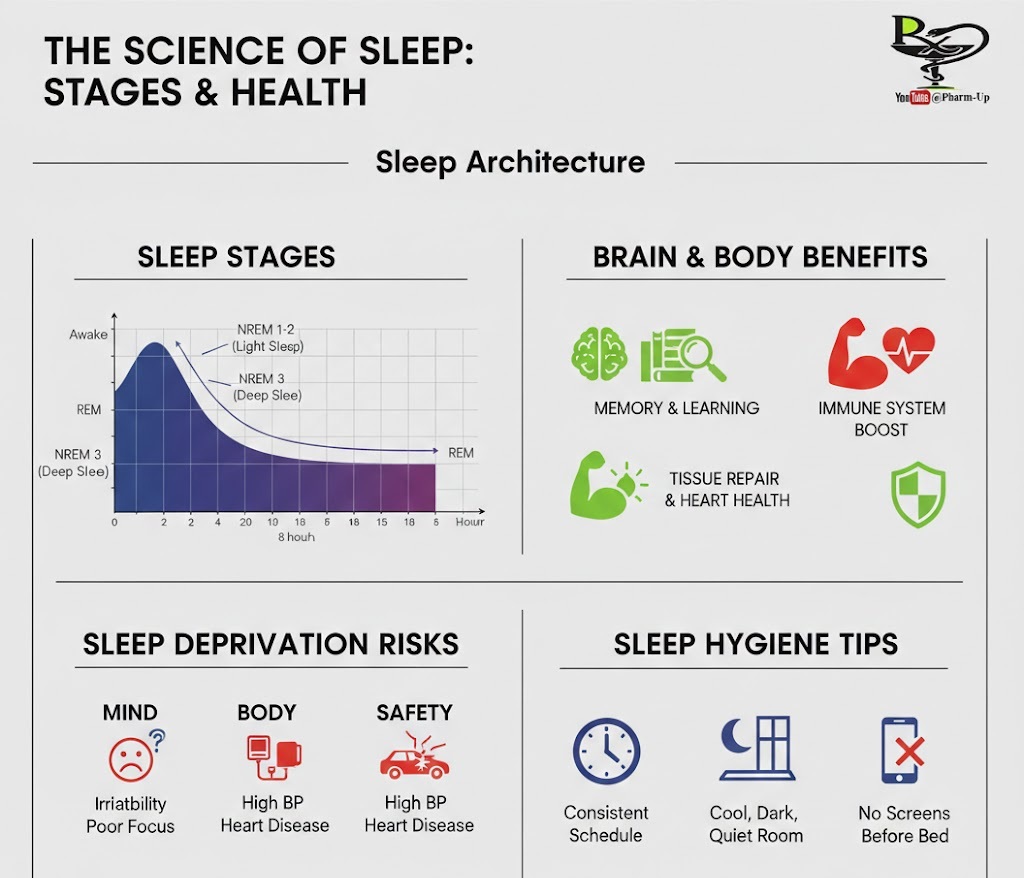
Sleep is a fundamental biological process. While you rest, your brain and body remain remarkably active, performing “maintenance” tasks that are impossible while awake. These include repairing tissues, consolidating memories, and flushing out metabolic waste from the brain.
The Stages of Sleep
Throughout the night, your brain cycles through two main types of sleep approximately every 90 minutes. You need both to wake up feeling restored.
- Non-REM Sleep: * Stage 1 (Light Sleep): The transition between wakefulness and sleep. Heart rate and breathing slow down.
- Stage 2: A period of light sleep before entering deeper sleep. Body temperature drops.
- Stage 3 (Deep Sleep): The “restorative” stage. This is when the body repairs tissue, builds bone and muscle, and strengthens the immune system.
- REM (Rapid Eye Movement) Sleep: * Occurs about 90 minutes after falling asleep.
- The brain is highly active; this is when most dreaming occurs.
- Essential for cognitive functions like memory consolidation, learning, and emotional processing.
How Much Sleep Do You Need?
Sleep needs change significantly across the lifespan. While individual needs vary, the following are standard daily recommendations:
| Age Group | Recommended Sleep Hours |
| Infants (4-12 months) | 12–16 hours (including naps) |
| Children (1-5 years) | 10–14 hours (including naps) |
| School-Age (6-12 years) | 9–12 hours |
| Teens (13-18 years) | 8–10 hours |
| Adults (18+ years) | 7–9 hours |
The Risks of Sleep Deprivation
Missing out on quality sleep is more than just an inconvenience; it is a significant health risk.
- Cognitive Impairment: Slower reaction times (similar to alcohol impairment), poor focus, and memory gaps.
- Mental Health: Increased risk of depression, anxiety, and irritability.
- Physical Health: Chronic sleep loss is linked to obesity, Type 2 diabetes, high blood pressure, and heart disease.
- Immune Suppression: You become more likely to get sick after being exposed to a virus.
Tips for Better Sleep Hygiene
If you find yourself dozing off during the day or struggling to wake up, try these “sleep hygiene” improvements:
- Consistency: Go to bed and wake up at the same time every day, even on weekends.
- Environment: Keep your bedroom cool, dark, and quiet. Remove electronic “blue light” (phones/TVs) at least 30 minutes before bed.
- Daytime Habits: Get natural sunlight during the day and exercise regularly, but avoid intense workouts late at night.
- Dietary Triggers: Avoid caffeine in the afternoon and heavy meals or alcohol right before bed.
About the Author