Pharm'Up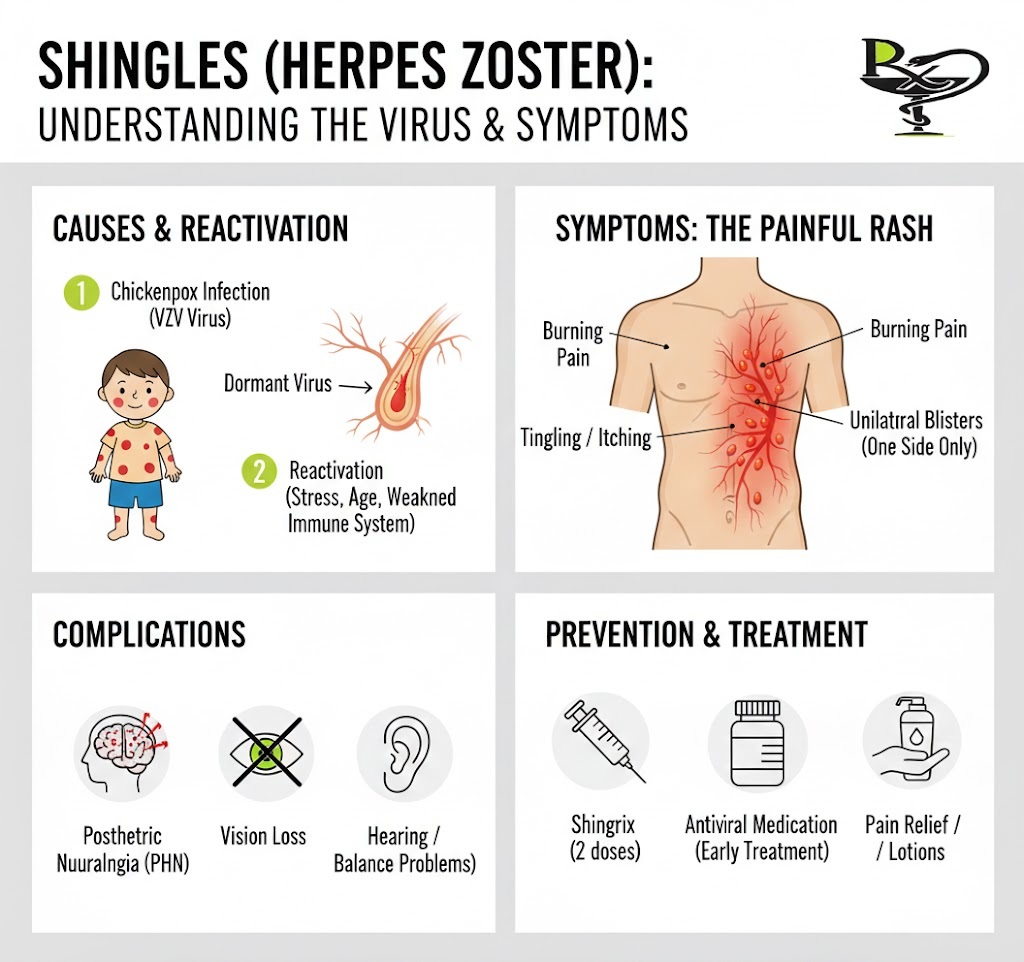
Shingles is a viral infection caused by the varicella-zoster virus (VZV)—the same virus responsible for chickenpox. After a person recovers from chickenpox, the virus stays dormant (inactive) in the nerve tissues near the spinal cord and brain. Years or decades later, the virus can “reactivate” as shingles.
Symptoms and Progression
Shingles is unique because it typically affects only one side of the body or face.
- Early Phase: Before the rash appears, people often feel burning, shooting pain, tingling, or itching in a specific area.
- Rash Phase: A red rash develops, quickly turning into fluid-filled blisters. These blisters typically scab over in 7–10 days and clear up fully within 2–4 weeks.
- Systemic Symptoms: Some may also experience fever, headache, chills, and fatigue.
Is it Contagious?
You cannot catch shingles from someone else. However, if you have never had chickenpox or the chickenpox vaccine, you can catch chickenpox from someone with shingles through direct contact with the fluid from the blisters.
- The risk is low if the rash is kept covered.
- Once the blisters have crusted over, the person is no longer contagious.
Potential Complications
For some, the pain of shingles continues long after the rash is gone:
- Postherpetic Neuralgia (PHN): The most common complication. It involves damaged nerve fibers sending confused and exaggerated messages of pain from the skin to the brain. This pain can last for months or years.
- Vision Loss: If shingles occurs near the eye, it can cause painful eye infections and permanent vision loss.
- Neurological Issues: Depending on the nerves affected, it can lead to hearing problems, balance issues, or facial paralysis.
Treatment and Prevention
While there is no cure, early intervention is key to reducing the severity of the infection.
- Antivirals: Medicines like acyclovir or valacyclovir are most effective when started within 72 hours of the rash appearing. They help speed healing and reduce the risk of PHN.
- Vaccination: The Shingrix vaccine is highly recommended for adults 50 and older. It is a two-dose vaccine that provides strong protection against shingles and the long-term nerve pain that can follow.
- Symptom Management: Oatmeal baths, wet compresses, and calamine lotion can help soothe the itching and pain.
About the Author