Pharm'Up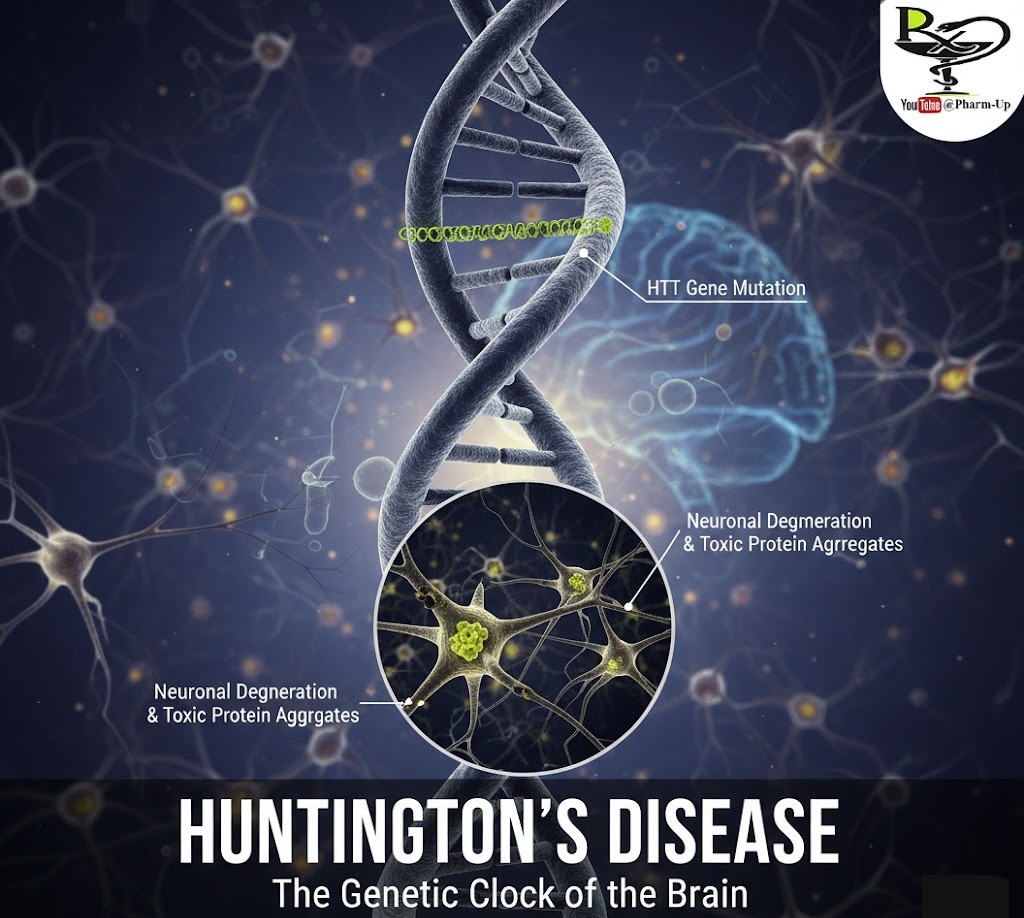
Huntington’s Disease (HD) is often described as having ALS, Parkinson’s, and Alzheimer’s all at once. It is a progressive, hereditary brain disorder that causes the gradual breakdown (degeneration) of nerve cells in the brain, specifically impacting the basal ganglia—the area responsible for motor control, emotion, and cognition.
The 50/50 Genetic Legacy
Unlike many genetic conditions that require both parents to carry a trait, HD is autosomal dominant.
- The Probability: If a parent has the defective gene, every child they have has a 50% chance of inheriting it.
- The Certainty: If you inherit the gene, you will develop the disease at some point in your life. There are no “carriers” who remain unaffected.
- The Test: A blood test can identify the gene long before symptoms appear. However, because there is currently no cure, the decision to test is deeply personal and often involves extensive genetic counseling.
The Three Pillars of Decline
Symptoms usually emerge between the ages of 30 and 50, progressing steadily over 10 to 20 years across three main areas:
- Physical (Chorea): The most recognizable sign is “chorea”—involuntary, jerky movements that look like dancing. As the disease progresses, these turn into rigidity and the loss of basic functions like swallowing and walking.
- Cognitive: HD attacks the brain’s “executive function.” Patients may struggle to organize tasks, lose their memory of family members, or experience a loss of impulse control.
- Psychiatric: Irritability, depression, and social withdrawal are common early warning signs, often appearing before the physical movements begin.
Inside the Brain: What’s Happening?
The disease is caused by a mutation in the HTT gene, which produces a protein called huntingtin.
- The Mutation: In a healthy brain, this protein is vital. In HD, a segment of DNA repeats itself too many times (like a typo that repeats a word 40+ times).
- The Result: This “elongated” protein becomes toxic, clumping together inside neurons and eventually killing them.
Management and Hope
While there is currently no cure or treatment to stop the progression, modern medicine focuses on quality of life:
- Symptom Management: Drugs like tetrabenazine can help suppress the involuntary “dancing” movements.
- Therapies: Speech and physical therapy can help patients maintain independence for as long as possible.
- Future Research: Scientists are currently exploring gene-silencing techniques, aiming to “turn off” the defective huntingtin gene before it can cause damage.
About the Author