Pharm'Up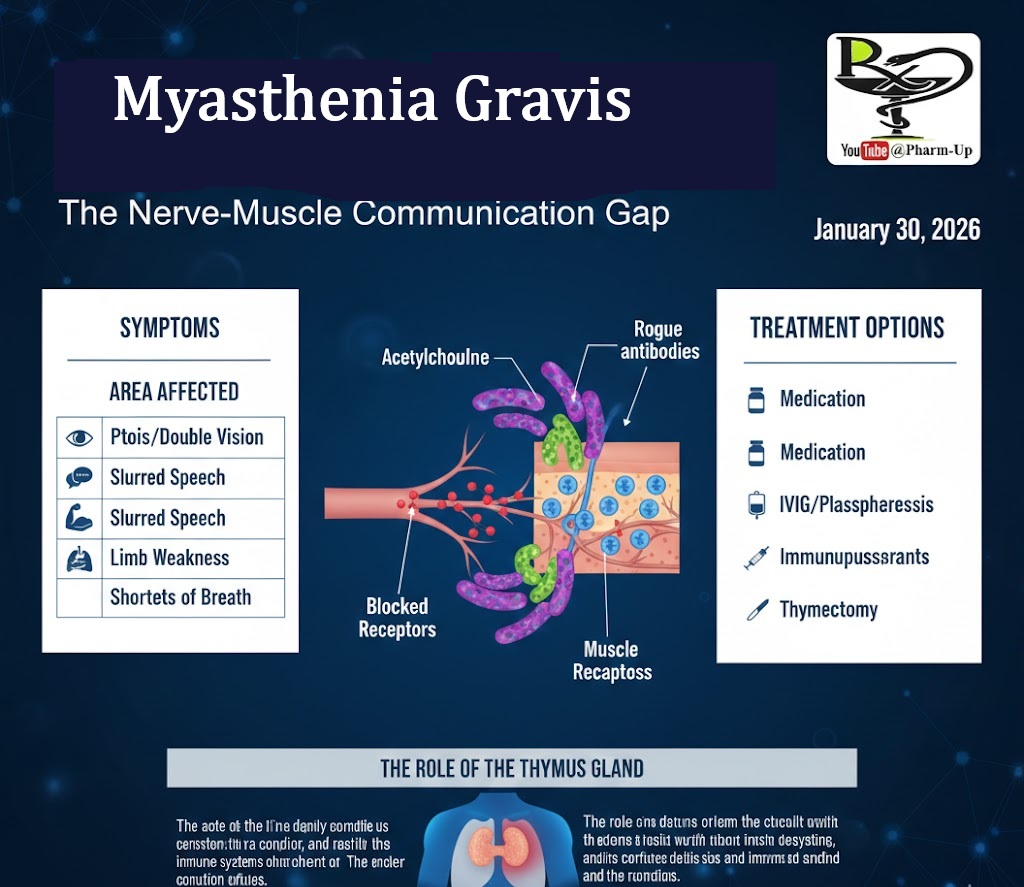
Myasthenia Gravis (MG), Latin for “grave muscle weakness,” is a chronic autoimmune disorder that interrupts the flow of information between your nerves and your voluntary muscles. Unlike many other neurological conditions, the hallmark of MG is fatigability: muscles become weaker with repetitive use but improve significantly after a period of rest.
The Science of the Blockage
To move a muscle, your brain sends a signal that travels down a nerve to the neuromuscular junction. In a healthy body, the nerve releases a chemical “key” called acetylcholine that fits into receptors on the muscle to trigger movement.
- The Attack: In MG, the immune system produces rogue antibodies that block, alter, or destroy the receptors for acetylcholine.
- The Result: Even though the nerve is sending the signal, the muscle cannot “hear” it. The connection is broken, leading to muscle weakness.
The Role of the Thymus Gland
The thymus gland, located in the upper chest, is a central part of the immune system. While it normally shrinks after puberty, it remains abnormally large in many adults with MG.
- Immune Confusion: Scientists believe the thymus may give “incorrect instructions” to immune cells, prompting them to attack acetylcholine receptors.
- Thymomas: About 10% of people with MG develop a tumor on the thymus gland. While usually benign, these are often removed to prevent complications and improve MG symptoms.
Recognizing the Symptoms
MG symptoms often fluctuate throughout the day, typically being mildest in the morning and peak in the evening.
| Area Affected | Common Symptoms |
| Eyes (Ocular MG) | Drooping of one or both eyelids (ptosis) and double vision (diplopia). |
| Face & Throat | Difficulty swallowing, “snarling” smile, and speech that sounds nasal or slurred. |
| Limbs & Neck | Difficulty lifting arms, climbing stairs, or holding the head upright. |
| Respiratory | Shortness of breath. If severe, this can lead to a Myasthenic Crisis, requiring a ventilator. |
Diagnostic Path and Treatment
Diagnosing MG can be tricky because muscle weakness is a symptom of many diseases. Doctors typically use:
- Tensilon Test: An injection of a chemical that briefly improves muscle strength to confirm the diagnosis.
- Blood Work: Testing specifically for acetylcholine receptor antibodies.
- Electrodiagnostic Medicine: Using EMG to see how quickly the muscles tire when stimulated.
Management Options
- Anticholinesterase Agents: Medications like pyridostigmine that help the acetylcholine stay at the junction longer, improving communication.
- Immunosuppressants: Steroids and other drugs that quiet the overactive immune system.
- Emergency Procedures: Plasmapheresis (filtering the blood) or IVIG (healthy antibody infusion) to quickly remove the “bad” antibodies.
- Surgery: A Thymectomy (removal of the thymus) can lead to long-term remission for many patients.
About the Author