Pharm'Up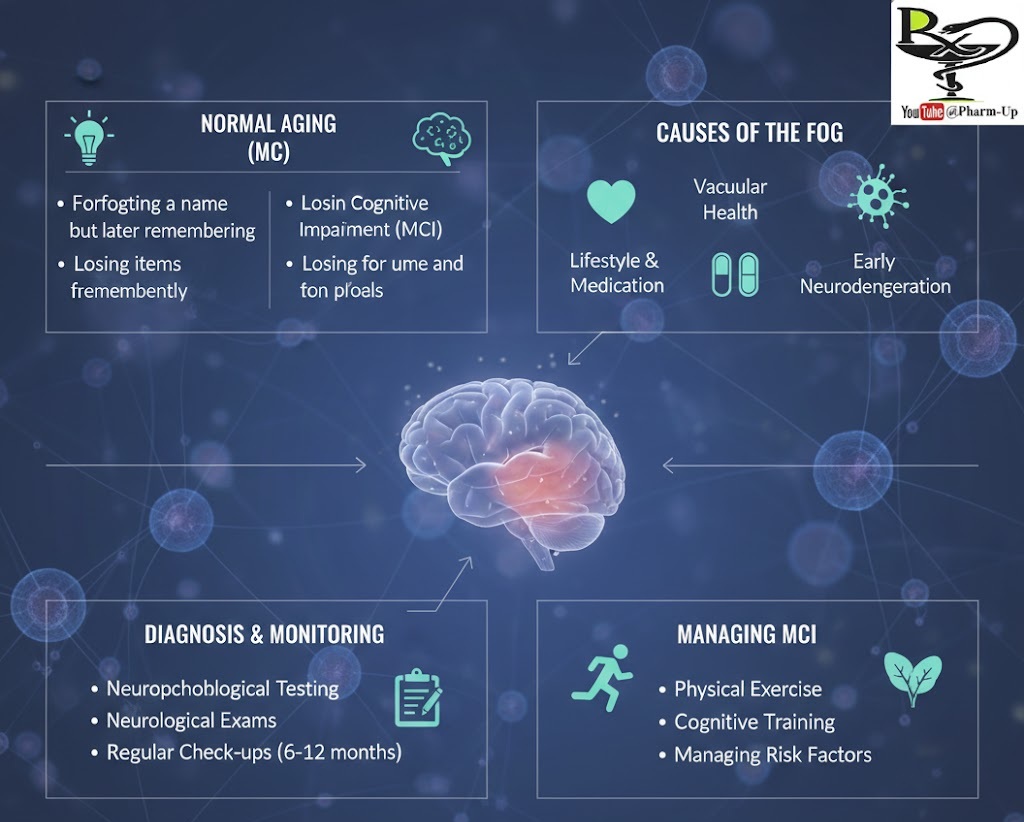
Mild Cognitive Impairment (MCI) is often described as the “bridge” between the normal forgetfulness of aging and the more serious decline of dementia. While it involves noticeable changes in cognitive abilities, it is distinguished by the fact that it does not significantly interfere with a person’s ability to live independently.
Normal Aging vs. MCI
It is helpful to understand where the line is drawn. While everyone misplaces their keys occasionally, MCI involves a consistent pattern of memory or thinking slips.
| Feature | Normal Aging | Mild Cognitive Impairment (MCI) |
| Memory | Forgetting a name but remembering it later. | Losing items frequently or forgetting recent conversations. |
| Executive Function | Occasional errors when balancing a checkbook. | Increasing difficulty following a recipe or managing bills. |
| Social Function | Can still navigate social situations easily. | May struggle to find the right words more than peers. |
The “Why” Behind the Fog
MCI doesn’t have a single cause. It is a clinical “status” that can be triggered by various factors:
- Vascular Health: Problems with the blood vessels supplying the brain can lead to “Vascular MCI.”
- Lifestyle & Medication: Certain medications, sleep apnea, or even vitamin deficiencies (like $B_{12}$) can mimic MCI symptoms.
- Early Neurodegeneration: In many cases, MCI represents the earliest clinical stage of Alzheimer’s disease or other forms of dementia.
Diagnosis and Monitoring
Because there is no single “MCI blood test,” doctors use a combination of methods to identify the condition:
- Neuropsychological Testing: Brief mental status exams (like the MoCA or MMSE) that test memory, orientation, and language.
- Neurological Exams: Checking reflexes, balance, and eye movements to rule out other issues like Parkinson’s.
- Regular Check-ups: Since MCI can progress, stable patients are usually monitored every 6 to 12 months to track any “slope” in their cognitive abilities.
Managing MCI Without Drugs
While there are currently no FDA-approved medications specifically for MCI, research suggests that the “heart-healthy, brain-healthy” approach is the best defense:
- Physical Exercise: Increases blood flow to the brain and may stimulate growth factors.
- Cognitive Training: “Use it or lose it”—engaging in puzzles, reading, or learning a new skill.
- Managing Risk Factors: Controlling blood pressure, cholesterol, and diabetes is crucial to preventing further damage to brain tissue.
About the Author