Pharm'Up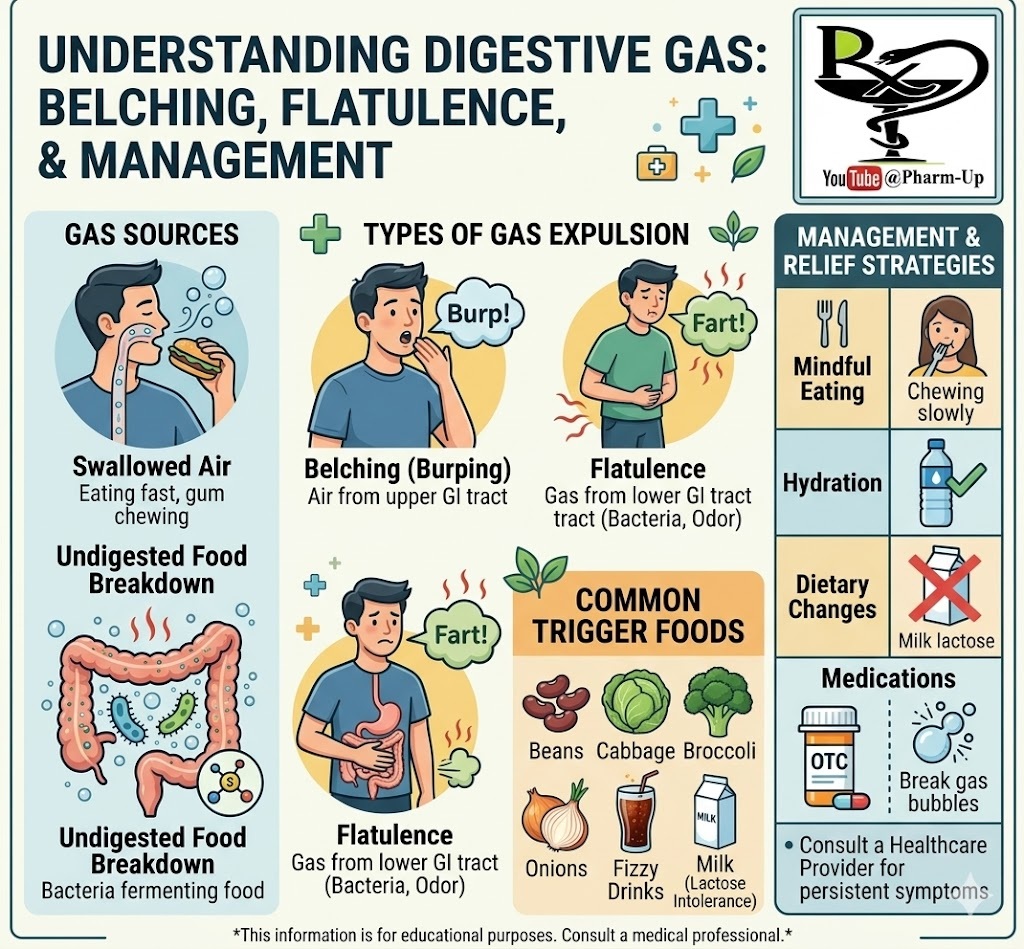
Gas is a natural and universal part of the human digestive process. On average, most individuals pass gas between 13 and 21 times per day. While often a source of social discomfort, it is a sign that the digestive system is functioning and processing the air we swallow and the food we eat.
Sources and Types of Gas
Gas enters and moves through the digestive tract in two primary ways:
- Belching (Burping): This occurs when gas is expelled through the mouth. It is primarily caused by swallowed air (aerophagia) while eating, drinking, or talking.
- Flatulence: This is the release of gas through the anus. It results from the breakdown of undigested food by bacteria residing in the large intestine.
- The Origin of Odor: Most gas is actually odorless. The characteristic smell is caused by specific bacteria in the large intestine that release tiny amounts of sulfur-containing gases during fermentation.
Common Causes and Triggers
The production of gas varies significantly from person to person. Common triggers include:
- High-Fiber Foods: Beans, cabbage, broccoli, and whole grains are healthy but known for gas production.
- Lactose Intolerance: Difficulty digesting milk sugars can lead to significant bloating and gas.
- Fizzy Drinks: Carbonated beverages introduce extra air into the stomach.
- Eating Habits: Eating too quickly or chewing gum increases the amount of air swallowed.
Strategies for Reduction and Relief
If gas becomes uncomfortable or excessive, several lifestyle adjustments can help:
| Strategy | Action Step |
| Hydration | Drink plenty of water and non-carbonated fluids to aid digestion. |
| Mindful Eating | Eat slowly and chew thoroughly to minimize air intake. |
| Dietary Adjustment | Identify “trigger foods” or limit dairy if you are lactose intolerant. |
| Medical Support | Over-the-counter medicines (like simethicone) can help break up gas bubbles. |
When to Consult a Professional: If gas is accompanied by persistent abdominal pain, a change in bowel habits, or severe bloating that does not resolve with lifestyle changes, it is important to speak with a healthcare provider.
About the Author