Pharm'Up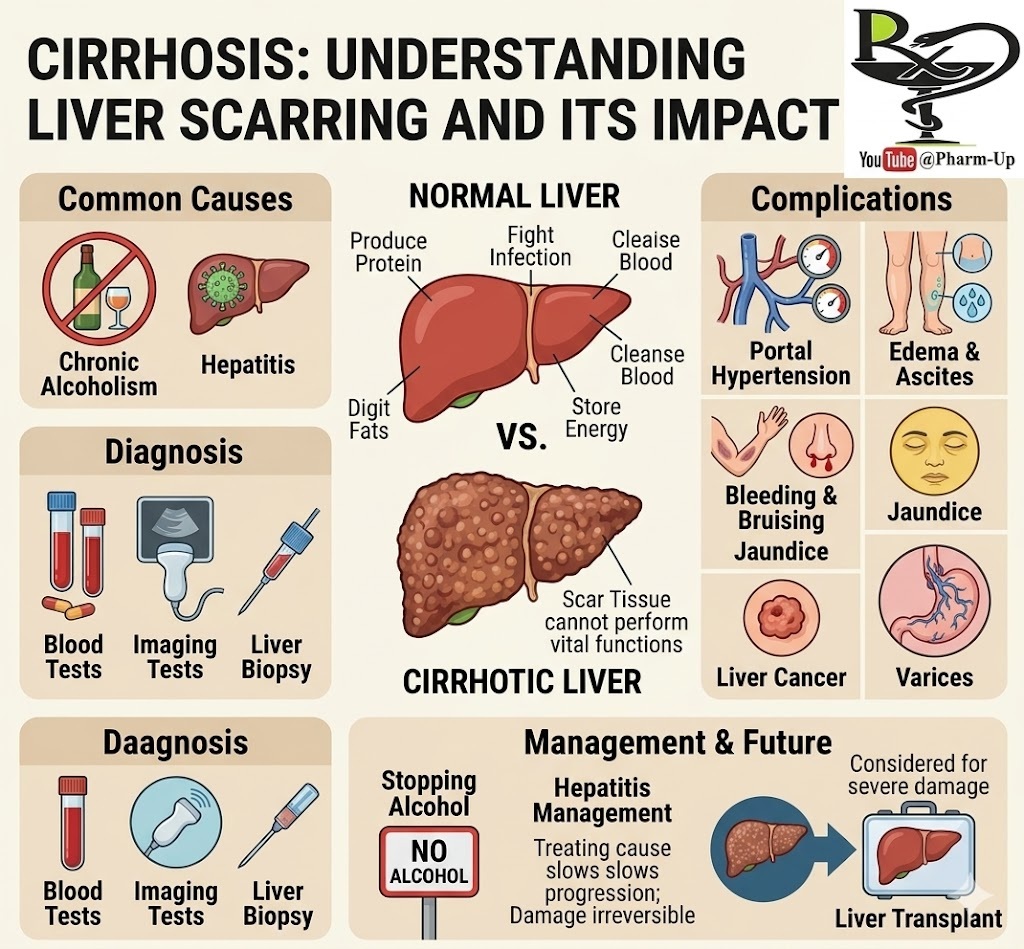
Cirrhosis is a late-stage scarring (fibrosis) of the liver caused by many forms of liver diseases and conditions, such as hepatitis and chronic alcoholism. Each time your liver is injured—whether by excessive alcohol consumption or another cause—it tries to repair itself. In the process, scar tissue forms. As cirrhosis progresses, more and more scar tissue forms, making it difficult for the liver to function.
The Role of Healthy Liver Tissue vs. Scar Tissue
Healthy liver tissue is responsible for vital functions that scar tissue simply cannot perform. When the liver is heavily scarred, it loses the ability to:
- Produce Proteins: Essential for blood clotting and fluid balance.
- Fight Infections: By removing bacteria from the blood.
- Cleanse the Blood: Filtering out toxins and processing metabolic waste.
- Support Digestion: By producing bile to break down fats.
- Store Energy: Managing glucose levels for the body’s use.
Potential Complications of Cirrhosis
Because the liver is involved in so many bodily systems, cirrhosis can lead to a wide range of serious health issues:
| Category | Complications |
| Blood & Circulation | Easy bruising, frequent nosebleeds, and Portal Hypertension (high blood pressure in the vein entering the liver). |
| Fluid & Swelling | Edema (swelling in the legs) and Ascites (fluid buildup in the abdomen). |
| Digestive Risks | Varices (enlarged veins in the esophagus/stomach that can bleed) and gallstones. |
| Systemic Issues | Jaundice (yellowing of skin/eyes), kidney failure, severe itching, and increased sensitivity to medications. |
| Malignancy | A small percentage of patients may eventually develop liver cancer. |
Diagnosis and Management
Doctors typically diagnose cirrhosis through a combination of blood tests (to check liver enzymes and function), imaging tests (like ultrasound or CT scans), or a liver biopsy to examine the tissue directly.
While the damage from cirrhosis is generally irreversible, treating the underlying cause—such as stopping alcohol use or managing hepatitis—can prevent further scarring. In cases where the liver has sustained too much damage to function, a liver transplant may be the only remaining option.
About the Author