Pharm'Up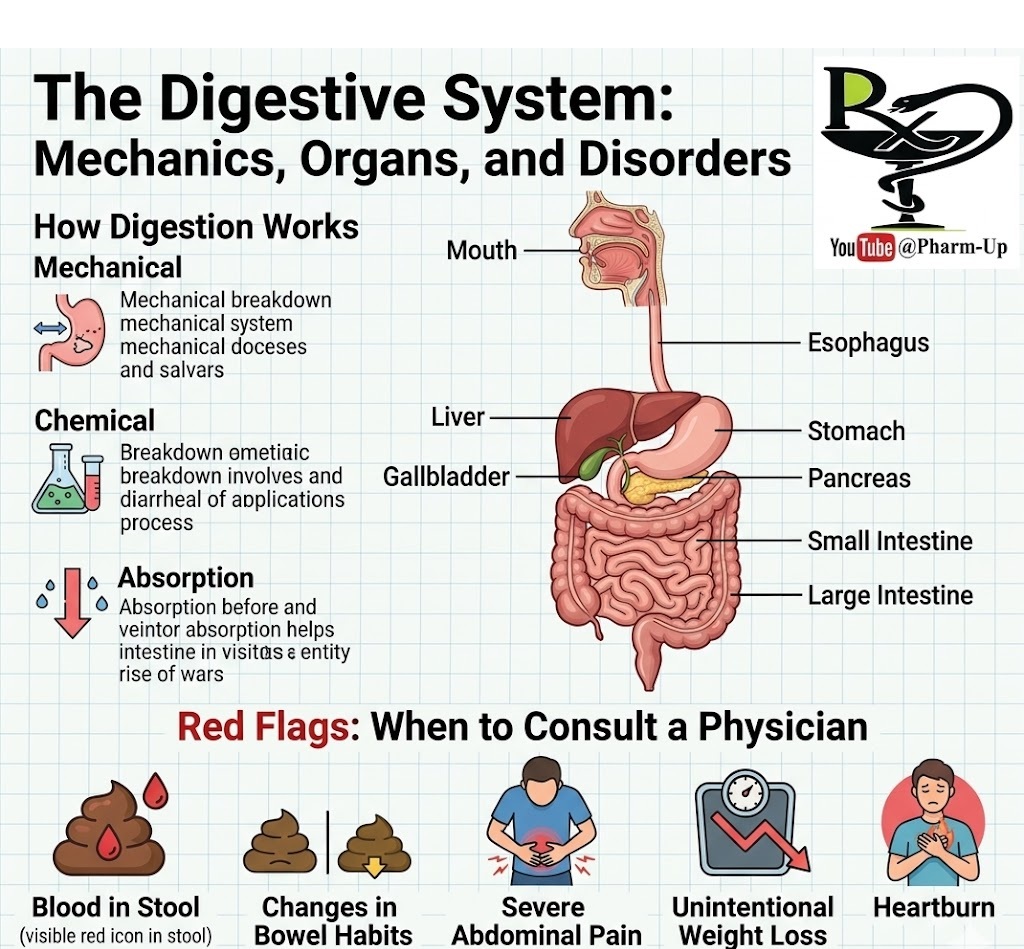
Digestion is the complex biological process by which your body converts food into the essential nutrients and energy required to sustain life. It involves a coordinated effort between a series of hollow organs and solid “helper” organs that produce chemical catalysts.
Anatomy of the Digestive Tract
The digestive system is essentially a long, continuous “twisting tube” known as the gastrointestinal (GI) tract, supported by accessory organs.
- The GI Tract: Includes the mouth, esophagus, stomach, small intestine, large intestine (colon), and anus.
- Accessory Organs:
- Liver: Produces bile to help digest fats and filters toxins.
- Pancreas: Secretes enzymes into the small intestine to break down protein, fats, and carbs.
- Gallbladder: Stores and concentrates bile until it is needed for digestion.
How Digestion Works
Digestion is both mechanical (chewing and stomach churning) and chemical (enzymes and acids).
- Ingestion & Transport: Food moves through the esophagus via peristalsis (muscle contractions).
- Breakdown: The stomach uses acid to turn food into a liquid paste called chyme.
- Absorption: The small intestine is where the vast majority of nutrients enter the bloodstream.
- Elimination: The large intestine absorbs water and prepares waste for removal.
Identifying Digestive Disorders
Because the system is so large, disorders can range from temporary upsets to chronic conditions like IBD, Celiac disease, or GERD.
| Common Symptoms | Potential Concerns |
| Persistent Heartburn | May indicate GERD or a hiatal hernia. |
| Bowel Habit Changes | Can signal IBS, infection, or dietary intolerances. |
| Abdominal Pain | Could range from simple gas to gallstones or appendicitis. |
Red Flags: When to Consult a Physician
While occasional indigestion is common, certain “alarm symptoms” require professional medical evaluation:
- Hematochezia: Visible blood in the stool or black, tarry stools.
- Unexplained Weight Loss: Dropping weight without changes in diet or exercise.
- Chronic Heartburn: Acid reflux that does not respond to over-the-counter antacids.
- Severe Pain: Intense abdominal cramping that interferes with daily activities.
- Dysphagia: Difficulty swallowing or the feeling of food getting stuck in the chest.
About the Author


 Pharm'Up