Pharm'Up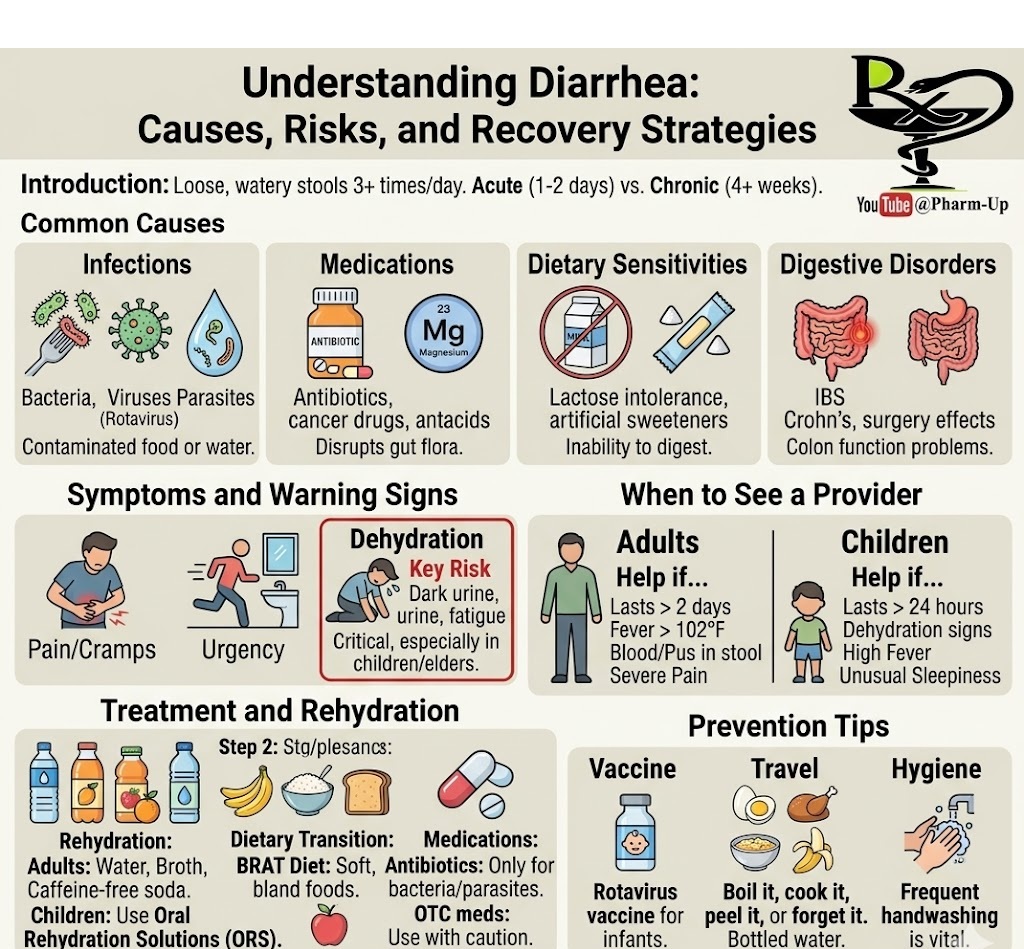
Diarrhea is characterized by loose, watery stools occurring three or more times in a single day. While it is a common ailment that typically resolves within a day or two (acute diarrhea), persistent symptoms lasting four weeks or more (chronic diarrhea) may indicate an underlying medical condition.
Common Causes and Triggers
Diarrhea occurs when the digestive system processes food and fluids too quickly, or when the colon cannot absorb enough liquid.
- Infections: Bacteria, viruses (like Rotavirus or Norovirus), and parasites from contaminated food or water are the primary culprits.
- Medications: Antibiotics can disrupt the natural balance of gut bacteria; magnesium-based antacids and cancer drugs are also common triggers.
- Dietary Sensitivities: Intolerances such as lactose intolerance or sensitivities to artificial sweeteners.
- Digestive Disorders: Chronic conditions like Irritable Bowel Syndrome (IBS) or Crohn’s Disease.
- Post-Surgical Effects: Surgery on the stomach or gallbladder can alter how quickly food moves through the GI tract.
Symptoms and Warning Signs
Beyond loose stools, you may experience:
- Abdominal cramping or sharp pain.
- An urgent, uncontrollable need to use the bathroom.
- Dehydration: The most significant risk, marked by extreme thirst, dark urine, fatigue, or dizziness.
When to Contact a Professional
| For Adults (Seek help if…) | For Children (Seek help if…) |
|---|---|
| Diarrhea lasts more than 2 days. | Diarrhea lasts more than 24 hours. |
| Fever of 102∘F (39∘C) or higher. | Signs of dehydration (no wet diapers, no tears). |
| Stools are black, tarry, or contain blood/pus. | High fever or unusual sleepiness. |
| Severe abdominal or rectal pain. | Severe vomiting or inability to drink. |
Export to Sheets
Treatment and Rehydration
The priority in treating diarrhea is replacing lost fluids and electrolytes (salts and minerals).
- Rehydration: * Adults: Drink water, broth, fruit juices, and caffeine-free sodas.
- Children: Use Oral Rehydration Solutions (ORS) specifically formulated to balance electrolytes.
- Dietary Transition: Once symptoms improve, stick to soft, bland foods (such as the “BRAT” diet: Bananas, Rice, Applesauce, Toast).
- Medication: Antibiotics are only effective if the cause is bacterial or parasitic. Anti-diarrheal OTC meds should be used cautiously and generally avoided if there is a high fever or bloody stool.
Prevention Tips
- Vaccination: Ensure infants receive the Rotavirus vaccine.
- Travel Safety: In developing regions, “boil it, cook it, peel it, or forget it.” Use bottled water even for brushing teeth and avoid ice cubes made from tap water.
- Hygiene: Frequent handwashing, especially after using the bathroom or before handling food, remains the best defense against infectious diarrhea.
About the Author