Pharm'Up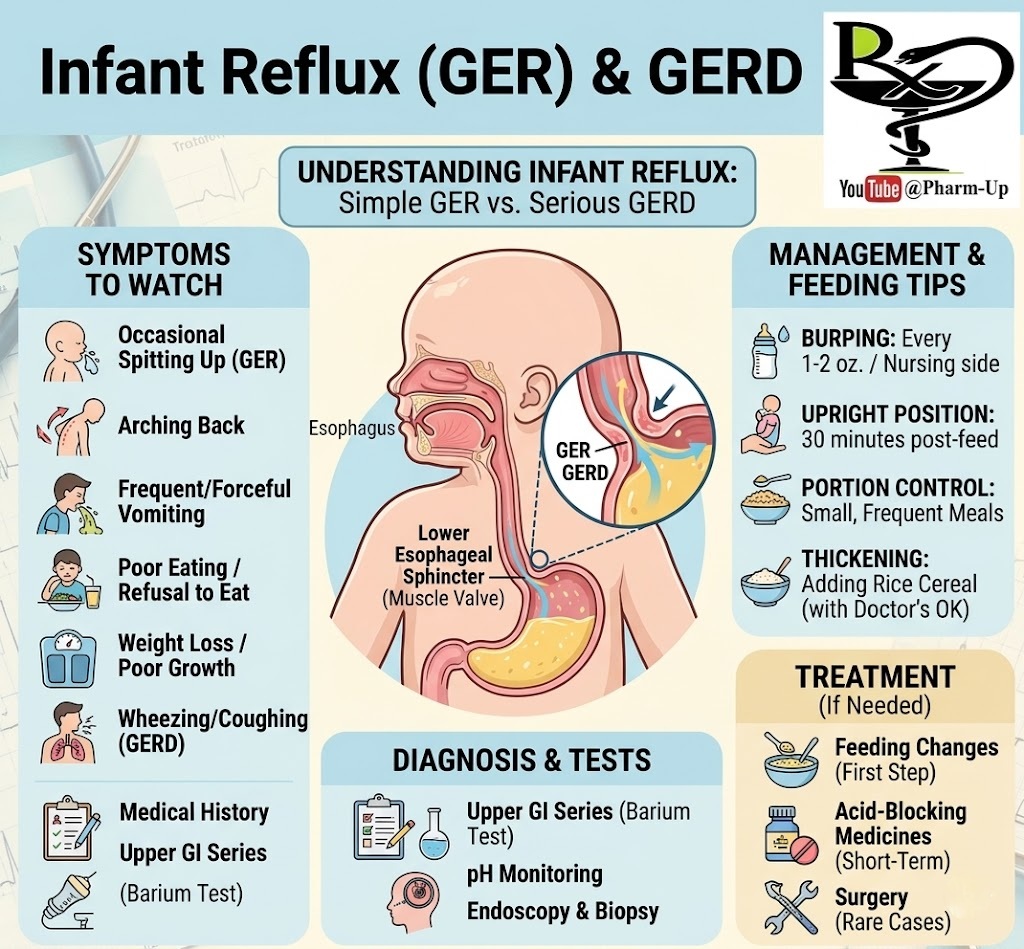
It is very common for healthy babies to “spit up” milk or food, a process known as Gastroesophageal Reflux (GER). While this usually resolves on its own by 12 months, Gastroesophageal Reflux Disease (GERD) is a more serious version that can impact a baby’s feeding, sleep, and growth.
Why Do Babies Spit Up?
The main cause is an underdeveloped lower esophageal sphincter—the muscle that acts as a valve between the esophagus and the stomach.
- In GER: The muscle is simply immature, allowing stomach contents to flow back up.
- In GERD: This muscle is weak or relaxes too often, leading to irritation or feeding difficulties.
- Risk Factors: Premature birth, hiatal hernias, and conditions affecting the nervous or respiratory systems (like cerebral palsy or cystic fibrosis).
Symptoms to Watch For
While occasional spitting up is normal, GERD may present with:
- Feeding Issues: Refusing to eat, gagging, or trouble swallowing.
- Physical Discomfort: Arching the back during or after meals, and excessive irritability.
- Respiratory Signs: Wheezing, coughing, or trouble breathing.
- Growth Concerns: Not gaining enough weight or actual weight loss.
Management and Feeding Changes
Most cases of infant reflux can be managed with simple adjustments to feeding routines:
- Burping: Burp the baby every 1–2 ounces of formula or after nursing from each breast.
- Upright Position: Keep the baby upright for 30 minutes after every feeding.
- Thickening: With a provider’s guidance, adding rice cereal to bottles can help keep milk down.
- Portion Control: Avoid overfeeding; stick to recommended amounts of milk or formula.
Diagnosis and Treatment
Diagnosis: Usually based on medical history. If symptoms are severe, tests like an Upper GI series (Barium test), pH monitoring, or an Endoscopy may be used.
Treatment:
- Medication: Acid-blockers may be tried for a short time if feeding changes fail and growth is affected.
- Surgery: This is extremely rare and only considered if the reflux causes serious breathing problems or severe weight loss.
About the Author