Pharm'Up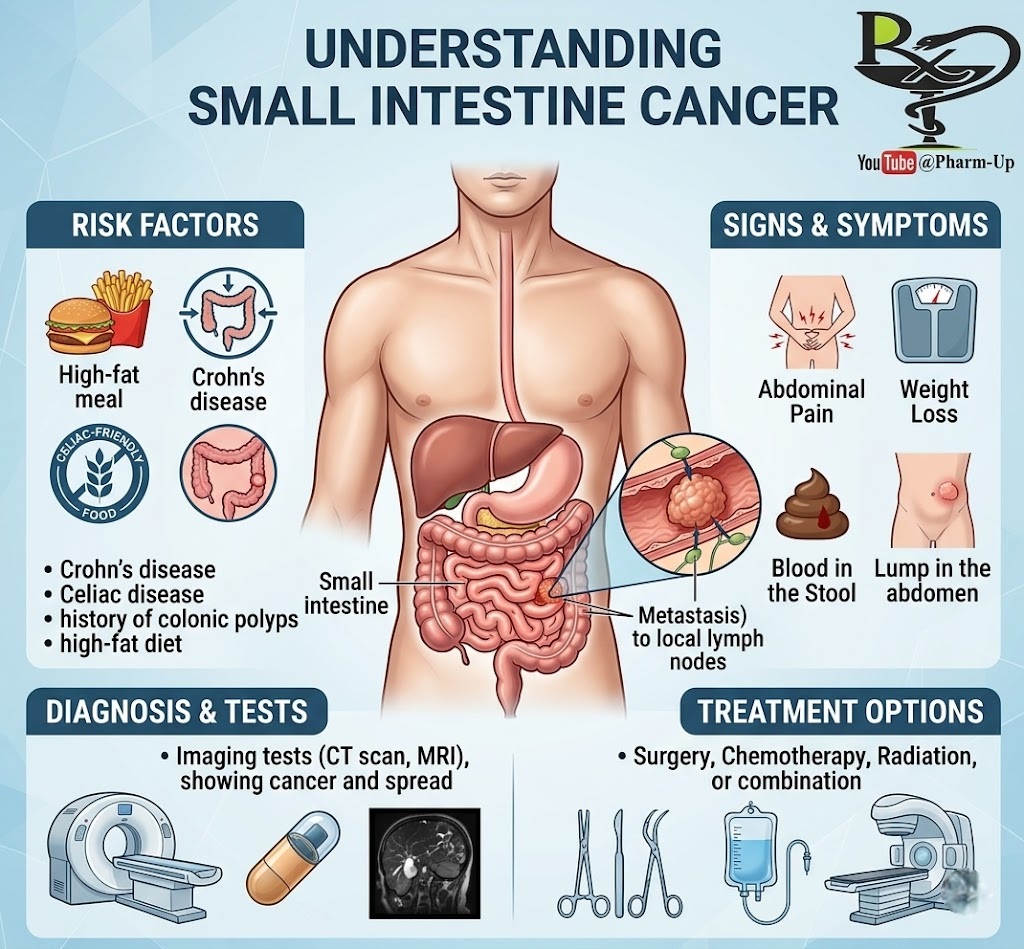
The small intestine is a critical component of the digestive system, acting as a long, winding tube that connects the stomach to the large intestine. Its primary job is to absorb nutrients from the food you eat. While cancer of the small intestine is relatively rare compared to other digestive cancers, understanding the risk factors and warning signs is essential for early detection.
Small and large intestine
Risk Factors
Certain health conditions and lifestyle choices can increase the likelihood of developing small intestine cancer:
- Pre-existing Conditions: Having Crohn’s disease, celiac disease, or a history of colonic polyps.
- Diet: Consuming a diet consistently high in fats.
- Genetics: A family history of gastrointestinal cancers can also play a role.
Recognizing the Signs
Symptoms can be vague and are often mistaken for other digestive issues. Key warning signs include:
- Persistent Abdominal Pain: Cramping or pain in the mid-section.
- Unexplained Weight Loss: Dropping weight without changes to diet or exercise.
- Blood in the Stool: This may appear dark or tarry.
- Physical Changes: A noticeable lump or mass in the abdomen.
Diagnosis and Management
Diagnosis: Because the small intestine is long and folded, doctors use advanced imaging tests (such as CT scans, MRIs, or specialized endoscopies) to create detailed pictures of the area. these tests help determine the size of a tumor and if the cancer has metastasized (spread).
Treatment Options:
- Surgery: The most frequent treatment involves removing the cancerous section of the intestine.
- Chemotherapy: Using specialized drugs to kill remaining cancer cells.
- Radiation Therapy: Targeting the tumor with high-energy beams.
- Combination Therapy: Using two or more of these methods to ensure the best outcome.
About the Author


 Pharm'Up