Pharm'Up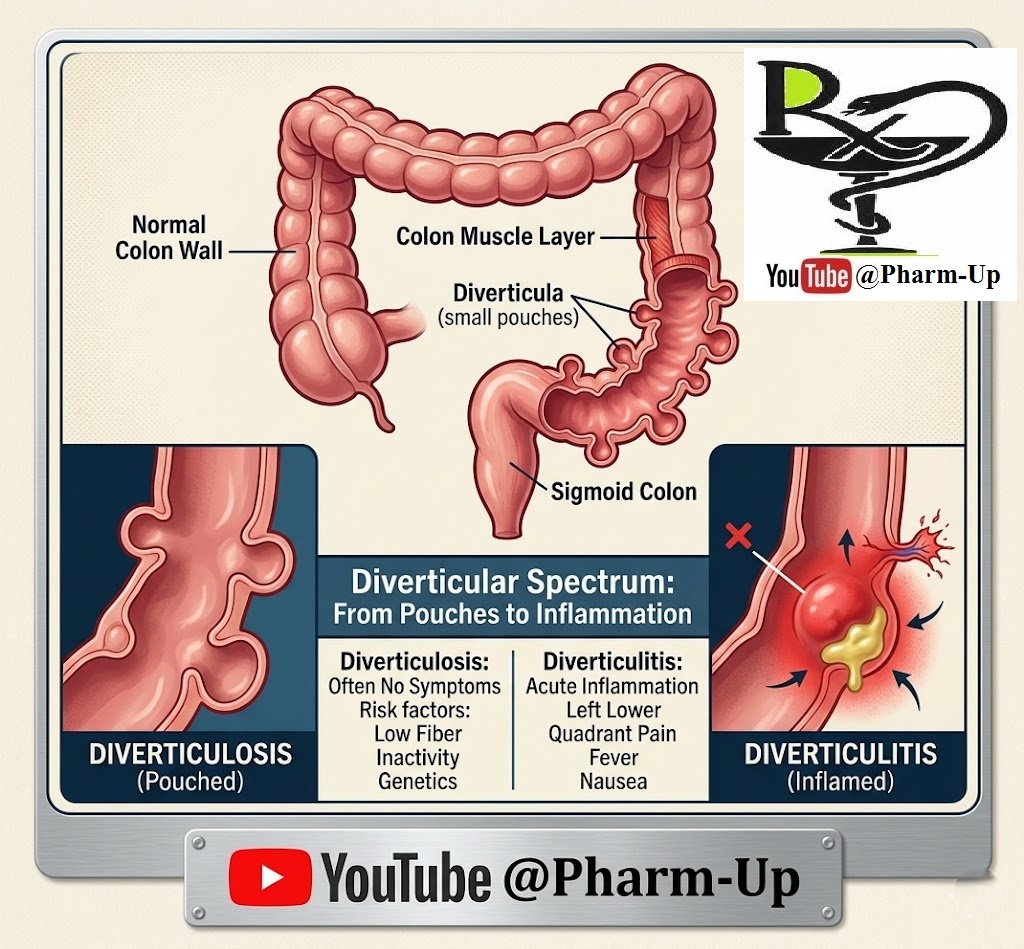
Diverticular conditions involve the development of small pouches in the colon wall, a common occurrence as people age. While many individuals live with these pouches without issue, they can sometimes lead to inflammation or other health complications.
Defining the Conditions
- Diverticulosis: This is the presence of small, bulging pouches called diverticula, typically found in the lower part of the colon. Most people with diverticulosis do not experience symptoms.
- Diverticulitis: This occurs when one or more of these pouches become inflamed or infected. It often manifests suddenly and can lead to serious health issues.
- Diverticular Disease: A broader term used when these pouches cause chronic symptoms, diverticulitis, or complications like bleeding.
Symptoms and Warning Signs
While diverticulosis is often asymptomatic, some may experience chronic bloating, constipation, or abdominal cramping. Diverticulitis, however, presents with more acute symptoms:
- Severe abdominal pain (usually on the lower left side)
- Fever and chills
- Nausea or vomiting
- Sudden changes in bowel habits
Causes and Risk Factors
The exact cause is still under research, but several factors are known to increase risk:
- Lifestyle: Diets low in fiber and high in red meat, physical inactivity, and smoking.
- Physical Factors: Obesity and changes in the gut microbiome.
- Medications: Regular use of NSAIDs (nonsteroidal anti-inflammatory drugs) and steroids.
- Genetics: Certain genes may predispose individuals to the condition.
Diagnosis and Treatment
Diagnosis typically involves a review of medical history, physical exams, and tests such as blood work, CT scans, or colonoscopies.
Treatment varies by severity:
- For Diverticulosis: High-fiber diets, probiotics, and monitoring.
- For Diverticulitis: Antibiotics, a temporary clear liquid diet to rest the colon, and pain management (usually acetaminophen). Severe cases or complications may require hospitalization or surgery.
Prevention Tips
To reduce the risk of developing diverticulitis, healthcare providers recommend maintaining a healthy weight, staying physically active, quitting smoking, and consuming a high-fiber diet.
About the Author