Fermented Stevia Extract Exhibits Potent Anti-Tumor Effects Against Pancreatic Cancer Cells
 Pharm'Up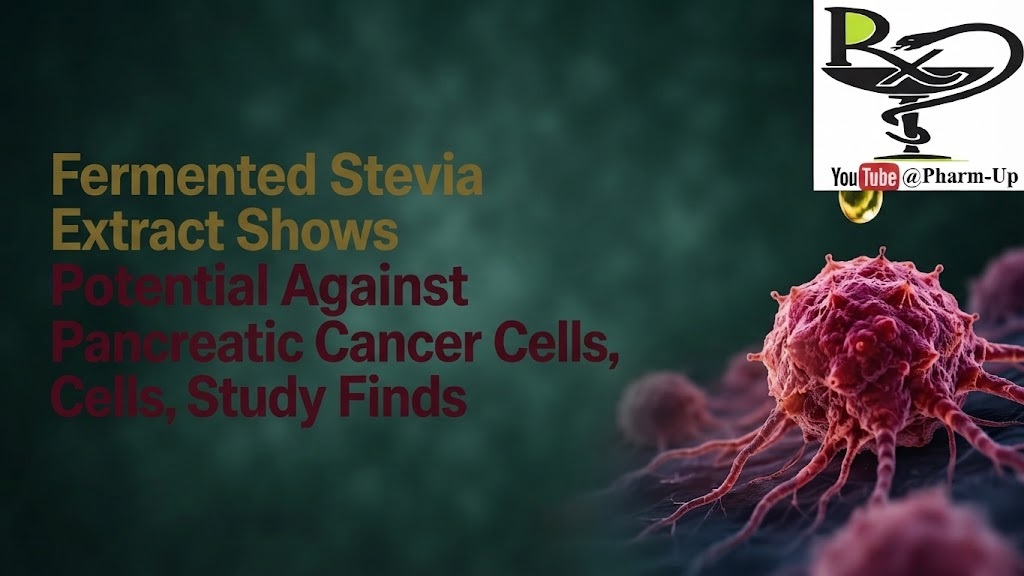
Recent scientific investigations have opened promising new avenues in oncology and natural-product research. A study conducted by a research team from Hiroshima University has revealed that stevia leaf extract (Stevia rebaudiana Bertoni), when subjected to microbial fermentation, exhibits significantly enhanced anticancer activity against aggressive human pancreatic cancer cells. Published in the International Journal of Molecular Sciences, the study explores how biological transformation via specific bacterial strains can alter plant extracts to yield potent bioactive compounds.
Exploring the Role of Microbial Fermentation
Pancreatic cancer remains one of the most formidable malignant diseases in modern medicine, largely due to its aggressive nature, limited therapeutic options, and tendency to be diagnosed at advanced stages. To identify novel plant-derived therapeutic leads, researchers investigated whether modifying the chemical profile of stevia leaf extract through fermentation could improve its biological efficacy.
The team utilized Lactobacillus plantarum SN13T—a bacterial strain originally isolated from banana leaves—as a biological transformation system. Following systematic evaluations of various environmental parameters, the researchers determined that anaerobic fermentation at 37 °C for 72 hours provided the optimal conditions for generating an extract with heightened anti-tumor properties.
Comparative Cytotoxicity and Cellular Impact
To evaluate efficacy, the researchers compared fermented stevia leaf extract (FSLE) against unfermented stevia leaf extract (SLE) using PANC-1 human pancreatic cancer cells, alongside HEK-293 cells as a non-cancerous control model.
- Enhanced Potency: While both extracts reduced cancer cell viability, the fermented preparation displayed superior cytotoxic activity, yielding a lower 48-hour half-maximal inhibitory concentration (IC50) value of 271.2 μg/mL compared to 331.3 μg/mL for the unfermented extract.
- Favorable Safety Profile: Notably, the fermented extract demonstrated limited toxicity toward the non-cancerous HEK-293 cell line, highlighting a selective impact on malignant cells.
- Morphological Alterations: Treatment induced visible signs of cellular distress, including reduced cell counts, weakened cell adhesion, and pronounced cellular rounding and shrinkage.
Identification of Chlorogenic Acid Methyl Ester (CAME)
Advanced analytical techniques—including High-Performance Liquid Chromatography (HPLC), proton and carbon nuclear magnetic resonance (1H−NMR and 13C−NMR), and electrospray ionization mass spectrometry (ESI−MS)—revealed the formation of a key active compound: chlorogenic acid methyl ester (CAME).
While undetectable in raw, unfermented stevia extract, CAME was present at a concentration of approximately 374.4 μg/mL in the fermented preparation. Subsequent standalone experiments isolating CAME demonstrated that the compound directly inhibited PANC-1 cell proliferation, suppressed colony-forming capabilities, hindered cell migration, and impaired wound-healing behaviors. Furthermore, flow cytometry analyses confirmed that CAME triggered cell-cycle arrest at the G0/G1 phase and actively promoted apoptotic cell death.
Modulation of Apoptotic Pathways and Antioxidant Capacity
At the molecular level, CAME treatment influenced mitochondrial-associated apoptotic pathways. The study noted marked upregulation of several pro-apoptotic genes and markers, including:
- Bax
- Bad
- Caspase-3
- Caspase-9
- Cytochrome c
- E-cadherin
Concurrently, the expression of the anti-apoptotic gene Bcl-2 was significantly reduced. Beyond its anticancer properties, the fermented extract also demonstrated superior performance in 2,2-diphenyl-1-picrylhydrazyl (DPPH) and 2,2′-azino-bis(3-ethylbenzothiazoline-6-sulfonic acid) (ABTS) radical-scavenging assays, as well as protecting cells against hydrogen peroxide-induced oxidative stress.
Preclinical Nature and Future Outlook
While these laboratory findings offer valuable insights into microbial biotransformation and cancer cell inhibition, experts emphasize that the research remains strictly preclinical. The observed cytotoxic effects in cultured PANC-1 cell lines do not imply that dietary consumption of stevia sweeteners can prevent or treat pancreatic cancer in humans.
Nevertheless, extending this line of inquiry into advanced animal models, such as recent 2026 investigations utilizing pancreatic tumor xenograft mouse models, paves the way for deeper pharmacokinetic, safety, and eventual clinical evaluations. This approach underscores the vast, untapped potential of combining microbiology with botanical research to discover novel therapeutic agents.
About the Author