Pfizer TUKYSA Receives FDA Approval for HER2+ Breast Cancer Maintenance Treatment
 Pharm'Up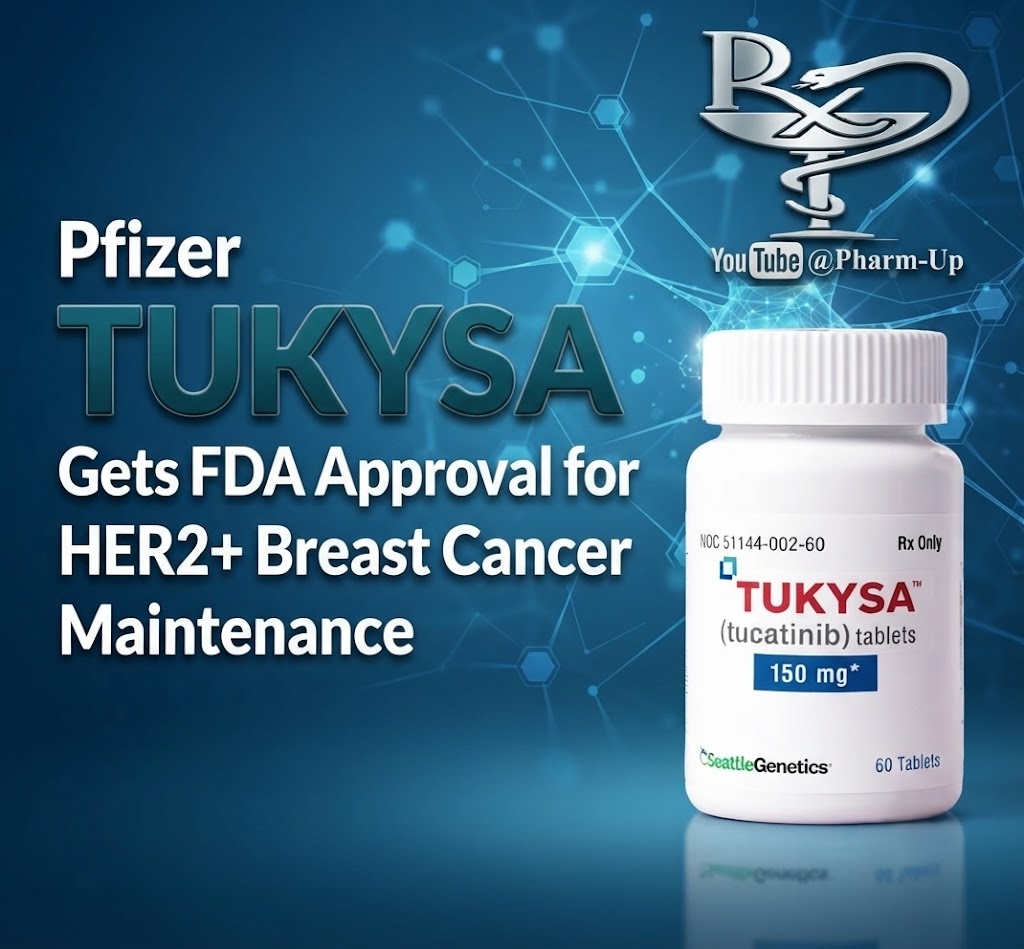
The U.S. Food and Drug Administration (FDA) has approved TUKYSA (tucatinib) in combination with trastuzumab and pertuzumab as a maintenance therapy for adult patients with unresectable locally advanced or metastatic HER2-positive breast cancer following induction treatment. This approval establishes a new chemotherapy-free maintenance option that allows eligible patients to delay disease progression without continuing taxane chemotherapy.
Key Clinical Trial Results (HER2CLIMB-05)
The approval is backed by data from the Phase III HER2CLIMB-05 trial, which enrolled 654 patients who completed four to eight cycles of induction therapy without disease progression. Key findings include:
- Progression-Free Survival (PFS): Patients treated with TUKYSA, trastuzumab, and pertuzumab achieved a median PFS of 24.9 months, compared to 16.3 months in the placebo combination group—marking an 8.6-month improvement.
- Risk Reduction: The regimen reduced the risk of disease progression or death by 35.9%, with a hazard ratio of 0.64 and a p-value of less than 0.0001.
Mechanism of Action & Safety Profile
- Mechanism: TUKYSA is an oral tyrosine kinase inhibitor targeting HER2, while trastuzumab and pertuzumab are HER2-targeting monoclonal antibodies, working together across multiple pathways to inhibit tumor growth.
- Safety & Warnings: The safety profile aligned generally with TUKYSA’s established data, though increased liver toxicity was observed. The FDA prescribing information includes a boxed warning for severe and potentially fatal hepatotoxicity, requiring liver function monitoring before and during treatment. Common adverse reactions include diarrhea, musculoskeletal pain, nausea, fatigue, rash, vomiting, and hepatotoxicity.
About the Author