Pharm'Up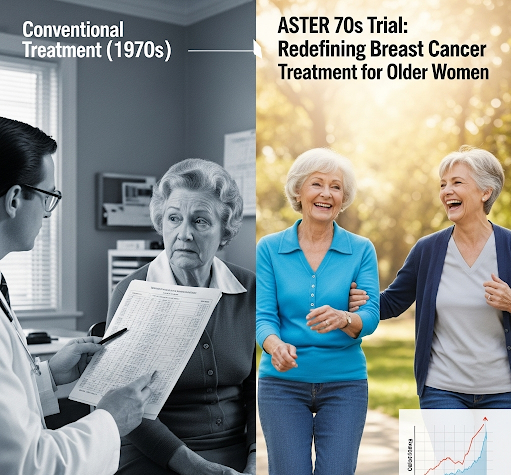
The ASTER 70s trial, a phase 3 study published in The Lancet, has provided crucial new evidence challenging the routine use of adjuvant chemotherapy in older women with high-risk, hormone receptor (HR)-positive, HER2-negative breast cancer. The findings suggest that chemotherapy offers no statistically significant survival benefit in this population, while causing substantial and potentially life-threatening toxicity. This study is particularly impactful as it focuses on a demographic often underrepresented in clinical trials, where treatment decisions have historically been based on data from younger cohorts.
Study Design and Patient Population
The trial enrolled over 1,000 women aged 70 or older who had newly diagnosed early breast cancer or an isolated recurrence of HR-positive, HER2-negative disease. All participants’ tumors were assessed using the Genomic Grade Index (GGI), an 8-gene test to determine risk. Patients with high-risk disease were then randomized into two groups: one receiving adjuvant chemotherapy followed by endocrine therapy, and the other receiving endocrine therapy alone. The median age of participants was 75, with about 40% having a G8 frailty score of 14 or less, indicating common health issues.
Key Findings on Survival and Toxicity
After a median follow-up of 7.8 years, the results showed no statistically significant survival advantage for the chemotherapy group. At 4 years, the overall survival (OS) was 90.5% in the chemotherapy-endocrine group versus 89.3% in the endocrine-only group. By 8 years, the OS was 72.7% versus 68.3%. The hazard ratio was 0.83, with a 95% confidence interval of 0.63–1.11, and a p-value of 0.21, failing to meet statistical significance.
Conversely, the trial found a stark difference in adverse effects. Severe adverse events were reported in 34% of patients receiving chemotherapy, compared to just 9% of those on endocrine therapy alone. The text highlights that treatment-related deaths occurred exclusively in the chemotherapy group, none in the endocrine-only group. This is a critical finding, given that older patients face a higher risk of mortality from non-cancer health issues, making the tolerability of treatment a major concern.
Implications for Clinical Practice
The ASTER 70s trial’s results challenge the traditional, one-size-fits-all approach to breast cancer treatment. They emphasize the need to prioritize quality of life and weigh the risk of toxicity against the potential for only modest, or nonexistent, survival gains. The study supports the use of genomic risk assessment to guide treatment decisions, moving towards more personalized care plans for older adults.
Study Limitations
Despite its significant contributions, the study has several limitations. The use of a non-commercial genomic assay (GGI) may limit the direct applicability of the findings for providers who more commonly use commercial tests like Oncotype DX and MammaPrint. Additionally, competing mortality in this older population may have diluted the trial’s ability to detect smaller benefits from chemotherapy. Finally, the trial was underpowered to perform detailed subgroup analyses based on factors like frailty, age, or comorbidities, leaving some uncertainty about whether specific subsets of older patients could still benefit from chemotherapy.
The Evolving Role of Healthcare Professionals
This research highlights the growing importance of a multidisciplinary approach to geriatric oncology. Pharmacists, in particular, play a key role in helping both patients and providers navigate complex treatment decisions, balancing the potential for efficacy with the high risks of toxicity in this vulnerable population. The trial serves as a powerful reminder that “more is not always better,” and that patient-centered care, guided by robust evidence, is paramount.
About the Author