Pharm'Up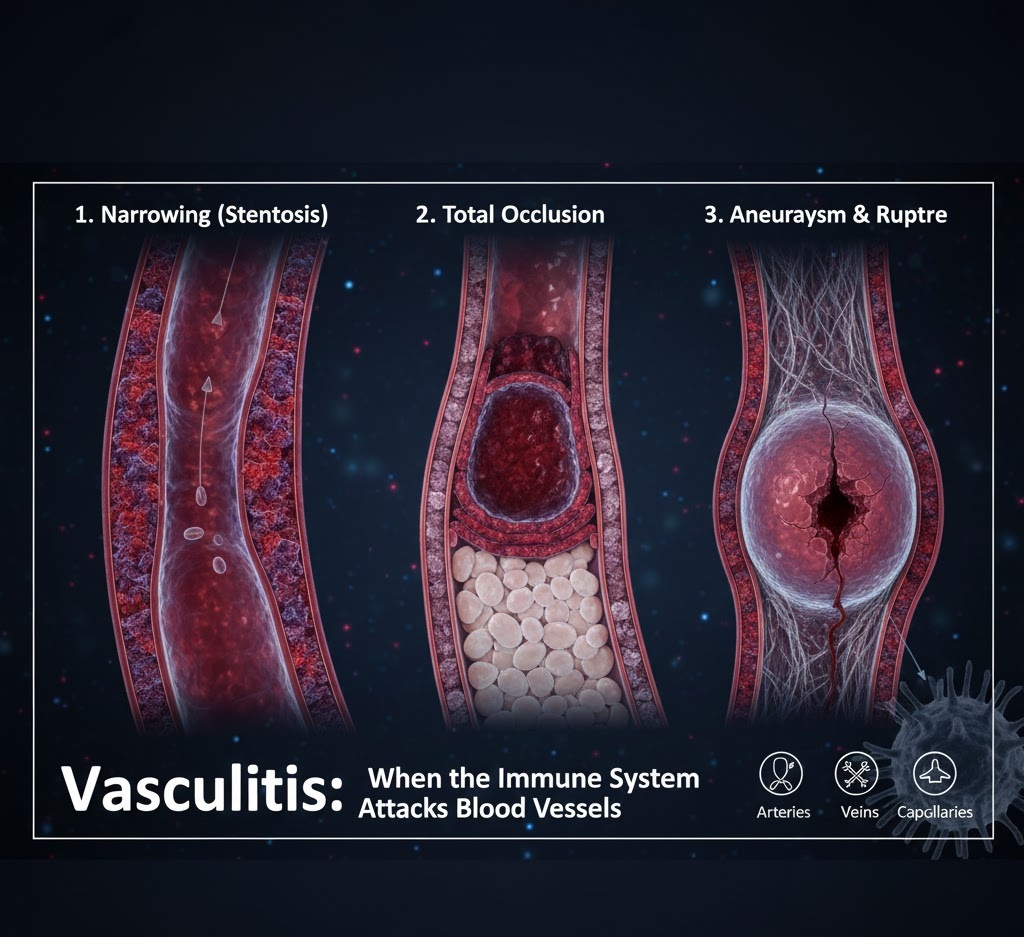
Vasculitis is a complex condition defined by the inflammation of blood vessels. It represents a malfunction of the body’s defense mechanism, where the immune system—designed to protect against pathogens—mistakenly targets the structural integrity of the circulatory system. This inflammation can be triggered by an infection, a reaction to medication, or a secondary disease, though in many clinical cases, the primary cause remains idiopathic (unknown).
The Anatomy of the Attack
Vasculitis can affect any segment of the body’s “transportation highway.” Depending on which vessels are targeted, the severity and symptoms can vary significantly:
- Arteries: Large, muscular vessels that carry oxygenated blood away from the heart to vital organs.
- Veins: Flexible vessels that return deoxygenated blood back to the heart.
- Capillaries: The smallest, microscopic vessels where the actual exchange of oxygen and nutrients occurs at the cellular level.
Structural Consequences of Inflammation
When the walls of a blood vessel become inflamed, the physical architecture of the vessel changes, leading to three dangerous scenarios:
1. Vascular Narrowing (Stenosis)
Inflammation causes the vessel walls to thicken and swell inward. This reduces the internal diameter, making it increasingly difficult for blood to reach the tissues it serves.
2. Total Occlusion
In severe cases, the vessel may swell shut or a clot may form at the site of inflammation, completely blocking blood flow. This can lead to tissue death (infarction) in the organs dependent on that vessel.
3. Aneurysm and Rupture
The inflammatory process can eat away at the vessel wall, causing it to stretch and thin. This creates a weak, bulging spot known as an aneurysm. If the pressure becomes too great, the aneurysm can burst, resulting in catastrophic internal bleeding.
Clinical Presentation and Symptoms
Because vasculitis can strike anywhere—from the skin to the brain—the symptoms are often broad and “flu-like” in the early stages. Common warning signs include:
- Systemic Distress: Persistent fever, fatigue, and a general feeling of being unwell.
- Localized Swelling: Visible inflammation or lumps depending on the depth of the affected vessels.
- Organ-Specific Signs: Such as rashes (skin), shortness of breath (lungs), or numbness (nerves).
Treatment and Management
The medical priority in treating vasculitis is to dampen the immune response to prevent permanent organ damage.
- Anti-Inflammatory Steroids: (e.g., Prednisone) are often the first line of defense to quickly reduce vessel swelling.
- Immunosuppressive Therapy: Medications that “quiet” the immune system to stop it from attacking the blood vessels.
- Monitoring: Long-term follow-ups are essential to ensure the inflammation has subsided and the vessels are regaining their structural integrity.
About the Author


 Pharm'Up