Pharm'Up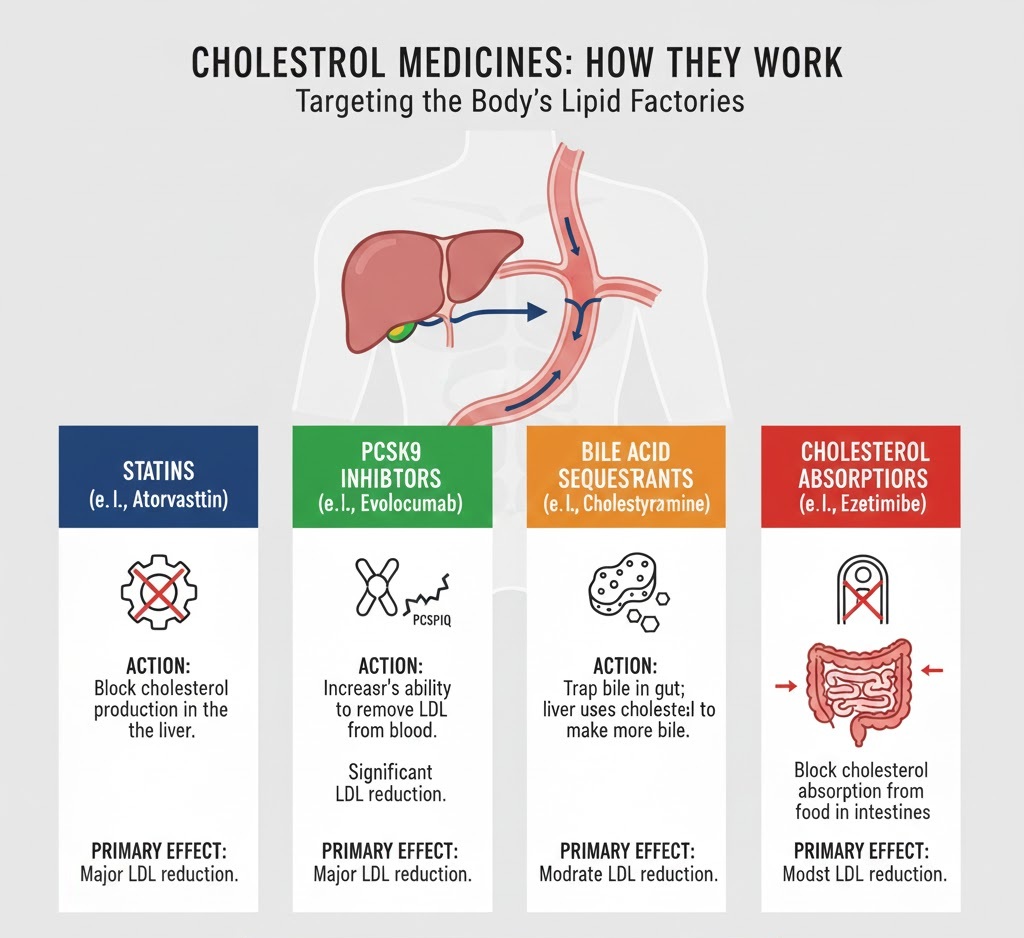
When lifestyle adjustments are not enough to manage high cholesterol, medications become a vital tool in preventing cardiovascular events. These drugs work through various biological mechanisms, primarily targeting the liver and the digestive system to optimize your lipid profile.
1. Who Requires Cholesterol Medication?
Doctors typically follow specific clinical guidelines to determine if medication is necessary. You may be a candidate if:
- High Cardiovascular Risk: You have a history of heart attack, stroke, or peripheral arterial disease.
- Severe LDL Elevation: Your “bad” cholesterol is $\ge$ 190 mg/dL.
- Diabetes: You are aged 40–75 with an LDL level $\ge$ 70 mg/dL.
- Genetic Predisposition: You have Familial Hypercholesterolemia (FH), a condition where high cholesterol is inherited.
2. Types of Cholesterol-Lowering Drugs
Statins (HMG-CoA Reductase Inhibitors)
Statins are the “gold standard” and most prescribed class. They block the enzyme in the liver responsible for creating cholesterol.
- Action: Lowers LDL and reduces inflammation in the arteries.
- Examples: Atorvastatin, Rosuvastatin, Simvastatin.
PCSK9 Inhibitors
These are newer, injectable medications often used when statins aren’t sufficient or for patients with FH.
- Action: They block the PCSK9 protein, allowing the liver to have more “receptors” to clear LDL from the blood.
Bile Acid Sequestrants
These act like a “sponge” in the digestive tract.
- Action: They bind to bile acids (which contain cholesterol) so they are excreted. The liver then has to pull more cholesterol from the blood to replace the lost bile.
Cholesterol Absorption Inhibitors
- Action: These specifically block the small intestine from absorbing cholesterol from the food you eat.
- Example: Ezetimibe.
Fibrates and Niacin
- Action: Fibrates are primarily used to lower triglycerides. Niacin (a B vitamin) can lower LDL and triglycerides while raising “good” HDL, though it must be used under strict medical supervision due to side effects.
3. How Doctors Choose Your Medicine
Your healthcare provider will tailor your prescription based on:
- Your Lipid Profile: The specific levels of LDL, HDL, and Triglycerides.
- Age and Overall Health: Conditions like kidney or liver disease can affect which drug is safest.
- Side Effect Profile: Higher doses of statins may cause muscle aches in some patients, requiring a change in dosage or drug class.
4. Summary Table of Actions
| Medication Class | Primary Target | Main Benefit |
| Statins | Liver Production | Major drop in LDL |
| PCSK9 Inhibitors | Blood Clearance | Significant drop in LDL |
| Fibrates | Fat Metabolism | Major drop in Triglycerides |
| Sequestrants | Digestive System | Moderate drop in LDL |
About the Author


 Pharm'Up