Pharm'Up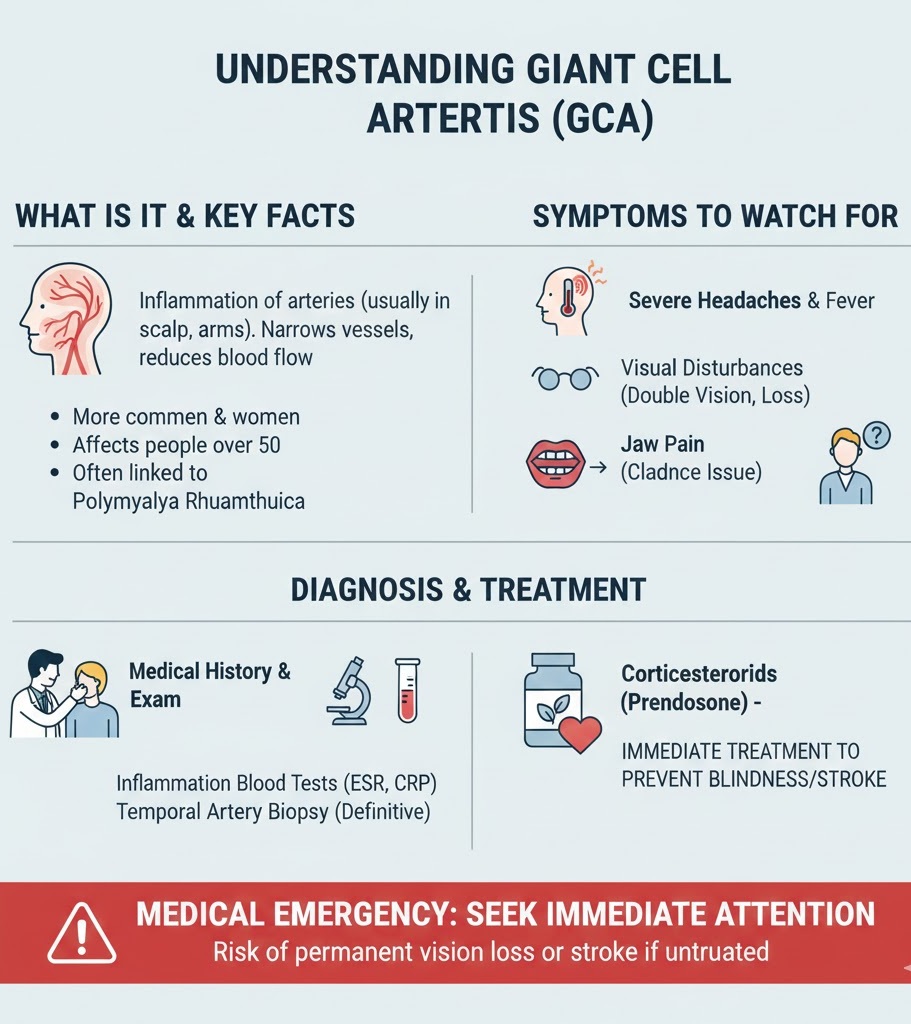
Giant cell arteritis (GCA), also known as temporal arteritis, is a serious condition characterized by the inflammation of the lining of your arteries. It most commonly affects the arteries in the head, particularly those in the temples. When these vessels become inflamed, they narrow, significantly restricting blood flow to vital areas like the eyes and brain.
Key Facts and Risk Factors
- Demographics: It almost exclusively affects adults over the age of 50 and is more common in women than in men.
- Related Conditions: GCA is frequently linked to polymyalgia rheumatica (PMR), a disorder that causes muscle pain and stiffness in the shoulders and hips.
- Risk: If left untreated, the restricted blood flow can lead to permanent blindness or a stroke.
Symptoms to Watch For
While early signs can mimic the flu (fever, fatigue, and weight loss), specific symptoms often include:
- Severe Headaches: Typically focused around the temples.
- Scalp Tenderness: Pain when brushing hair or wearing glasses.
- Visual Disturbances: Double vision, blurring, or sudden vision loss in one eye.
- Jaw Claudication: Pain in the jaw or tongue, especially when eating or talking.
- Balance Issues: Dizziness or problems with coordination.
Diagnosis and Treatment
Because there is no single “GCA test,” doctors rely on a combination of methods:
- Medical History & Exam: Checking for tenderness in the temporal arteries.
- Inflammation Tests: Blood tests like ESR (sedimentation rate) or CRP (C-reactive protein).
- Biopsy: A small sample of the temporal artery is often taken to look for “giant cells” under a microscope.
Treatment: The primary treatment is high-dose corticosteroids (such as prednisone). Treatment usually begins immediately—often before a biopsy is even performed—to prevent vision loss. Most people need to stay on medication for one to two years, tapering the dose slowly under a doctor’s supervision.
About the Author