Pharm'Up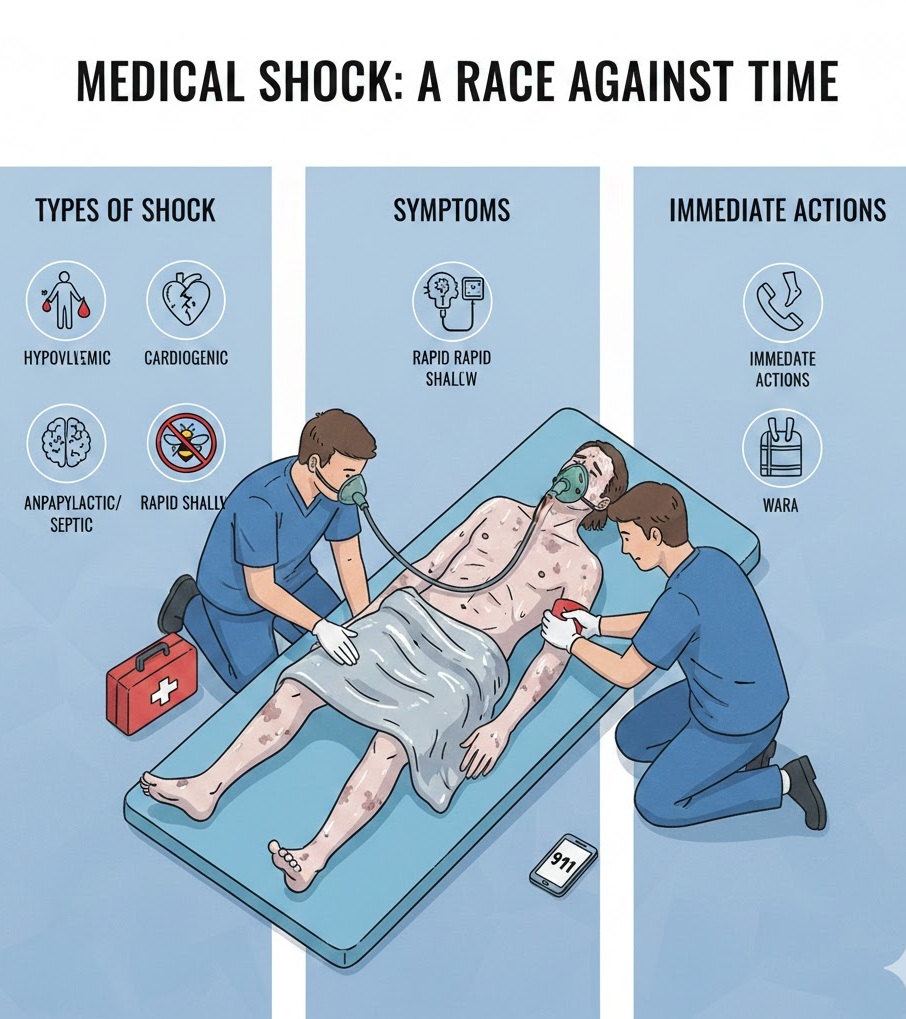
Shock is a critical, life-threatening condition that occurs when the body’s circulatory system fails to provide enough oxygenated blood to vital organs and tissues. Without immediate treatment, this lack of perfusion can lead to permanent organ damage or death.
1. Major Types of Shock
Shock is categorized based on the underlying cause of the circulatory failure.
Hypovolemic Shock
This occurs when the total volume of liquid in the blood vessels drops significantly.
- Causes: Traumatic bleeding (internal or external), severe dehydration, major burns, or excessive vomiting and diarrhea.
- Mechanism: There isn’t enough “fluid” for the heart to pump.
Cardiogenic Shock
This happens when the heart muscle is damaged and cannot pump blood effectively despite having enough blood volume.
- Causes: Heart attack (myocardial infarction), heart failure, or arrhythmias.
- Mechanism: The “pump” is broken.
Distributive Shock
In this type, the blood volume is normal, but the blood vessels dilate (widen) excessively, causing blood pressure to plummet.
- Septic Shock: Triggered by an overwhelming immune response to an infection in the bloodstream.
- Anaphylactic Shock: A severe allergic reaction (e.g., to bee stings, nuts, or medication) that causes airway swelling and vessel dilation.
- Neurogenic Shock: Caused by damage to the central nervous system or spinal cord, disrupting the signals that tell blood vessels to maintain tone.
2. Recognizing the Symptoms
The body’s “fight or flight” response kicks in to protect the brain, leading to a specific set of physical signs:
- Mental State: Confusion, anxiety, or complete loss of consciousness.
- Circulation: A very weak but rapid pulse; sudden drop in blood pressure.
- Skin: Pale, cool, and clammy skin; sometimes “mottled” (blotchy) appearance.
- Respiration: Rapid, shallow breathing as the body struggles for oxygen.
- Output: Decreased or absent urine production as the kidneys begin to fail.
3. Immediate Emergency Actions
Shock is a medical emergency. If you suspect someone is in shock, take the following steps immediately:
- Call Emergency Services: Alert professionals right away.
- Positioning: Lay the person flat on their back. If there is no suspected head, neck, or leg injury, slightly elevate the legs to encourage blood flow to the heart and brain.
- Temperature Control: Keep the person warm with a blanket to prevent hypothermia, which worsens shock.
- No Ingestion: Do not give the person anything to eat or drink, as this can cause choking or interfere with emergency surgery.
- Loosen Clothing: Ensure their airway is clear and loosen restrictive clothing around the neck or waist.
4. Hospital Treatment Approaches
Treatment depends entirely on the type of shock diagnosed by doctors:
- Hypovolemic: Intravenous (IV) fluids and blood transfusions.
- Septic: Antibiotics and vasopressors (medications to tighten blood vessels).
- Anaphylactic: Epinephrine (EpiPen) and antihistamines.
- Cardiogenic: Oxygen, heart medications, or emergency surgery (like a stent).
About the Author


 Pharm'Up