Pharm'Up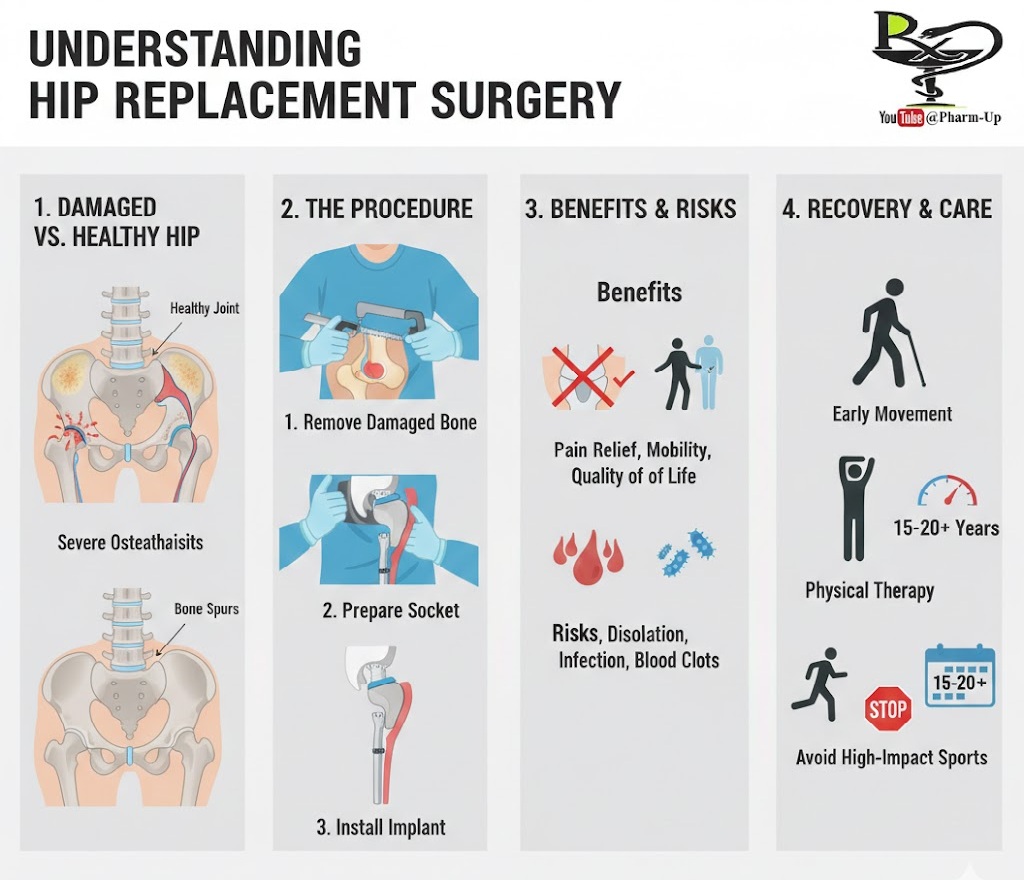
Hip replacement surgery, also known as hip arthroplasty, is a transformative procedure designed to replace a severely damaged hip joint with an artificial implant (prosthesis). This surgery is typically reserved for individuals whose joint pain significantly impairs their quality of life and has not responded to conservative treatments like medication or physical therapy.
1. The Primary Cause: Osteoarthritis
While various conditions can necessitate a hip replacement, Osteoarthritis is the leading cause.
- It is a “wear-and-tear” condition where the protective cartilage that cushions the hip bones wears away.
- As the bones rub together, it creates bone spurs, chronic inflammation, and debilitating pain.
- This often results in a limited range of motion, making simple tasks like putting on socks or getting out of a car difficult.
2. The Surgical Procedure
During the operation, a surgeon performs three main steps to “rebuild” the joint:
- Removal: The damaged femoral head (the “ball” of the thigh bone) and the damaged surface of the acetabulum (the “socket” in the pelvis) are removed.
- Preparation: The bone surfaces are cleaned and shaped to fit the new components.
- Installation: A metal or ceramic ball is attached to a stem inserted into the femur, and a durable plastic, metal, or ceramic socket is placed into the pelvis.
3. Goals and Expected Outcomes
The primary objective of hip replacement is to restore function. Most patients experience:
- Significant Pain Relief: The elimination of bone-on-bone friction usually removes the primary source of chronic pain.
- Restored Mobility: Patients can often return to walking, swimming, and cycling with ease.
- Improved Alignment: Surgery can help correct leg-length discrepancies caused by joint collapse.
4. Risks and Post-Operative Precautions
As with any major surgery, there are risks involved that require careful management:
- Dislocation: Since the artificial ball is smaller than the original, it can pop out of the socket if the leg is twisted in certain ways.
- Blood Clots: Reduced mobility after surgery increases the risk of Deep Vein Thrombosis (DVT).
- Infection: Surgeons take extreme precautions, but infection at the site of the prosthesis is a serious complication.
- Activity Restrictions: To protect the new joint, patients are often advised to avoid high-impact activities like jogging, jumping, or contact sports.
5. Recovery and Long-Term Care
Success depends largely on post-surgical rehabilitation.
- Early Movement: Most patients are encouraged to stand and walk with assistance within 24 hours of surgery.
- Physical Therapy: Strengthening the muscles around the hip is vital to keep the new joint stable.
- Longevity: Modern hip implants are highly durable, often lasting 15 to 20 years or more with proper care.
About the Author