Pharm'Up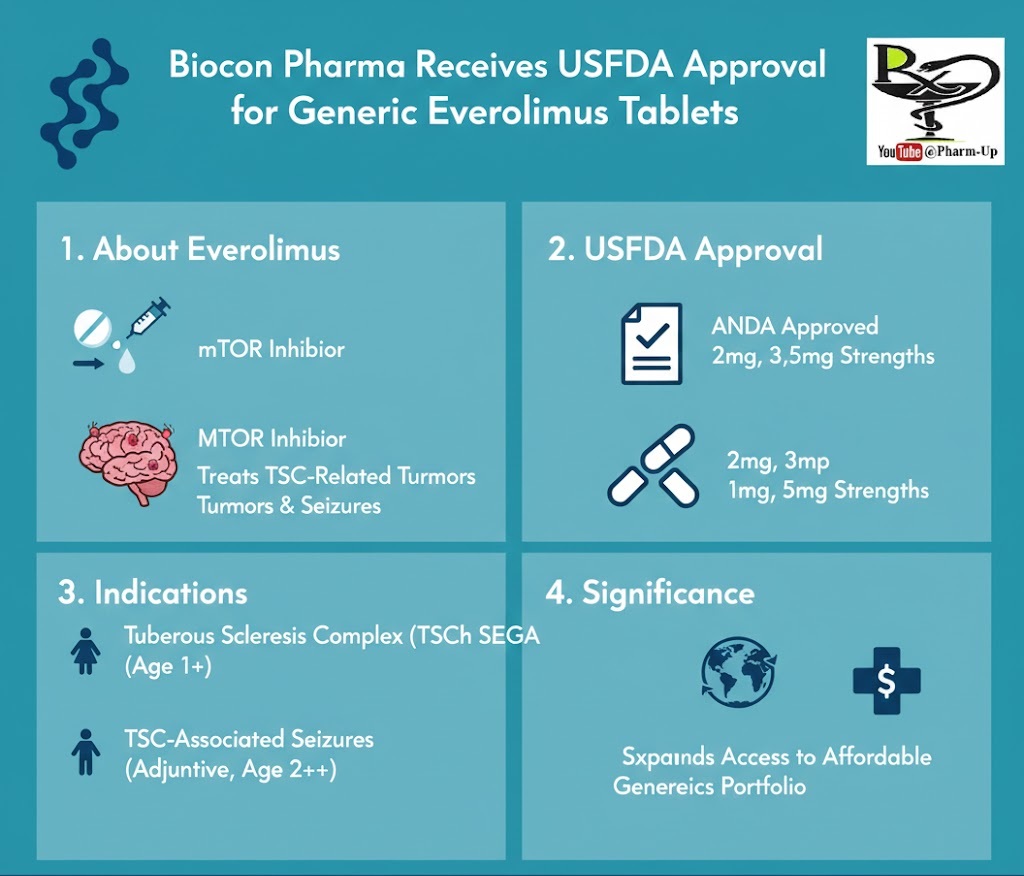
Biocon Pharma Limited, a wholly owned subsidiary of Biocon Limited, has reached a significant regulatory milestone with the U.S. Food and Drug Administration (USFDA) granting approval for its Abbreviated New Drug Application (ANDA) for Everolimus Tablets for Oral Suspension. This approval covers the 2 mg, 3 mg, and 5 mg dosage strengths.
1. Targeted Treatment for Rare Genetic Conditions
Everolimus is a complex generic medication indicated for patients with Tuberous Sclerosis Complex (TSC)—a rare genetic disorder that causes non-cancerous tumors to grow in various parts of the body. Specifically, the approval includes:
- SEGA Treatment: For adult and pediatric patients (1 year and older) diagnosed with TSC who have Subependymal Giant Cell Astrocytoma (a type of brain tumor) that requires medical intervention but cannot be surgically removed.
- Seizure Management: As an adjunctive (add-on) therapy for adult and pediatric patients (2 years and older) experiencing TSC-associated partial-onset seizures.
2. Strategic Importance for Biocon
This approval reinforces Biocon’s position in the high-value complex generics and specialty pharmaceutical segment.
- Portfolio Strength: It bolsters Biocon’s vertically integrated drug product offerings in the United States.
- Patient Access: By providing a generic version of a specialized medication, Biocon aims to expand access to more affordable treatment options for rare and chronic neurological conditions.
3. Understanding the Formulation
Unlike standard tablets, these Tablets for Oral Suspension are designed to be dissolved in water before administration. This is particularly important for pediatric patients or those who have difficulty swallowing whole pills.
- Mechanism of Action: Everolimus works as an mTOR inhibitor, blocking a protein that helps tumor cells grow and multiply, thereby shrinking tumors and reducing seizure frequency.
4. Safety and Monitoring
Due to the complexity of the drug, treatment typically involves:
- Dose Titration: Doctors determine the dose based on the patient’s body surface area and individual response.
- Regular Testing: Patients require ongoing monitoring for potential side effects, including mouth sores, increased risk of infection, and changes in kidney function or blood sugar levels.
About the Author