Pharm'Up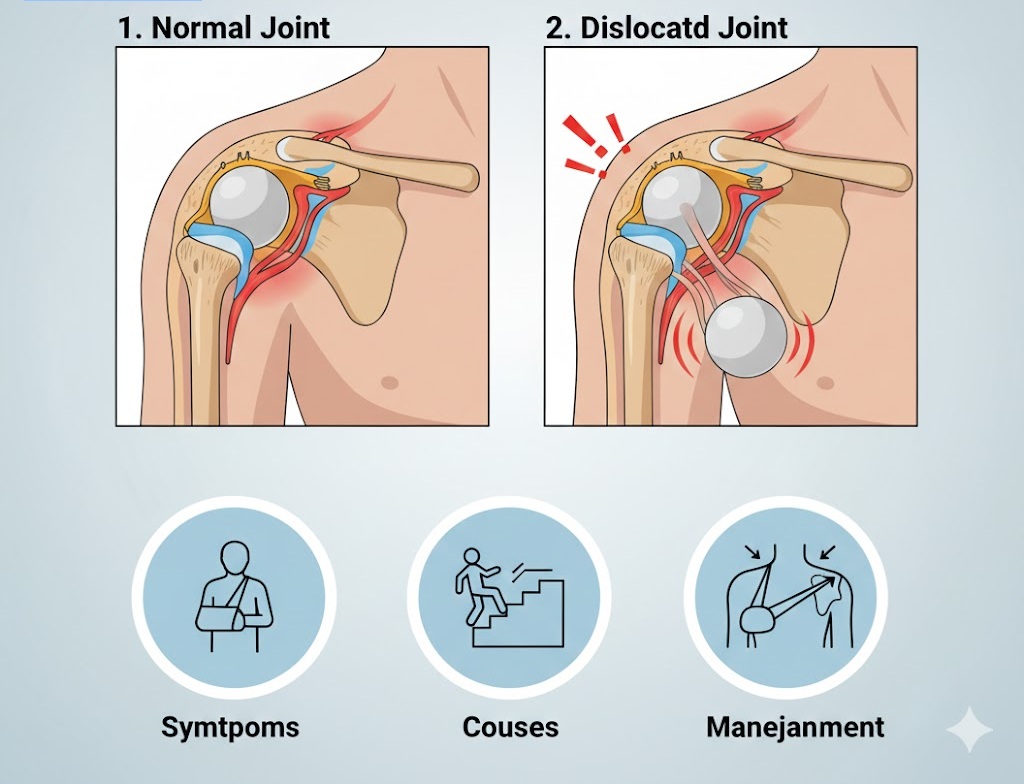
A shoulder dislocation occurs when the ball-shaped top of the upper arm bone (humerus) pops out of the cuplike socket of the shoulder blade (scapula). Because the shoulder is the most mobile joint in the human body, it is also the one most prone to this type of injury.
1. Types and Causes
Dislocations are classified based on the severity of the displacement:
- Partial Dislocation (Subluxation): The ball is only partially out of the socket.
- Full Dislocation: The ball is completely out of the socket.
Common Causes include:
- Physical Trauma: Sports injuries and traffic accidents.
- Falls: Landing directly on the shoulder or an outstretched arm.
- Muscle Contractions: Violent contractions from seizures or electric shocks can pull the bone out of place.
2. Symptoms and Risk Factors
A dislocated shoulder is typically obvious and requires immediate medical attention. Symptoms include:
- Deformity: The arm or shoulder visibly looks out of place.
- Intense Pain: Often accompanied by muscle spasms.
- Neurological Signs: Numbness or weakness in the arm, neck, or fingers.
- Physical Signs: Swelling, bruising, and inability to move the arm.
Who is most at risk? Young men (due to high-impact activities) and older adults, particularly women (due to increased fall risks).
3. The Three Steps of Treatment
Standard medical care follows a specific three-phase process:
- Closed Reduction: A professional procedure where the provider moves the bone back into the socket. This usually provides immediate relief from severe pain.
- Immobilization: Wearing a sling for several days to weeks to allow the surrounding tissues to heal.
- Rehabilitation: Targeted exercises to regain range of motion and strengthen the muscles to prevent future instability.
Note: Surgery may be required if there is damage to nerves and tissues, or if the shoulder becomes chronically unstable (leading to repeated dislocations).
About the Author