Pharm'Up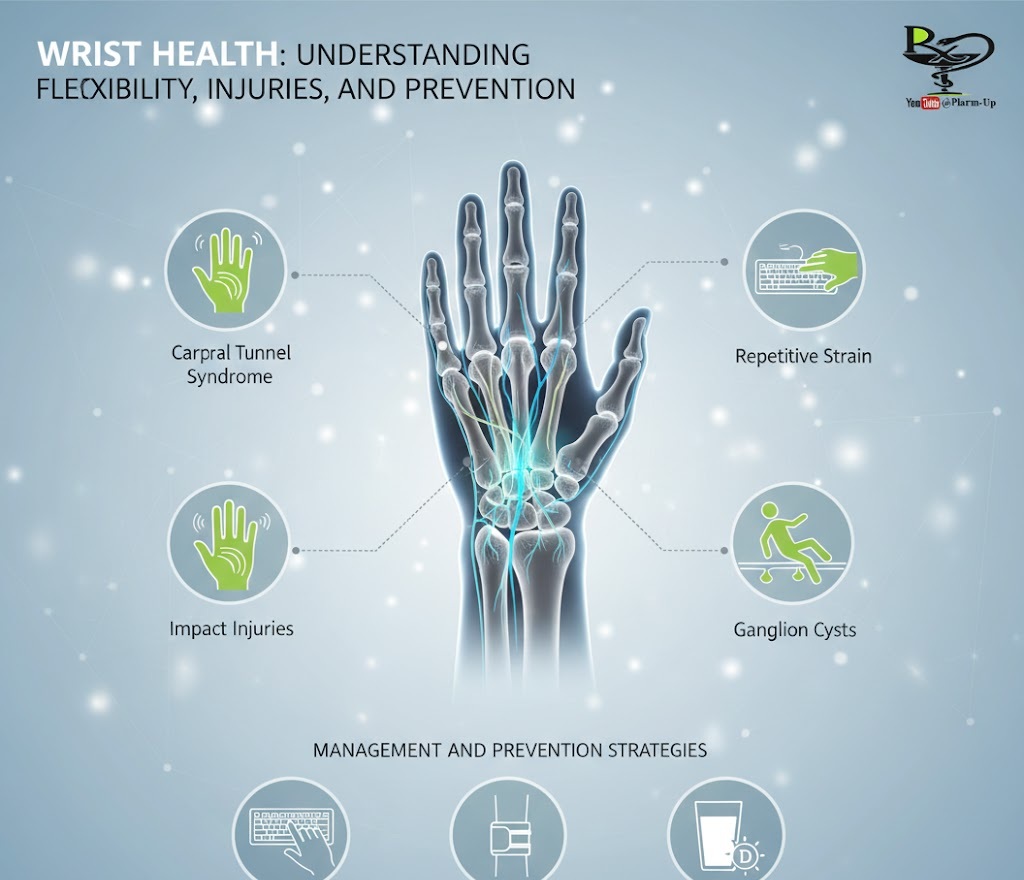
The wrist is one of the most complex structures in the human body. Far from being a single hinge, it is a sophisticated network of eight carpal bones, two forearm bones, and a web of tendons and ligaments. This intricate design allows for the wide range of motion needed for everything from heavy lifting to delicate typing.
Common Wrist Disorders & Risks
Because we use our hands for almost every daily task, the wrist is highly susceptible to both acute trauma and chronic overuse.
- Carpal Tunnel Syndrome: Compression of the median nerve, leading to “pins and needles” or weakness.
- Ganglion Cysts: Fluid-filled lumps that often appear along the joints or tendons.
- Repetitive Strain: Conditions like Tendinitis are common in those who perform repetitive motions (typing, assembly line work, or using power tools).
- Impact Injuries: Fractures and sprains often occur during sports like snowboarding or gymnastics, usually from falling on an outstretched hand.
Signs Your Wrist Needs Attention
Symptoms can be subtle at first but often escalate if ignored. Look out for:
- Numbness/Tingling: Especially in the thumb, index, and middle fingers.
- Loss of Grip Strength: Difficulty opening jars or holding a pen.
- Swelling or Lumps: Visible masses or general puffiness around the joint.
- Morning Stiffness: Pain that is worse when you first wake up.
Management and Prevention Strategies
| Approach | Actionable Steps |
| Ergonomics | Use a wrist rest for typing; keep the wrist in a “neutral” (straight) position. |
| Protection | Wear wrist guards during high-impact sports like skating or hockey. |
| Nutrition | Ensure adequate Calcium and Vitamin D intake to maintain bone density. |
| Recovery | Follow the R.I.C.E. method (Rest, Ice, Compression, Elevation) for minor sprains. |
About the Author