Pharm'Up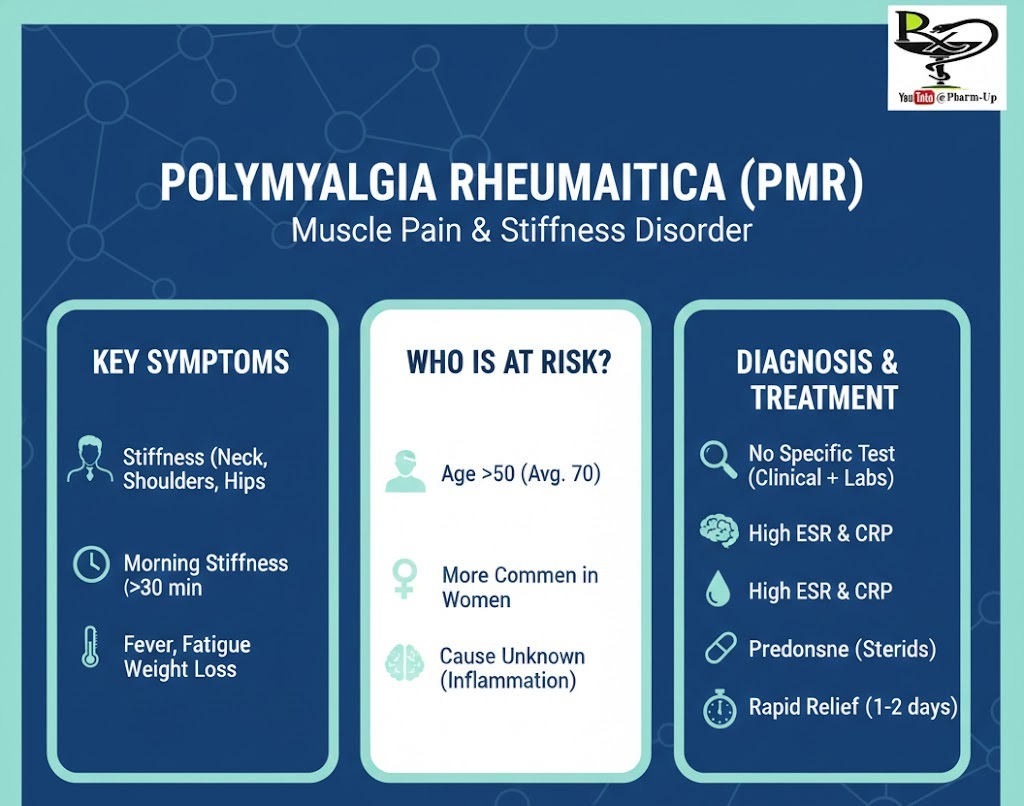
Polymyalgia rheumatica (PMR) is an inflammatory disorder that primarily causes significant muscle pain and stiffness. It is specifically characterized by its impact on the “girdle” areas of the body—the shoulders and the hips.
Key Characteristics & Symptoms
PMR is unique in its demographic focus and the timing of its symptoms:
- Primary Demographics: It almost exclusively affects adults over the age of 50, with the average age of onset being around 70. It is also more frequently diagnosed in women.
- The “Morning Stiffness”: The hallmark symptom is severe stiffness after resting, particularly in the morning. This stiffness often lasts longer than 30 minutes and can make simple tasks like getting dressed or rising from a chair very difficult.
- Affected Areas: Pain is most commonly felt in the neck, shoulders, and pelvic girdle (hips/thighs).
- Systemic Symptoms: Patients may also experience “flu-like” symptoms, including low-grade fever, unexplained weight loss, and general fatigue.
The Connection to Giant Cell Arteritis (GCA)
PMR is closely linked to Giant Cell Arteritis (also known as temporal arteritis). About 15% of people with PMR also develop GCA, and about 50% of people with GCA have PMR.
- What is GCA? It is an inflammation of the lining of the arteries, most often the ones in the head (temples).
- Warning Signs: If PMR is accompanied by new, severe headaches, jaw pain when eating, or blurred/double vision, it is considered a medical emergency because GCA can lead to permanent blindness if not treated immediately.
Diagnosis and Rapid Response Treatment
Diagnosis
Because there is no “gold standard” test, doctors look for a specific pattern:
- Clinical Presentation: Age >50 and bilateral (both sides) shoulder or hip pain.
- Inflammation Markers: Lab tests such as ESR (Erythrocyte Sedimentation Rate) and CRP (C-Reactive Protein) are usually significantly elevated.
- Rapid Response to Steroids: One of the strongest diagnostic clues is how quickly symptoms improve once treatment begins.
Treatment
- Corticosteroids: Low-dose Prednisone is the standard treatment.
- The “Miracle” Effect: Most patients experience a dramatic reduction in pain—often within 24 to 48 hours—after the first few doses.
- Duration: While the pain goes away quickly, the medication is usually tapered slowly over 1 to 2 years to prevent a relapse.
About the Author