Pharm'Up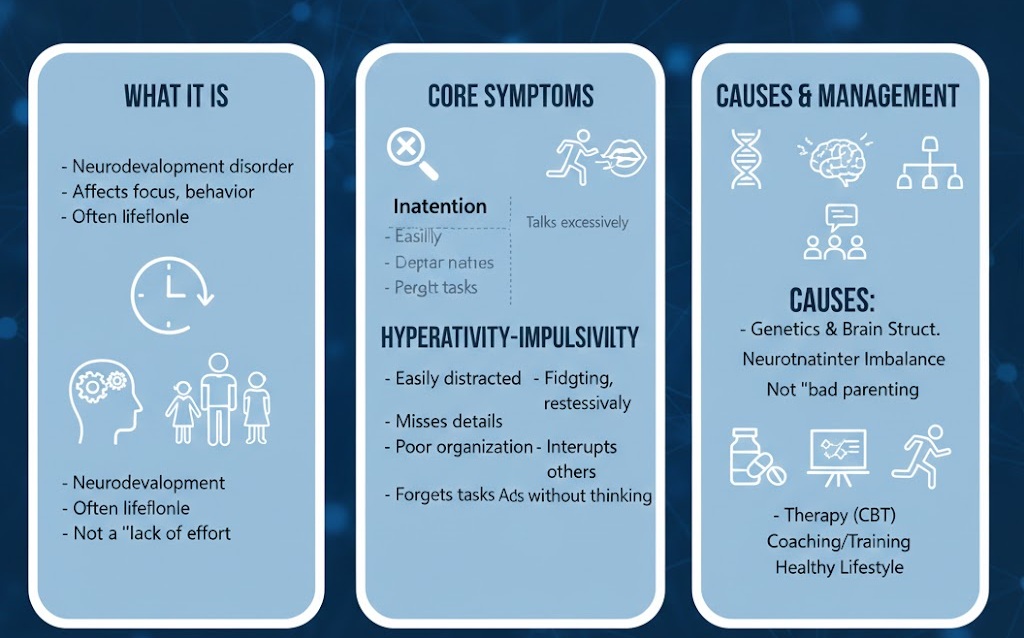
ADHD is a neurodevelopmental disorder that affects how the brain processes information and regulates behavior. While often associated with children, it is a lifelong condition for many, impacting focus, self-control, and activity levels.
The Three Types of ADHD
ADHD presents differently in everyone. Clinicians categorize it into three specific presentations:
- Mostly Inattentive: Often referred to as “ADD.” These individuals struggle with focus, organization, and following detailed instructions. They may seem to “daydream” or lose things frequently.
- Mostly Hyperactive-Impulsive: Characterized by a constant need for movement (fidgeting, pacing) and difficulty with verbal or behavioral “filters.” They may act on whims without considering consequences.
- Combined Type: The most common presentation, where the individual shows significant symptoms of both inattention and hyperactivity-impulsivity.
Core Symptoms
| Inattention Symptoms | Hyperactivity-Impulsivity Symptoms |
| Making careless mistakes | Fidgeting or squirming in seats |
| Difficulty sustaining mental effort | Talking excessively or blurting out answers |
| Poor time management and organization | Feeling restless or “driven by a motor” |
| Losing keys, phones, or homework | Interrupting others or difficulty waiting turns |
| Being easily sidetracked | Difficulty engaging in quiet hobbies |
Diagnosis and Causes
There is no “blood test” for ADHD. Diagnosis is a clinical process involving:
- Rule-outs: Physical exams to check vision, hearing, and sleep issues.
- Criteria: Symptoms must be present before age 12, occur in at least two settings (e.g., home and school), and significantly interfere with daily functioning.
- History: A thorough review of medical and family history.
What causes it? While the exact cause is unknown, research points to genetics (it often runs in families) and brain structure, specifically how neurotransmitters like dopamine function in the brain’s “executive control” centers.
Management and Treatment
While there is no cure, ADHD is highly manageable through a multi-modal approach:
- Medication: Stimulants and non-stimulants help balance brain chemicals to improve focus.
- Behavior Therapy: Developing “scaffolding” strategies—like using planners, breaking tasks into steps, and rewarding positive behaviors.
- Parent & School Support: Training for parents and specialized classroom accommodations (like extra time on tests).
- Healthy Lifestyle: Proper sleep, nutrition, and regular exercise have been shown to help regulate ADHD symptoms.
About the Author