Pharm'Up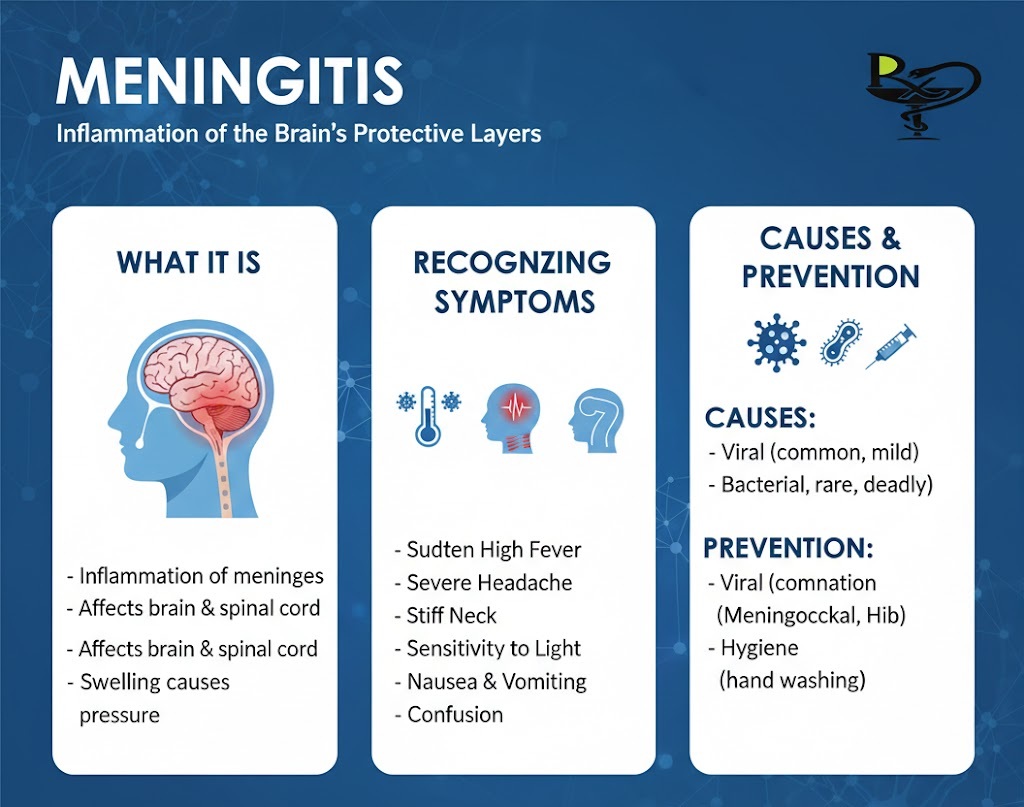
Meningitis is the inflammation of the meninges, the three thin layers of protective tissue that wrap around your brain and spinal cord. When these layers become infected or inflamed, they can swell and put dangerous pressure on the central nervous system.
Viral vs. Bacterial Meningitis
The cause of the inflammation determines how dangerous the condition is and how it must be treated.
- Viral Meningitis: The most common form. It is usually less severe and often clears up on its own or with basic medical support. It is typically spread through respiratory droplets or fecal-oral contact.
- Bacterial Meningitis: A medical emergency. It is rare but can be fatal within hours. Even with treatment, it can lead to permanent brain damage, hearing loss, or limb loss. Common culprits include Streptococcus pneumoniae and Neisseria meningitidis.
Recognizing the “Red Flag” Symptoms
Meningitis can progress with frightening speed. Seek immediate emergency care if you experience:
- Sudden High Fever: A temperature that spikes rapidly.
- Stiff Neck: Difficulty or pain when trying to touch your chin to your chest.
- Severe Headache: Often described as unlike any headache felt before.
- Sensitivity to Light (Photophobia): Bright lights causing physical pain or discomfort.
- Nausea/Vomiting: Often accompanied by confusion or a lack of appetite.
Diagnosis and Treatment
Diagnosis
To confirm meningitis and determine if it is bacterial or viral, doctors perform:
- Lumbar Puncture (Spinal Tap): The most definitive test. A needle collects cerebrospinal fluid (CSF) to check for bacteria, glucose levels, and white blood cells.
- Blood Cultures: To check for the presence of bacteria in the bloodstream.
- Imaging: CT or MRI scans to look for swelling or inflammation around the brain.
Treatment
- Bacterial: Requires immediate intravenous antibiotics and sometimes corticosteroids to reduce brain swelling.
- Viral: Primarily involves rest, fluids, and over-the-counter pain medicine. In specific cases, antiviral drugs may be used.
Prevention: The Power of Vaccines
The most effective way to prevent bacterial meningitis is through vaccination. Common vaccines include:
- Meningococcal Vaccine: Often required for students and military recruits.
- Pneumococcal Vaccine: Protects against bacteria that cause both pneumonia and meningitis.
- Hib Vaccine: Protects against Haemophilus influenzae type b.
About the Author