Pharm'Up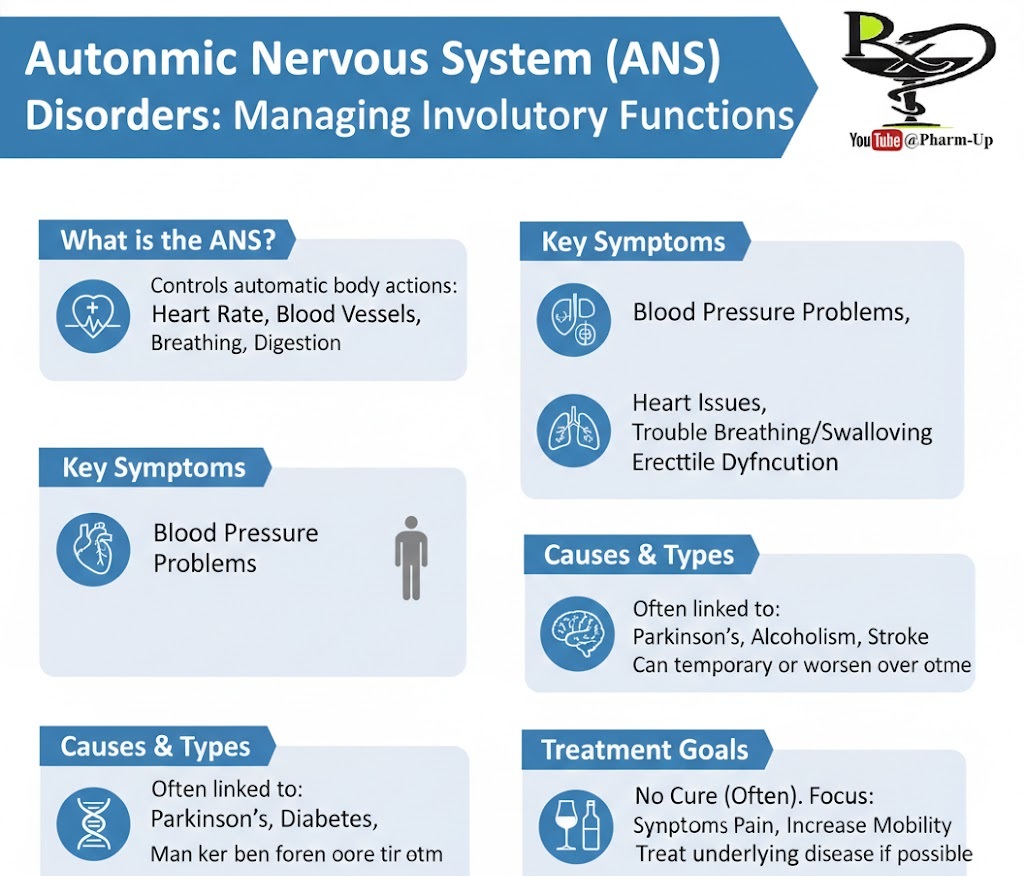
What is the Autonomic Nervous System?
Your autonomic nervous system (ANS) is the specialized network that controls “automatic” or involuntary actions—functions your body performs without conscious thought. This includes critical tasks such as:
- Heart Rate: Regulating the beating of your heart.
- Vascular Control: The widening or narrowing of your blood vessels.
- Digestion and Respiration: Managing breathing and swallowing.
Symptoms and Risks
When a malfunction occurs within this system, it can disrupt vital bodily processes. Common problems include:
- Circulation: Issues with blood pressure and heart function.
- Physical Function: Difficulty breathing or swallowing.
- Sexual Health: Erectile dysfunction in men.
These disorders can be life-threatening if they significantly impair heart function or the ability to breathe.
Causes and Types
Autonomic disorders vary in their origin and scope. They can affect a single area, such as in complex regional pain syndromes, or impact the entire system.
- Primary Disorders: Occurring alone without an obvious external cause.
- Secondary Disorders: Resulting from other medical conditions, such as Parkinson’s disease, diabetes, or alcoholism.
- Progression: While some forms are temporary, many are progressive and worsen over time.
Diagnosis and Treatment
Because these disorders are often tied to other health issues, doctors first look to see if treating an underlying disease improves autonomic function.
- Treatment Goals: In many cases, there is no known cure. Treatment focuses on managing and improving specific symptoms to enhance quality of life.
- Underlying Conditions: Addressing diseases like diabetes can sometimes halt or reverse autonomic damage.
About the Author