Pharm'Up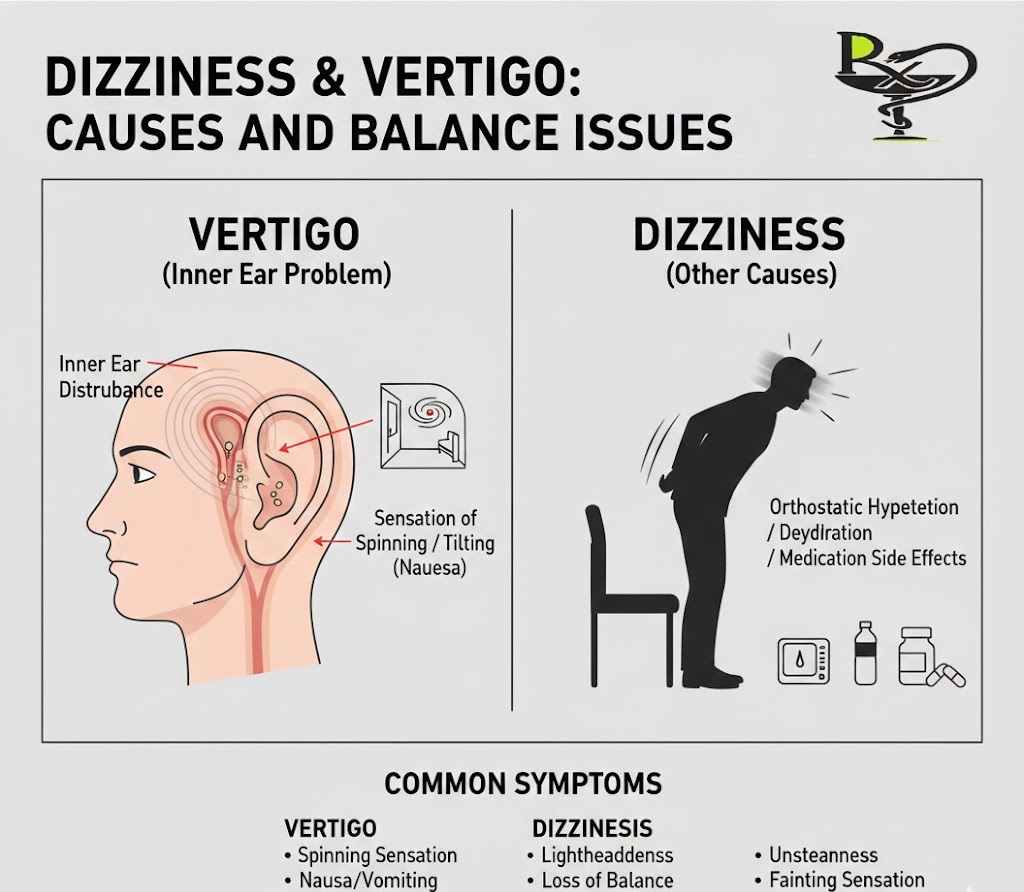
Dizziness is a broad term used to describe a range of sensations, such as feeling faint, woozy, weak, or unsteady. It is one of the most common reasons adults visit their doctors. When dizziness creates the false sense that you or your surroundings are spinning or moving, it is specifically called Vertigo.
Common Causes of Dizziness
Dizziness isn’t a disease itself, but rather a symptom of various underlying conditions:
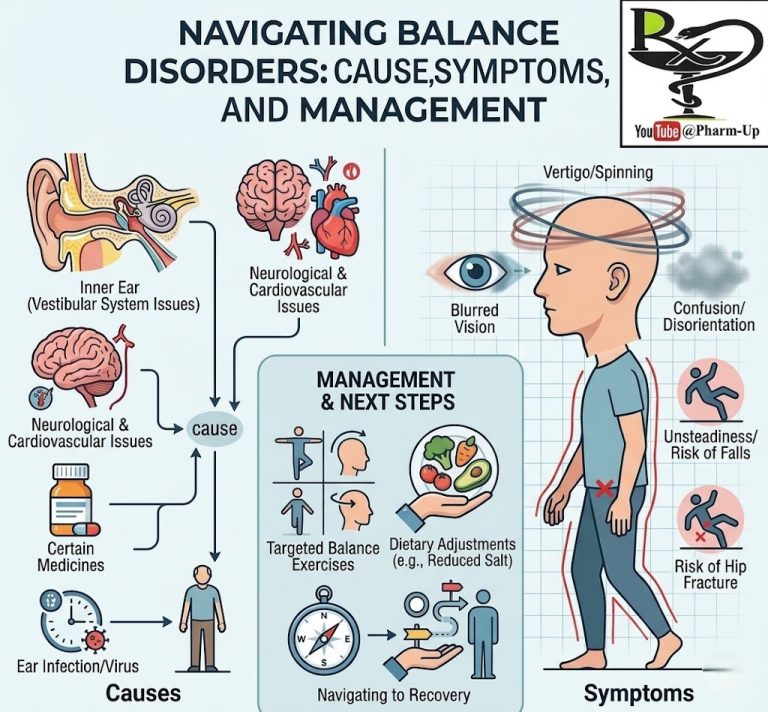
- Inner Ear Problems: Your sense of balance relies on a complex system in the inner ear. Conditions like BPPV (Benign Paroxysmal Positional Vertigo) or infections can disrupt this system.
- Circulatory Issues: A sudden drop in systolic blood pressure (orthostatic hypotension) when sitting up or standing too quickly can cause brief lightheadedness.
- Dehydration and Overheating: Low fluid volume in the body can lead to a dip in blood pressure and brain oxygenation.
- Medication Side Effects: Many drugs, including blood pressure medications, sedatives, and anti-seizure drugs, list dizziness as a common side effect.
- Neurological Conditions: Occasionally, dizziness can be a sign of migraines, or more rarely, strokes or multiple sclerosis.
Dizziness vs. Vertigo
Understanding the difference helps healthcare providers pinpoint the cause:
| Feature | Dizziness (Lightheadedness) | Vertigo (Spinning) |
| Sensation | Feeling faint, “spaced out,” or woozy. | A feeling that the room is spinning or tilting. |
| Primary Cause | Often blood pressure, dehydration, or low blood sugar. | Usually related to inner ear or vestibular nerve issues. |
| Balance | May feel unsteady while walking. | Often accompanied by nausea and difficulty standing. |
Risks and When to See a Doctor
Dizziness increases the risk of falls, especially in older adults, which can lead to serious injuries like hip fractures. While many cases resolve on their own, you should seek medical attention if dizziness is frequent, sudden, or severe.
Seek immediate emergency care if dizziness occurs with:
- A sudden, severe headache.
- Chest pain or heart palpitations.
- Numbness or paralysis of arms or legs.
- Fainting or loss of consciousness.
- Double vision or blurred vision.
About the Author