Pharm'Up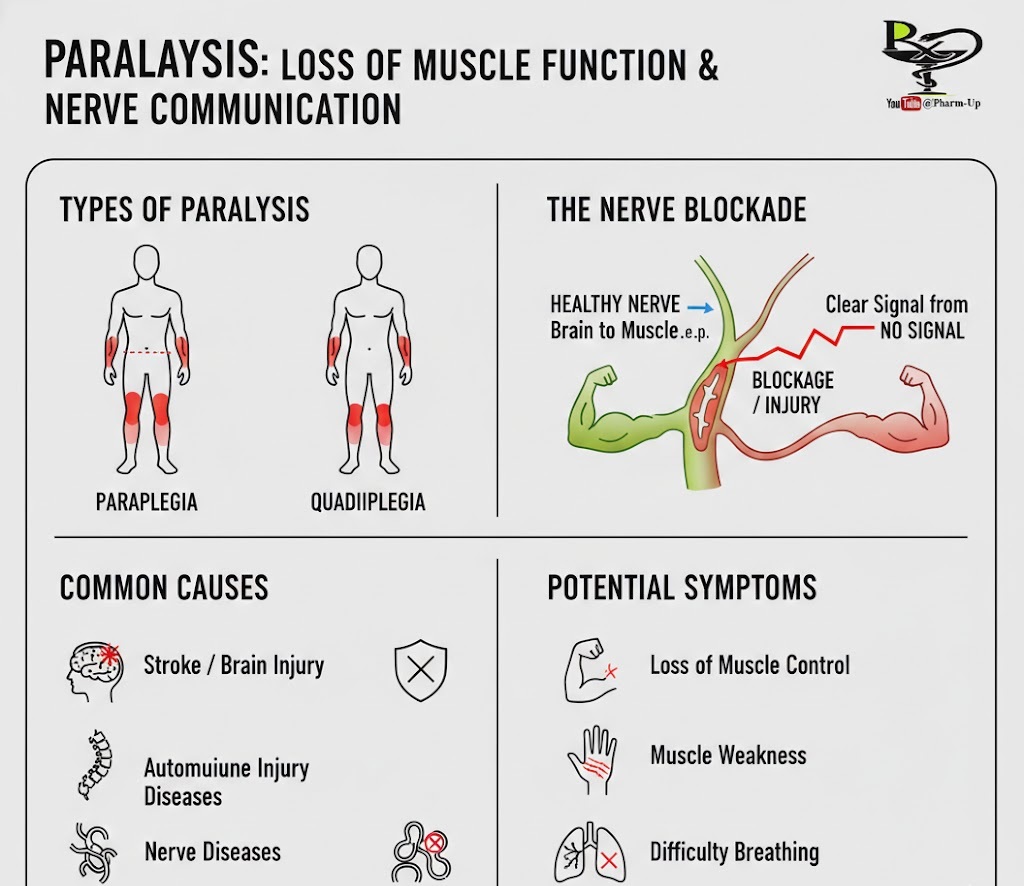
Paralysis is the loss of muscle function in part of your body. It occurs when there is a disruption in the communication system between the brain and the muscles. This “disconnection” can happen due to damage in the brain itself, the spinal cord, or the peripheral nerves.
Types of Paralysis
Paralysis is classified based on how much of the body is affected and where the loss of function occurs:
- Partial Paralysis (Paresis): You still have some control over the muscles.
- Complete Paralysis: You cannot move the affected muscles at all.
- Paraplegia: Paralysis that affects the lower half of the body, typically both legs, usually resulting from a spinal cord injury in the thoracic or lumbar sections.
- Quadriplegia (Tetraplegia): Paralysis that affects all four limbs and the torso, usually caused by an injury to the cervical (neck) area of the spinal cord.
- Monoplegia: Affects only one limb.
- Hemiplegia: Affects one side of the body (left or right), commonly seen after a stroke.
Common Causes
The onset of paralysis can be sudden (acute) or gradual, depending on the underlying cause:
- Trauma and Vascular Issues:
- Strokes: The leading cause of paralysis, occurring when blood flow to a part of the brain is blocked or a vessel bursts.
- Spinal Cord Injuries: Often from car accidents, falls, or sports injuries.
- Neurological and Nerve Diseases:
- Amyotrophic Lateral Sclerosis (ALS): A progressive disease that attacks the nerve cells controlling voluntary muscles.
- Bell’s Palsy: A sudden, usually temporary weakness or paralysis of the facial nerves.
- Autoimmune and Infectious Diseases:
- Guillain-Barré Syndrome: A rare condition where the immune system attacks the nerves.
- Polio: While eradicated in the U.S., it historically caused widespread paralysis globally.
Symptoms and Complications
Beyond the inability to move, paralysis can cause secondary health issues:
- Loss of Sensation: Inability to feel touch, heat, or cold.
- Muscle Atrophy: Weakening and shrinking of muscles due to lack of use.
- Spasticity: Involuntary muscle spasms or stiffness.
- Secondary Issues: Changes in breathing, heart rate, and organ function (bladder/bowel control).
Treatment and Support
While some forms of paralysis (like Bell’s palsy) can resolve on their own, chronic paralysis focus on maintaining health and independence:
- Physical Therapy: To maintain muscle mass and joint flexibility.
- Occupational Therapy: To learn new ways to perform daily tasks using adaptive equipment.
- Assistive Technology: Wheelchairs, braces, and voice-activated systems to improve mobility and communication.
About the Author