Pharm'Up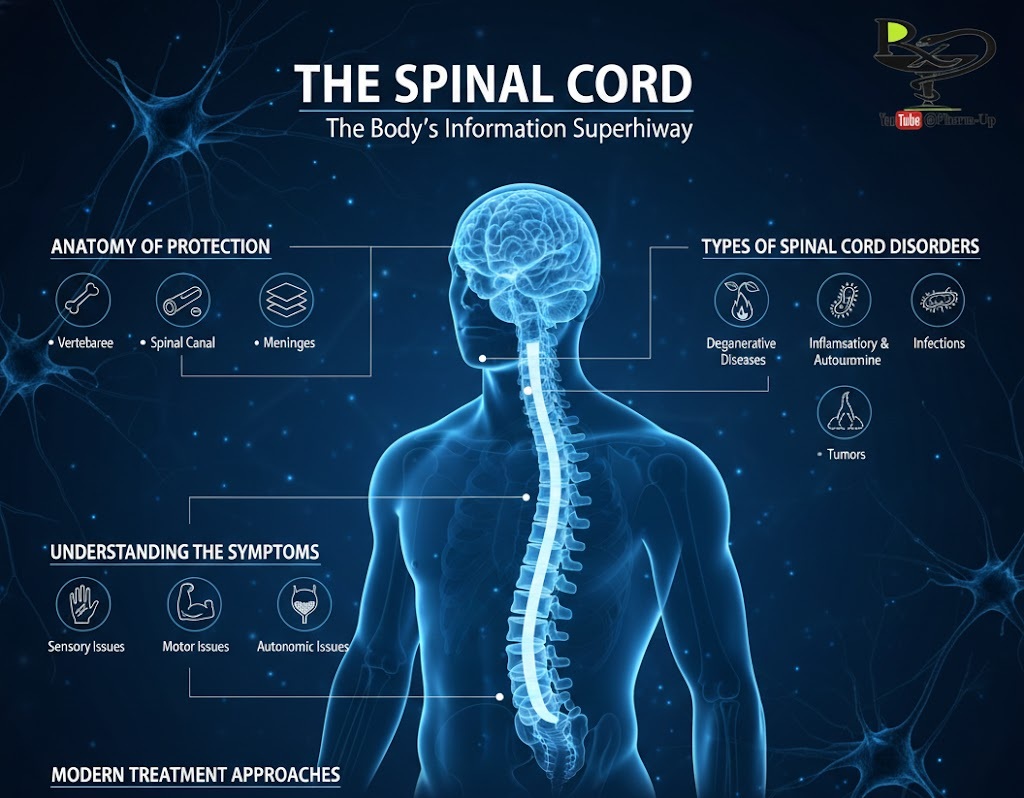
The spinal cord is a thick bundle of nerve tissue that serves as the primary communication link between your brain and the rest of your body. It doesn’t just “sit” in your back; it actively processes reflexes and ensures that every movement and sensation is transmitted at lightning speed.
Anatomy of Protection
Because the spinal cord is so vital and fragile, it is encased in a multi-layered protective system:
- The Vertebrae: 33 individual bones (vertebrae) stacked on top of each other to form the spinal column.
- The Spinal Canal: The hollow tunnel in the center of the vertebrae where the cord resides.
- Meninges: Three layers of protective membranes that surround the cord, cushioned by cerebrospinal fluid.
Types of Spinal Cord Disorders
While physical trauma (accidents) is a common cause of injury, the spinal cord is also susceptible to internal threats:
- Degenerative Diseases: Conditions like Amyotrophic Lateral Sclerosis (ALS) or Spinal Muscular Atrophy (SMA) cause the nerve cells in the cord to waste away over time.
- Inflammatory & Autoimmune: Diseases like Multiple Sclerosis (MS) or Transverse Myelitis cause the immune system to attack the cord’s protective coating.
- Infections: Viruses like polio or bacterial infections like meningitis can cause direct inflammation and damage to the nerve tissues.
- Tumors: Abnormal growths (benign or cancerous) can put physical pressure on the cord, “pinching” the signals.
Understanding the Symptoms
The symptoms of a spinal cord problem depend entirely on where the damage is located. Generally, the higher up the injury occurs, the more of the body is affected.
- Sensory Issues: Numbness, tingling, or a complete loss of sensation in the hands, feet, or torso.
- Motor Issues: Muscle weakness, loss of coordination, or paralysis.
- Autonomic Issues: Changes in heart rate, blood pressure, or bladder and bowel control.
Modern Treatment Approaches
Treatment is highly specialized and focuses on either repairing damage or preventing further decline:
- Surgical Intervention: To decompress the cord (remove pressure from tumors or bone fragments) or stabilize the spine using rods and screws.
- Pharmacology: Steroids to reduce acute inflammation or specialized medications to slow the progression of degenerative diseases.
- Rehabilitation: Intensive physical and occupational therapy to help the brain and body find new ways to communicate (neuroplasticity).
About the Author