Palbociclib Revolutionizes Advanced Breast Cancer Treatment with Improved Outcomes
 Pharm'Up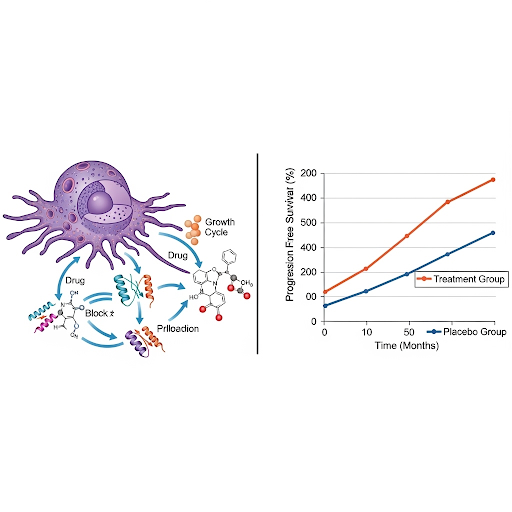
Palbociclib (Ibrance) has become a cornerstone in the treatment of advanced hormone receptor-positive (HR+), HER2-negative (HER2–) breast cancer. As the first of a new class of drugs known as CDK4/6 inhibitors to receive FDA approval, it has dramatically improved patient outcomes, particularly when used in combination with endocrine therapies.
How It Works and Its Proven Efficacy
Palbociclib functions by inhibiting two key proteins, CDK4 and CDK6, which are essential for cancer cells to grow and divide. By blocking this process, the drug effectively slows the proliferation of cancer cells. Clinical trials have consistently shown that when palbociclib is used alongside standard endocrine therapies like letrozole or fulvestrant, it can nearly double the median progression-free survival (PFS) compared to endocrine therapy alone. This extended period of disease control is a significant benefit for patients with metastatic breast cancer.The drug’s effectiveness isn’t limited to controlled trial settings. Real-world data from a large analysis of patients receiving palbociclib and fulvestrant have confirmed its benefits in a broader patient population, including individuals with comorbidities who might not be eligible for clinical studies. This reinforces the drug’s role as a valuable and reliable treatment option.
Future Directions in Palbociclib Research
Researchers are continuously exploring ways to build on palbociclib’s success by investigating new drug combinations to overcome treatment resistance and further improve patient outcomes.
- A recent study found that adding hydroxychloroquine, a drug that interferes with cancer cell survival processes, could boost the activity of a palbociclib-based regimen.
- Another promising combination is being tested in the Phase 3 INAVO120 trial, which combines palbociclib and fulvestrant with a new PI3Kα inhibitor, inavolisib. Early results from this trial have shown that this three-drug regimen significantly improved PFS, highlighting the potential of targeting multiple cancer pathways at once.
Palbociclib has truly transformed the landscape of HR+/HER2– breast cancer care. Ongoing research and the development of new combination therapies promise to further solidify its role and continue to enhance the quality of life for those living with advanced breast cancer.
About the Author