Pharm'Up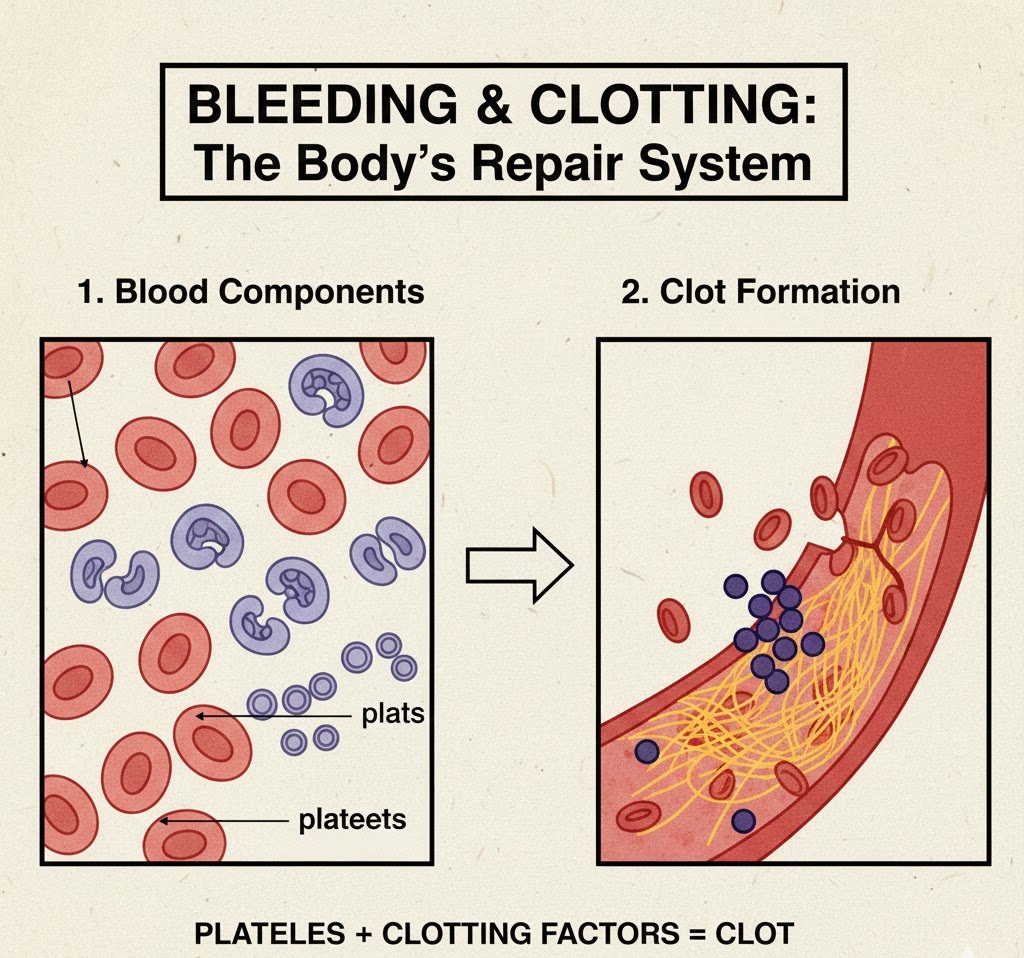
Bleeding, or hemorrhage, is the escape of blood from the circulatory system. This loss of blood can be external, visible on the surface of the skin through a wound, or internal, occurring within the body’s cavities or organs. While minor bleeding is a common part of life, severe or persistent bleeding can indicate underlying health issues or lead to life-threatening emergencies.
The Body’s Defense: The Clotting Process
Under normal circumstances, your body has a built-in “repair kit” designed to seal damaged blood vessels and stop blood loss. This process involves two main components:
- Platelets: Tiny cell fragments that rush to the site of an injury to stick together and form a “plug.”
- Clotting Factors: Special proteins in the blood that act like glue, strengthening the platelet plug into a durable fibrin mesh.
Once the vessel wall has healed, the body naturally produces enzymes to dissolve the clot, restoring smooth blood flow.
Clotting Imbalances: Too Much or Too Little
When the delicate balance of the clotting system is disrupted, it usually results in one of two medical complications:
1. Bleeding Disorders (Inadequate Clotting)
This occurs when the blood cannot form a solid plug. This might be due to a low platelet count or a deficiency in clotting factors (such as in Hemophilia).
- Signs: Easy bruising, frequent nosebleeds, or prolonged bleeding from minor cuts.
2. Thrombotic Disorders (Excessive Clotting)
In these cases, the body creates clots too easily, or fails to dissolve them once they have served their purpose.
- Risks: These “rogue” clots can travel to the heart, lungs, or brain, potentially causing a heart attack, pulmonary embolism, or stroke.
Internal Bleeding and Warning Signs
Unlike a cut on the finger, internal bleeding is hidden and often more dangerous. It can occur due to trauma or as a symptom of a disease.
| Type of Bleeding | Potential Indication |
| Gastrointestinal (GI) | Ulcers, inflammation, or digestive tract cancers. |
| Intracranial (Brain) | Hemorrhagic stroke or severe head trauma. |
| Hemoptysis (Coughing blood) | Respiratory infections or lung conditions. |
| Vaginal Bleeding | Hormonal imbalances or reproductive health issues. |
Note on Bruising: A bruise (contusion) is actually a form of minor internal bleeding. It occurs when small capillaries near the skin’s surface rupture, trapping blood under the skin.
When to Seek Emergency Care
Severe bleeding can lead to shock or organ failure. You should seek immediate medical attention if:
- Bleeding cannot be controlled by applying firm, direct pressure.
- The wound is deep, gaping, or caused by a high-force impact.
- There are signs of internal bleeding, such as coughing up blood or severe abdominal pain.
- The person feels dizzy, cold, or loses consciousness.
About the Author


 Pharm'Up