Pharm'Up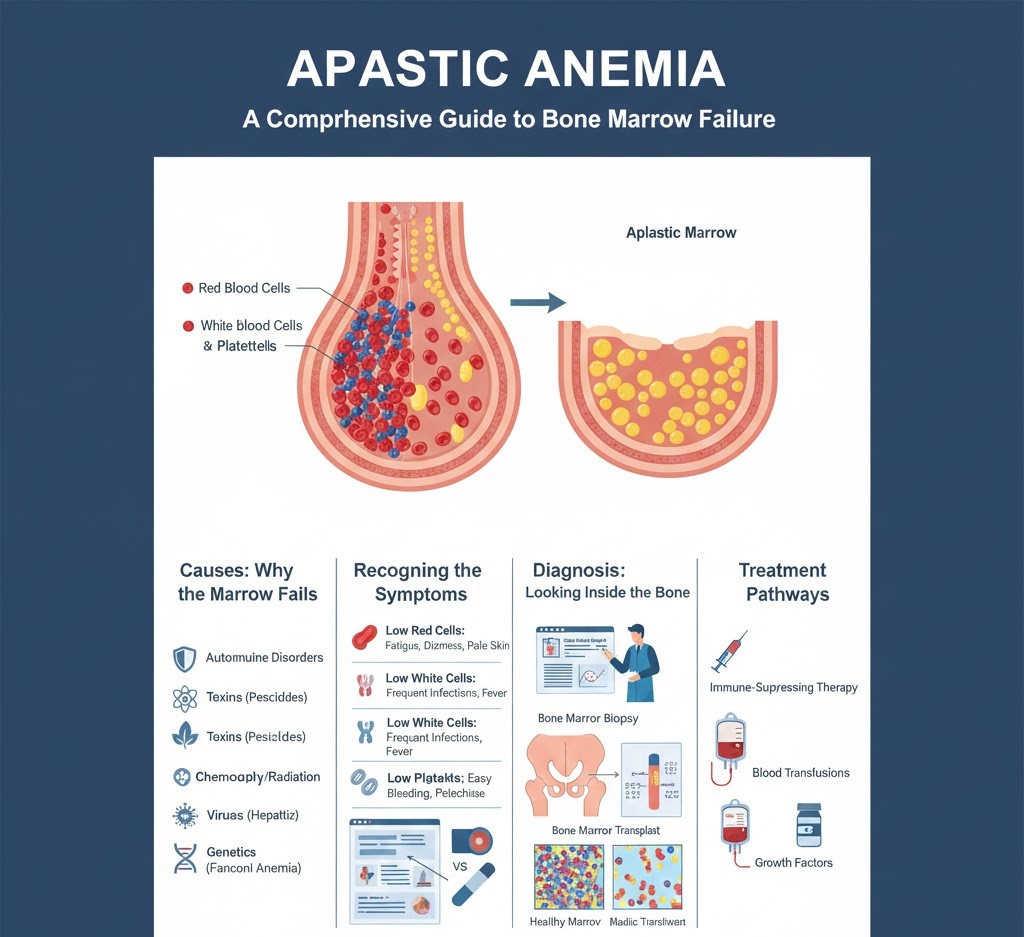
Aplastic anemia is a rare and life-threatening condition where the body stops producing enough new blood cells. Unlike other forms of anemia that might be caused by a lack of iron or vitamins, aplastic anemia is a “factory problem” located in the bone marrow.
1. How It Happens: Damage to Stem Cells
Inside your bones is a spongy tissue called bone marrow. It contains stem cells—the “seeds” that mature into three vital types of blood cells:
- Red Blood Cells: Carry oxygen throughout the body.
- White Blood Cells: Fight infections.
- Platelets: Help the blood clot to stop bleeding.
In aplastic anemia, these stem cells are damaged or destroyed. As a result, the bone marrow becomes “aplastic” or empty, leading to a condition called pancytopenia (a deficiency of all three blood cell types).
2. Causes: Why the Marrow Fails
The most frequent cause is the body’s own immune system attacking the stem cells (autoimmune response). Other triggers include:
- Environmental Toxins: Exposure to chemicals like benzene (found in gasoline) or certain pesticides.
- Medical Treatments: High-dose radiation or chemotherapy used for cancer.
- Infections: Viruses such as Hepatitis, HIV, or Epstein-Barr.
- Genetics: Inherited conditions like Fanconi Anemia, which prevents cells from repairing DNA damage.
- Idiopathic: In many cases, doctors cannot find a specific cause.
3. Recognizing the Symptoms
Because all three cell types are low, symptoms manifest in different ways:
| Cell Type Affected | Resulting Symptom |
| Low Red Cells | Extreme fatigue, shortness of breath, pale skin, and dizziness. |
| Low White Cells | Frequent or lingering infections and unexplained fevers. |
| Low Platelets | Easy bruising, nosebleeds, bleeding gums, or tiny red spots on the skin (petechiae). |
4. Diagnosis: Looking Inside the Bone
Beyond standard blood tests (Complete Blood Count), the definitive way to diagnose aplastic anemia is through a Bone Marrow Biopsy.
- A doctor removes a small sample of liquid bone marrow and a piece of bone tissue (usually from the hip).
- Under a microscope, a healthy sample is full of blood-producing cells, whereas an aplastic sample contains mostly fat cells.
5. Treatment Pathways
Treatment depends on the severity and the patient’s age:
- Immune-Suppressing Therapy: For autoimmune cases, drugs like cyclosporine are used to “calm” the immune system so the marrow can recover.
- Bone Marrow Transplant: Replacing damaged stem cells with healthy ones from a donor. This is often the preferred treatment for younger patients with a matching sibling.
- Blood Transfusions: A temporary measure to provide the body with the cells it isn’t making.
- Growth Factors: Medicines that stimulate the bone marrow to produce more white blood cells.
About the Author