Pharm'Up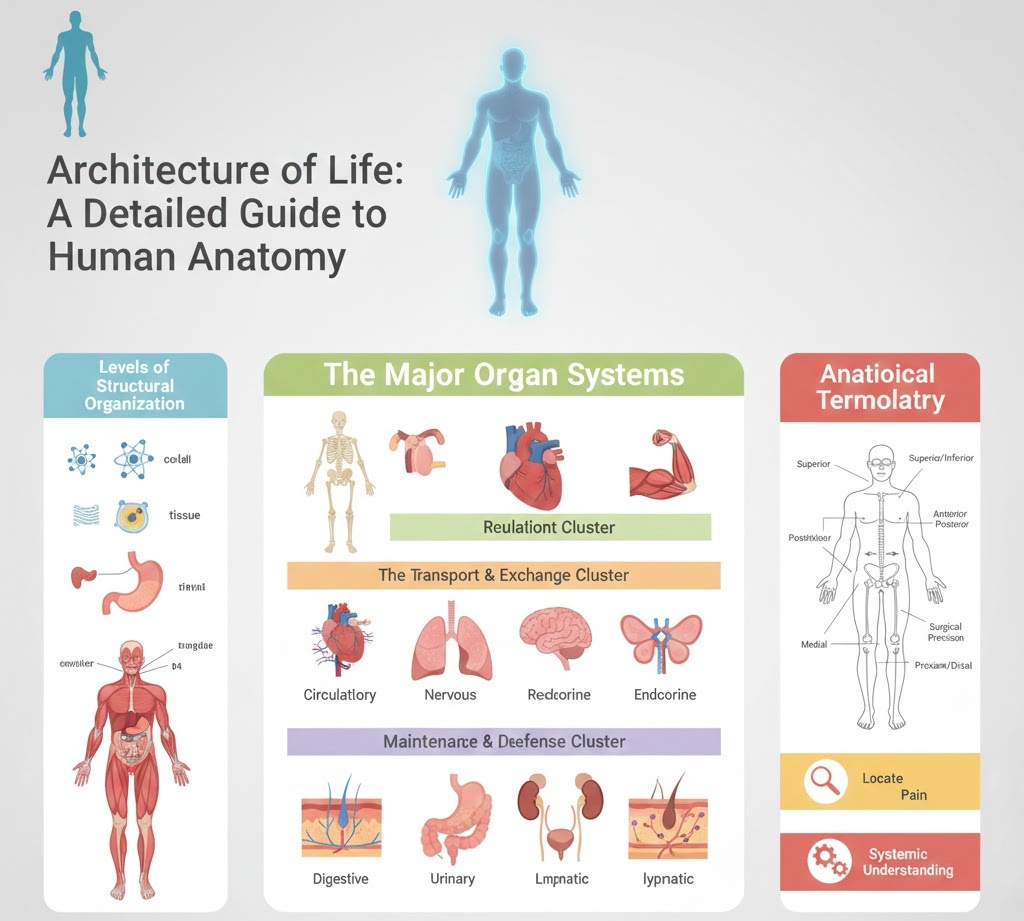
Anatomy is the biological science dedicated to the identification and description of the structural components of living things. In humans, it provides the essential “map” of how we are built, from the microscopic level of tissues to the complex integration of entire organ systems.
1. Levels of Structural Organization
To understand anatomy, one must look at the hierarchy of the body:
- Chemical Level: Atoms and molecules (like DNA and glucose).
- Cellular Level: The basic functional units of life.
- Tissue Level: Groups of similar cells working together (Epithelial, Connective, Muscle, and Nervous).
- Organ Level: Different tissues integrated to perform specific functions (e.g., the stomach or heart).
- System Level: Groups of organs that work together for a common purpose.
2. The Major Organ Systems
The Support & Movement Cluster
- Skeletal System: Composed of bones, cartilage, and ligaments. It stores minerals, protects vital organs (like the brain and lungs), and provides the levers for movement.
- Muscular System: Includes skeletal muscles for voluntary movement, smooth muscles within organs, and the specialized cardiac muscle of the heart.
The Transport & Exchange Cluster
- Circulatory (Cardiovascular) System: The heart, blood, and blood vessels. It acts as the body’s primary delivery service, transporting oxygen and nutrients while removing carbon dioxide.
- Respiratory System: The nose, pharynx, larynx, trachea, and lungs. This system facilitates gas exchange between the blood and the external environment.
The Control & Regulation Cluster
- Nervous System: The brain, spinal cord, and peripheral nerves. It serves as the “command center,” processing sensory input and triggering rapid motor responses.
- Endocrine System: Glands such as the pituitary, thyroid, and adrenals. It uses chemical messengers (hormones) to regulate long-term processes like growth, metabolism, and reproduction.
The Maintenance & Defense Cluster
- Digestive System: The alimentary canal (mouth to anus) and accessory organs (liver, pancreas). It breaks down food into nutrients the body can use.
- Urinary (Excretory) System: The kidneys, ureters, and bladder. It maintains fluid balance and filters metabolic waste from the blood.
- Integumentary System: The skin, hair, and nails. This is the body’s largest organ system, acting as a barrier against infection and regulating temperature.
- Lymphatic & Immune System: A network that drains excess fluid and houses the white blood cells responsible for defending the body against pathogens.
3. Anatomical Terminology
To describe locations accurately, anatomists use standardized “directional terms” based on a person standing in the Anatomical Position (upright, palms facing forward):
- Superior/Inferior: Above and below.
- Anterior/Posterior: Front and back.
- Medial/Lateral: Toward the midline and away from the midline.
- Proximal/Distal: Nearer to or farther from the point of attachment (used for limbs).
4. Why Anatomy Matters
Understanding anatomy is the foundation of medicine and physical health. It allows healthcare providers to:
- Locate the source of pain or dysfunction.
- Perform precise surgical procedures.
- Understand how a disease in one organ (like the kidneys) can affect another system (like blood pressure).
About the Author