Pharm'Up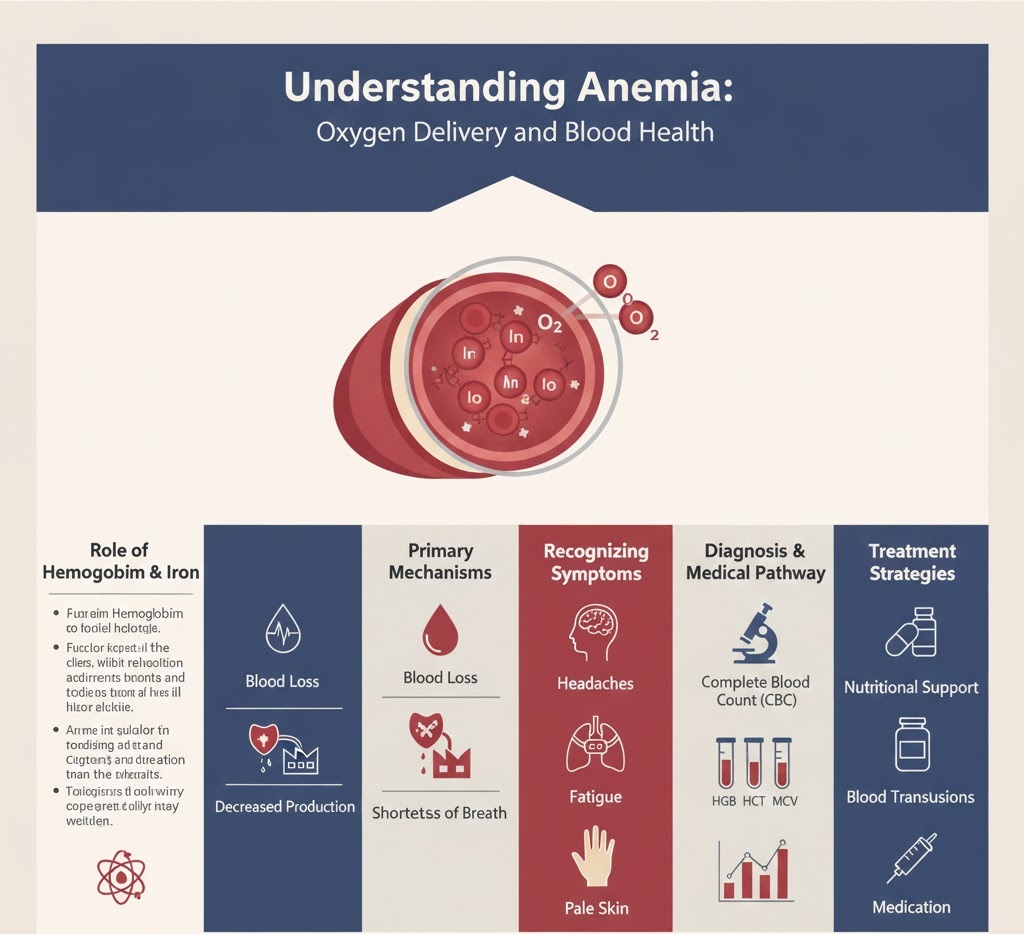
Anemia is a medical condition characterized by a deficiency in healthy red blood cells or hemoglobin. Because hemoglobin is the primary vehicle for transporting oxygen, a person with anemia essentially suffers from “low oxygen” in their tissues and organs, leading to a wide range of systemic symptoms.
1. The Role of Hemoglobin and Iron
To understand anemia, you must understand the composition of a red blood cell.
- Hemoglobin: This is the iron-rich protein found inside red blood cells. It binds to oxygen molecules in the lungs and releases them as the blood flows through the body’s tissues.
- The Iron Connection: Iron is the central building block of hemoglobin. Without sufficient iron, the body cannot produce enough “high-quality” red blood cells, leading to Iron Deficiency Anemia, the most common form of the condition.
2. The Three Primary Mechanisms of Anemia
Medical professionals generally categorize anemia based on why the red blood cell count is low:
| Mechanism | Description | Examples |
| Blood Loss | The most common cause; the body loses more blood than it can replace. | Heavy menstruation, GI ulcers, trauma, or colon cancer. |
| Decreased Production | The bone marrow fails to create enough healthy red blood cells. | Iron/B12/Folate deficiency, Aplastic anemia, or kidney disease. |
| Increased Destruction | Red blood cells are destroyed faster than the marrow can make them. | Sickle cell anemia, Thalassemia, or autoimmune disorders. |
3. Recognizing the Symptoms
When your organs are deprived of oxygen, your body sends out several warning signals:
- Neurological: Headaches, dizziness, and irritability.
- Cardiovascular: Shortness of breath, cold hands/feet, and a fast or irregular heartbeat.
- General: Persistent fatigue, weakness, and pale skin (pallor).
4. Diagnosis and Medical Pathway
If anemia is suspected, a doctor will typically perform a Complete Blood Count (CBC). This test measures:
- Hemoglobin levels: The amount of oxygen-carrying protein.
- Hematocrit: The percentage of your blood volume that is made of red blood cells.
- Mean Corpuscular Volume (MCV): The average size of your red blood cells (this helps determine if the cause is a vitamin deficiency or a genetic trait).
5. Treatment Strategies
Treatment is never “one size fits all” because it must address the underlying cause:
- Nutritional Support: Iron supplements, Vitamin B12 injections, or folic acid tablets.
- Procedures: Blood transfusions for severe cases or surgery to stop internal bleeding (like an ulcer).
- Medication: Drugs to suppress the immune system (for aplastic anemia) or to stimulate the bone marrow to produce more cells.
About the Author




 Pharm'Up