Pharm'Up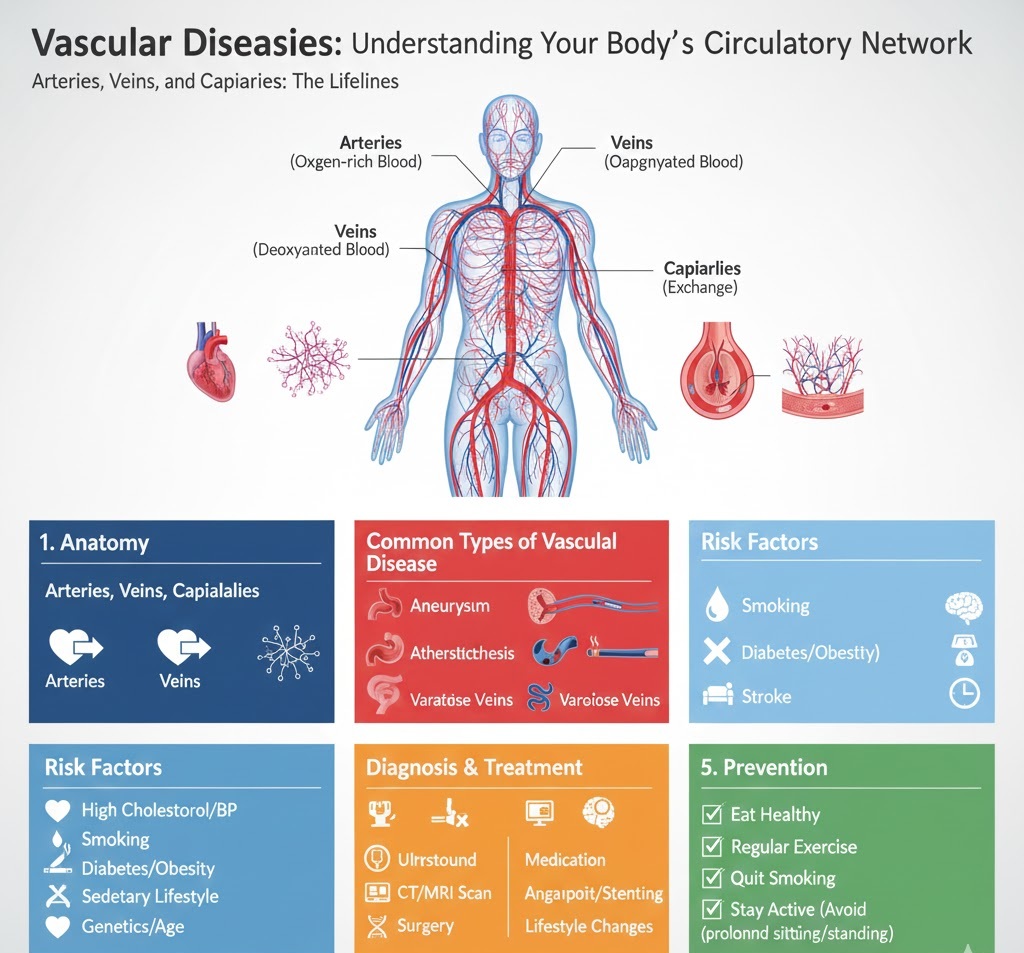
The vascular system is an expansive network of “pipes” responsible for transporting life-sustaining blood throughout the body. When these vessels become damaged, blocked, or weakened, it results in vascular disease. Understanding this system is crucial because it connects every major organ, from your brain to your toes.
1. Anatomy of the Vascular System
The system is composed of three primary types of vessels, each with a specific job:
- Arteries: Robust, muscular tubes that carry oxygen-rich blood away from the heart.
- Veins: Vessels that carry oxygen-depleted blood and waste products back to the heart. They contain valves to keep blood flowing in one direction.
- Capillaries: Microscopic bridges connecting arteries and veins. Their ultra-thin walls allow oxygen and nutrients to pass into tissues while absorbing carbon dioxide.
2. Common Types of Vascular Disease
Vascular diseases are categorized by the type of vessel they affect and the nature of the problem:
| Category | Disease | Description |
| Arterial | Atherosclerosis | Plaque buildup that narrows the arteries. |
| Arterial | Aneurysm | A dangerous bulge or weak spot in an artery wall. |
| Venous | Blood Clots (DVT) | A clot in a deep vein, often in the leg, which can travel to the lungs (Pulmonary Embolism). |
| Venous | Varicose Veins | Swollen, twisted veins caused by weakened valves. |
| Systemic | Vasculitis | Inflammation of the blood vessel walls. |
| Spastic | Raynaud’s | Sudden narrowing of vessels in response to cold or stress. |
3. Risk Factors: Who is Vulnerable?
While some factors are beyond our control (genetics, age), many are linked to lifestyle:
- Metabolic Issues: Diabetes, high cholesterol, and obesity.
- Behavioral: Smoking (the leading cause of preventable vascular damage) and a sedentary lifestyle.
- Physical Stasis: Sitting or standing for long periods, which hinders venous return.
- Biological: Pregnancy and aging increase the strain on vessel walls and valves.
4. Diagnosis and Modern Treatments
Because many vascular diseases occur deep within the body, doctors rely on specialized tools:
- Imaging: Ultrasounds (to see blood flow), CT scans, and MRIs.
- Procedures: Angioplasty and Stenting to mechanically open blocked arteries.
- Medications: Blood thinners (anticoagulants), cholesterol-lowering statins, and blood pressure regulators.
- Lifestyle Medicine: The foundation of all treatment—exercise and a heart-healthy diet.
5. Prevention: Protecting Your “Pipes”
- Move Regularly: If you work at a desk, set a timer to stretch every hour.
- Manage Numbers: Keep a close eye on your blood pressure, blood sugar, and cholesterol levels.
- Smoking Cessation: Quitting smoking is the single most effective way to stop the progression of vascular damage.
- Compression: Use compression stockings during long flights or periods of standing to help veins return blood to the heart.
About the Author