Pharm'Up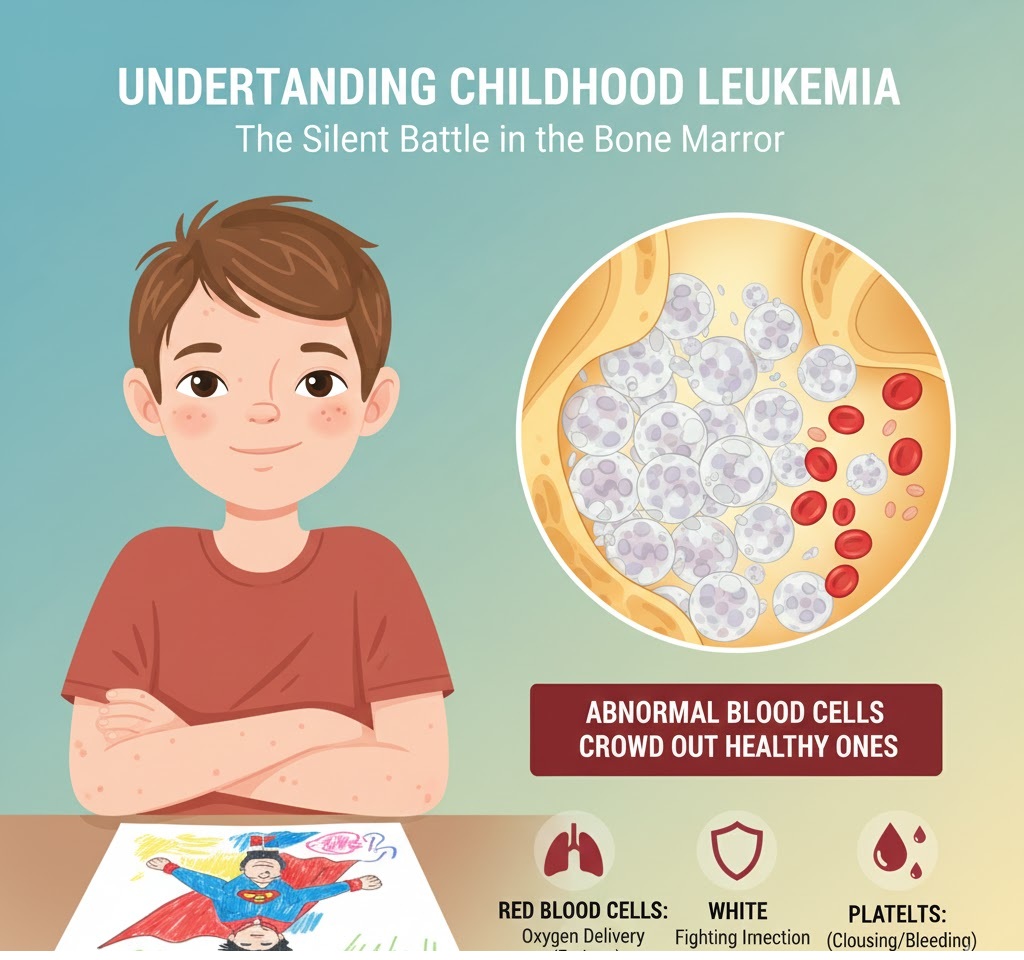
Leukemia is a cancer of the blood-forming tissues, primarily the bone marrow. In a healthy body, the bone marrow produces a controlled number of red blood cells, white blood cells, and platelets. In a child with leukemia, the bone marrow produces abnormal, immature cells (usually white blood cells) that multiply rapidly.
These abnormal cells “crowd out” healthy cells, leading to:
- Anemia: Not enough red blood cells to carry oxygen (causing fatigue).
- Infections: Not enough functional white blood cells to fight germs.
- Bleeding Issues: Not enough platelets to help the blood clot.
1. Common Types of Childhood Leukemia
Childhood leukemias are categorized by how fast they progress and which type of white blood cell they affect.
Acute Leukemias (Fast-Growing)
Most childhood cases are acute and require immediate treatment.
- Acute Lymphocytic Leukemia (ALL): The most common childhood cancer. It involves an overproduction of immature lymphocytes.
- Acute Myeloid Leukemia (AML): The second most common type; it involves abnormal myeloblasts, red blood cells, or platelets.
Chronic Leukemias (Slow-Growing)
These are rare in children and progress more gradually.
- Chronic Lymphocytic Leukemia (CLL): More common in teenagers.
- Chronic Myeloid Leukemia (CML): Very rare in young children.
2. Symptoms and Risk Factors
Symptoms often appear because the blood can no longer perform its vital functions.
- Systemic: Fever, night sweats, and unexplained weight loss.
- Skin: Easy bruising, bleeding gums, or petechiae (tiny red spots under the skin caused by leaking capillaries).
- Energy: Persistent fatigue and paleness.
- Bone Pain: Caused by the overgrowth of cells inside the marrow.
Risk Factors: While the exact cause is often unknown (genetic mutations in DNA), risks increase with certain genetic conditions like Down syndrome, past exposure to high-level radiation, or previous chemotherapy.
3. Diagnosis and Treatment
Diagnostic Tools
- CBC (Complete Blood Count): To check levels of different blood cells.
- Bone Marrow Aspiration/Biopsy: A needle is used to take a sample of fluid and tissue from the hip bone to look for cancer cells.
- Lumbar Puncture: Checking if leukemia cells have entered the cerebrospinal fluid (CSF) around the brain and spine.
Modern Treatments
Childhood leukemia treatment is highly specialized and often successful:
- Chemotherapy: The primary treatment to kill cancer cells.
- Targeted Therapy: Drugs that “target” specific genetic changes in cancer cells to minimize damage to healthy tissue.
- Stem Cell Transplant: Replacing diseased bone marrow with healthy stem cells after high-dose chemo.
- Immunotherapy: Boosting the child’s own immune system to recognize and attack leukemia cells.
About the Author