Pharm'Up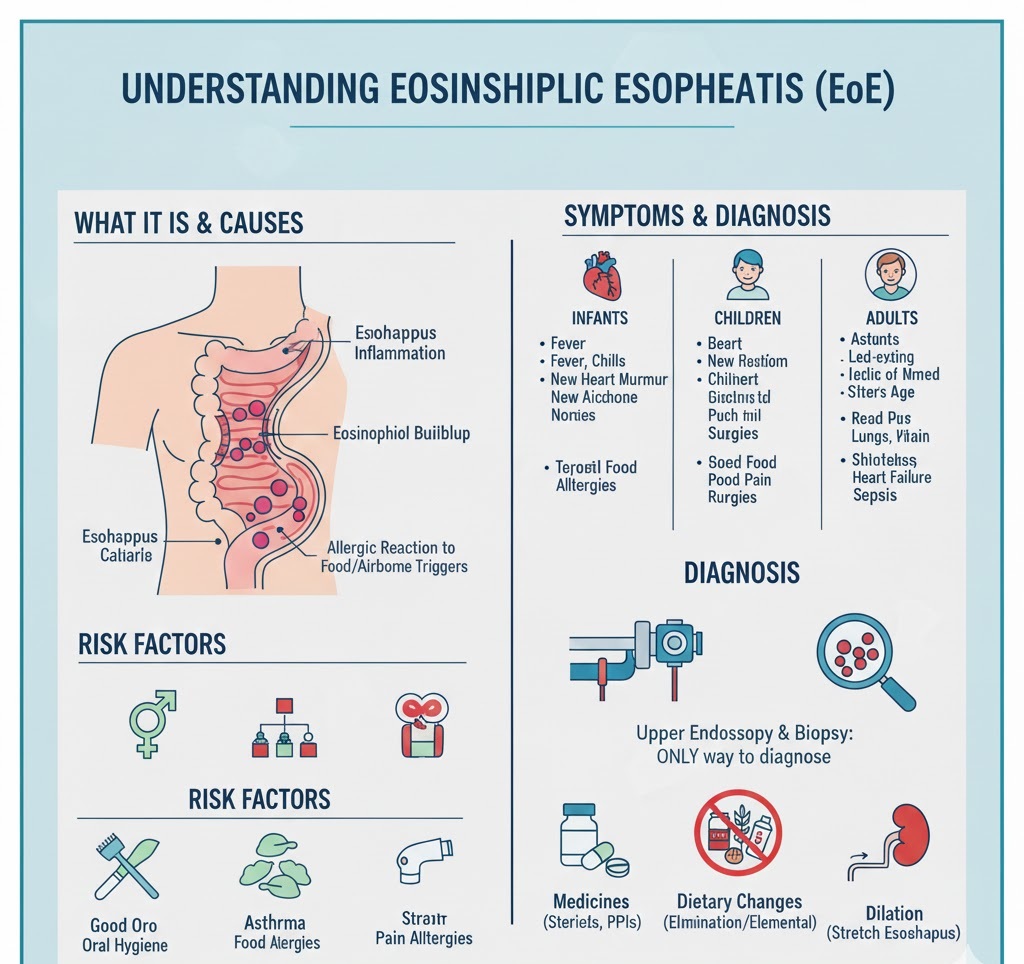
Eosinophilic Esophagitis (EoE) is a chronic immune system disease where white blood cells called eosinophils build up in the lining of the esophagus. This buildup causes inflammation and damage, making it difficult or painful to swallow.
Causes and Risk Factors
While the exact cause is unknown, researchers believe EoE is an allergic or immune response to food or environmental triggers (like pollen or pet dander).
You may be at higher risk if you:
- Are male.
- Have a family history of EoE.
- Have existing allergies (asthma, eczema, or food allergies).
Symptoms by Age Group
Symptoms often vary depending on the person’s age:
| Infants & Toddlers | Older Children | Adults |
| Feeding refusal | Abdominal pain | Difficulty swallowing (dysphagia) |
| Vomiting | Vomiting | Food getting stuck (impaction) |
| Poor weight gain | Reflux (unresponsive to meds) | Persistent heartburn |
Diagnosis: The Biopsy Requirement
Diagnosis starts with an upper endoscopy, where a doctor uses a camera to look for rings or white spots in the esophagus. However, a biopsy—taking a small tissue sample to count the eosinophils—is the only definitive way to confirm EoE.
Management and Treatment
There is currently no cure, but symptoms can be managed through:
- Medicines: Topical steroids (swallowed), acid suppressors (PPIs), or monoclonal antibodies.
- Dietary Elimination:
- Elimination Diet: Removing common allergens like dairy, wheat, and soy.
- Elemental Diet: Consuming only an amino acid formula (no proteins).
- Dilation: If the esophagus becomes too narrow, a doctor may perform a procedure to gently stretch it.
About the Author


 Pharm'Up