Pharm'Up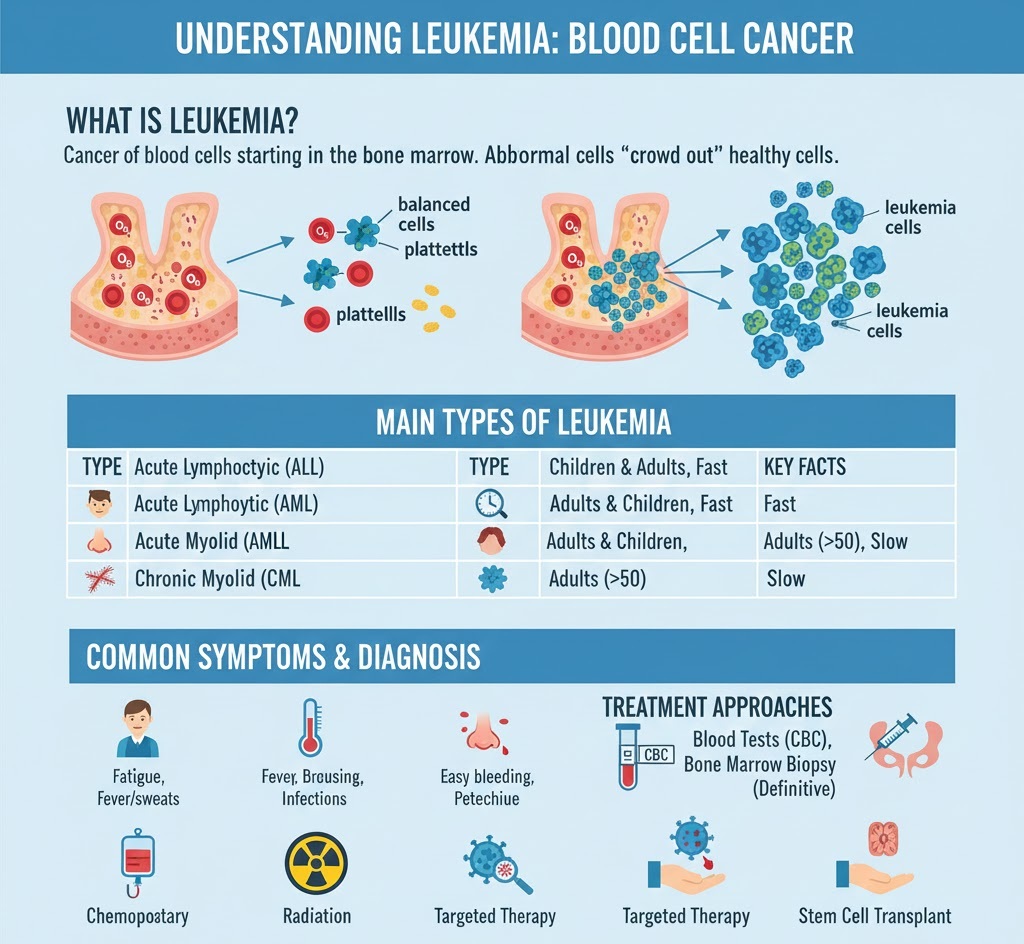
Leukemia is a type of cancer that affects the blood and bone marrow—the soft, spongy center of bones where blood cells are produced. Under normal conditions, bone marrow creates white blood cells (to fight infection), red blood cells (to carry oxygen), and platelets (to help blood clot).
When someone has leukemia, the bone marrow begins to produce large quantities of abnormal, immature blood cells. These cancerous cells do not function correctly and eventually “crowd out” healthy blood cells, making it difficult for the body to fight infections, prevent bleeding, or transport oxygen.
Main Types of Leukemia
Leukemia is classified by how quickly it progresses and the type of blood cell it affects.
1. By Growth Speed:
- Acute Leukemia: Grows rapidly and requires aggressive, immediate treatment.
- Chronic Leukemia: Grows slowly over a longer period; symptoms may not appear for years.
2. By Cell Type:
- Lymphocytic (Lymphoblastic): Affects the lymphoid cells, which form immune system tissue.
- Myeloid (Myelogenous): Affects myeloid cells, which normally become red blood cells, other types of white cells, and platelets.
| Type | Primary Patient Group |
| Acute Lymphocytic (ALL) | Most common type in children; also affects adults. |
| Acute Myeloid (AML) | Common in older adults and children. |
| Chronic Lymphocytic (CLL) | Very common in adults over age 50. |
| Chronic Myeloid (CML) | Primarily affects middle-aged and older adults. |
Symptoms and Diagnosis
Because leukemia affects the blood, symptoms can appear throughout the entire body:
- Persistent fatigue or weakness.
- Easy bruising or bleeding (including tiny red spots called petechiae).
- Frequent infections or fever.
- Night sweats and unintended weight loss.
How it is diagnosed:
Doctors typically start with a Complete Blood Count (CBC) to check for high white cell counts or low red cell counts. If leukemia is suspected, a bone marrow biopsy is performed—where a needle is used to take a sample of bone and marrow from the hip—to examine the cells directly.
Treatment Approaches
Treatment is highly personalized based on the specific type of leukemia and the patient’s age:
- Chemotherapy: The primary treatment to kill cancer cells.
- Radiation Therapy: Using high-energy beams to damage cancer cells.
- Targeted Therapy: Drugs that specifically attack the genetic mutations within the cancer cells.
- Stem Cell Transplant: Replacing diseased bone marrow with healthy stem cells after high-dose chemo.
About the Author