Pharm'Up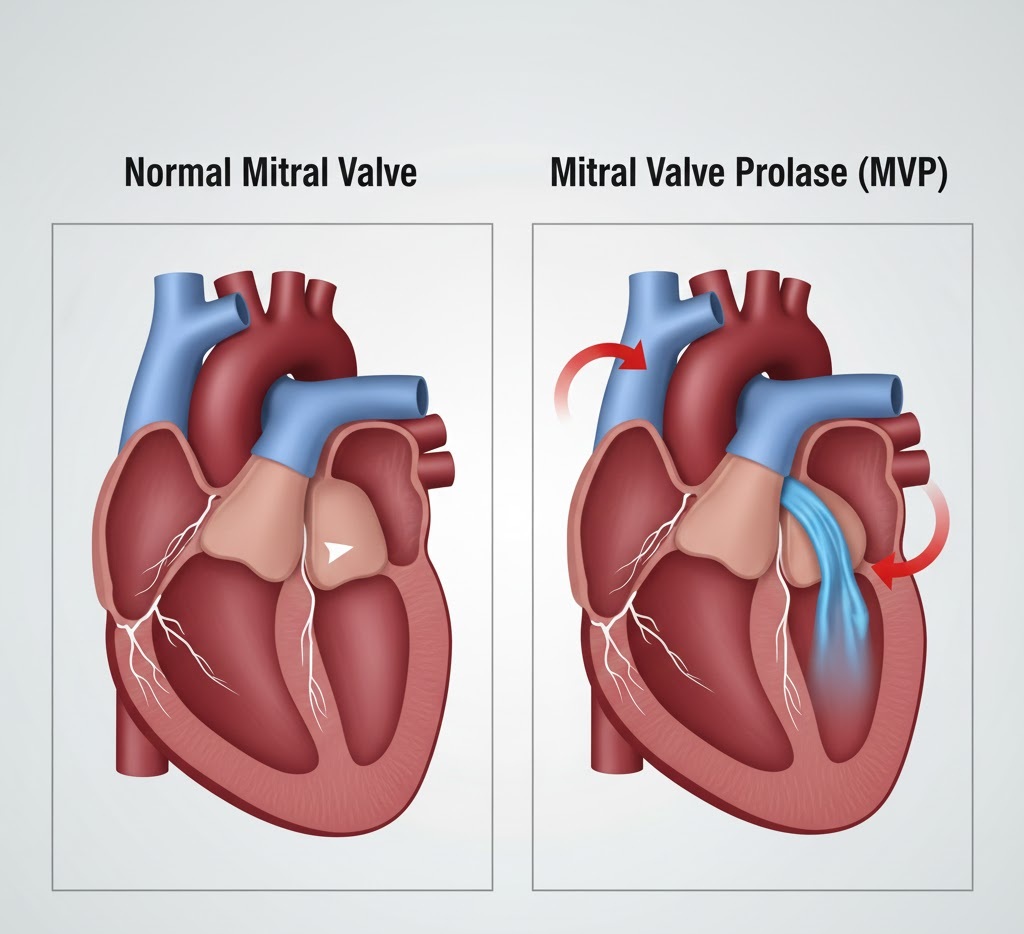
What is the Mitral Valve?
Think of your heart valves as one-way doors. The mitral valve is located between the upper left chamber (atrium) and the lower left chamber (ventricle). Its job is simple: open to let oxygen-rich blood move forward and close tightly to prevent it from flowing backward.+1
Understanding Mitral Valve Prolapse (MVP)
Mitral Valve Prolapse occurs when the flaps (leaflets) of the valve are “floppy” or enlarged. Instead of closing flat, they bulge or “prolapse” backward into the upper chamber when the heart squeezes.
- The Click: Doctors often diagnose this by hearing a distinct “clicking” sound through a stethoscope.
- Regurgitation (Backflow): In some cases, the flaps don’t seal, allowing blood to leak backward. This is called mitral regurgitation. If the leak is severe, it can lead to heart strain or failure.+1
[Image showing a comparison between a normal mitral valve closing tightly and a prolapsed valve bulging backward]
Who is at Risk?
While anyone can have MVP, it is often something you are born with. Common risk factors include:
- Genetics: It frequently runs in families.
- Connective Tissue Disorders: Conditions like Marfan syndrome or Ehlers-Danlos syndrome.
- Other Conditions: Scoliosis, Graves’ disease, or a history of rheumatic fever.
- Demographics: Men and those with high blood pressure are more likely to experience significant backflow.
Symptoms and Complications
Most people with MVP have no symptoms and live normal lives. However, if symptoms do occur, they may include:
- Heart Palpitations: Feeling like the heart is skipping beats or fluttering.
- Fatigue & Dizziness: Often linked to poor blood flow efficiency.
- Shortness of Breath: Especially during physical activity.
- Chest Pain or Anxiety: Sometimes mimicking other heart issues.
Treatment and Prevention
For the vast majority, no treatment is necessary. If treatment is required due to severe backflow, options include:
- Medicine: Beta-blockers or other drugs to manage palpitations or chest pain.
- Surgery: Valve repair is the preferred method to fix the floppy flaps. If repair isn’t possible, a valve replacement is performed.
- Heart-Healthy Habits: Regular check-ups and good dental hygiene (brushing/flossing) are vital. Dental health is specifically important because bacteria from the mouth can enter the blood and infect a damaged heart valve (Endocarditis).
About the Author