Pharm'Up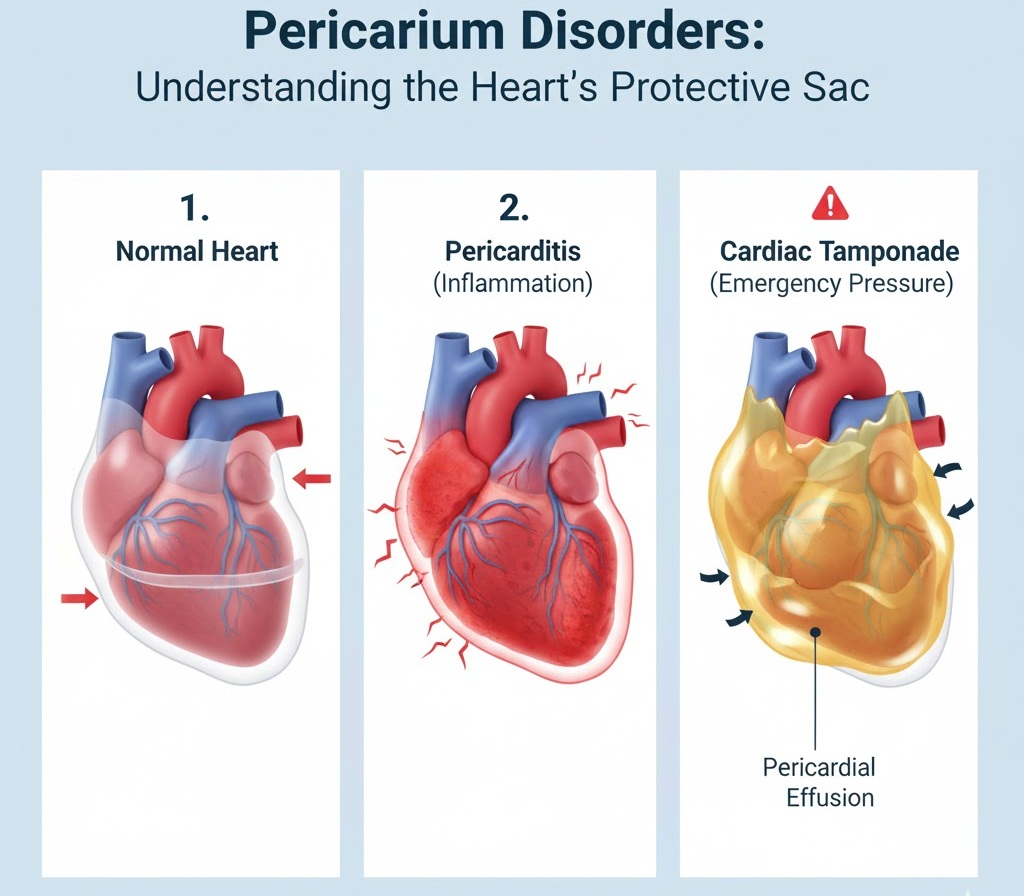
What is the Pericardium?
The pericardium is a thin, two-layered, fluid-filled sac that surrounds the outer surface of your heart. It serves several vital functions:
- Protection: It acts as a mechanical barrier against infection and malignancy.
- Stability: It anchors the heart within the chest cavity (mediastinum).
- Lubrication: It reduces friction between the heart and surrounding organs during every beat.
Common Pericardial Problems
When the pericardium becomes diseased or damaged, it can interfere with the heart’s ability to fill with blood.
1. Pericarditis (Inflammation)
This is the most common disorder. The layers of the pericardium become inflamed and rub against each other.
- Causes: Viral infections (most common), bacterial infections, heart attack, or recovery from heart surgery.
- Key Symptom: Sharp, stabbing chest pain that often worsens when inhaling or lying flat.
2. Pericardial Effusion (Fluid Buildup)
This occurs when too much fluid collects between the two layers of the sac. While small amounts may not cause symptoms, a large buildup can put pressure on the heart.
3. Cardiac Tamponade (Emergency Pressure)
This is a life-threatening condition where so much fluid builds up that the heart is compressed. This prevents the heart chambers from filling completely, leading to a dangerous drop in blood pressure.
Symptoms to Watch For
Because these conditions affect heart function, symptoms often appear suddenly:
- Chest Pain: Often sharp and located in the center or left side of the chest.
- Shortness of Breath: Especially when reclining.
- Heart Palpitations: A rapid or pounding heartbeat.
- Low-Grade Fever: Common specifically in cases of acute pericarditis.
Diagnosis and Treatment
Doctors typically use a combination of tools to diagnose pericardial issues:
- Echocardiogram: An ultrasound that can “see” fluid buildup (effusion).
- EKG/ECG: To check for electrical patterns unique to inflammation.
- Imaging: Chest X-rays or CT scans to check the size and shape of the heart sac.
Treatment is tailored to the underlying cause. It may include anti-inflammatory medications (like aspirin or ibuprofen) for pericarditis, or a procedure called pericardiocentesis, where a needle is used to drain excess fluid from the sac.
About the Author