Pharm'Up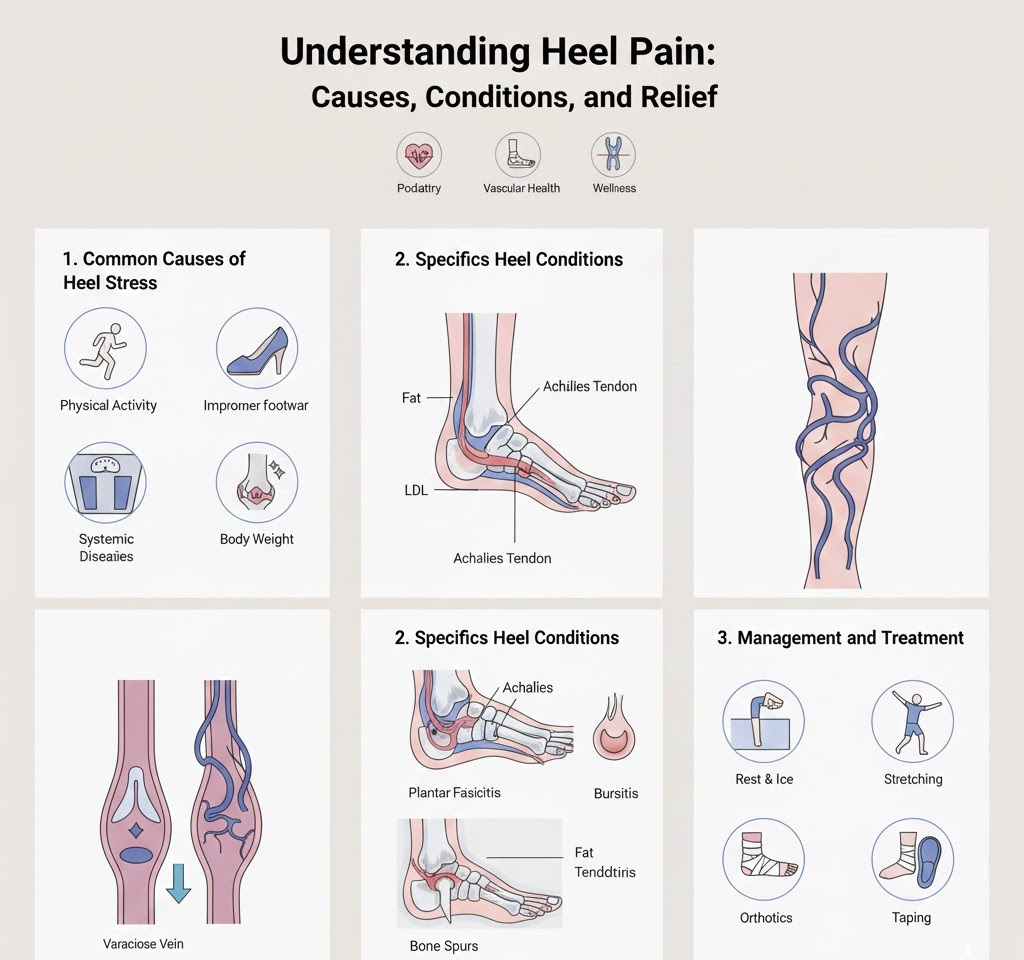
Heel pain is a frequent complaint that can significantly impact your daily mobility. Most heel problems develop not from a single traumatic event, but from repetitive stress and inflammation of the structures supporting the foot.
1. Common Causes of Heel Stress
The heel bone (calcaneus) is the largest bone in your foot and absorbs the most impact when you walk or run. Pain usually occurs when the surrounding tissues are overworked.
- Physical Activity: High-impact movements like jumping, running, or long-distance walking.
- Improper Footwear: Wearing shoes that lack arch support, have worn-out soles, or don’t fit correctly.
- Body Weight: Carrying excess weight increases the vertical pressure on the heel cushions.
- Systemic Diseases: Inflammatory conditions like Gout (uric acid crystals) or Rheumatoid Arthritis can target the heel joints.
2. Specific Heel Conditions
Stress on the foot often leads to “itis” conditions—meaning inflammation of specific tissues.
Plantar Fasciitis
The most common cause of heel pain. It is the inflammation of the thick band of tissue (fascia) that connects your heel bone to your toes. It often feels like a sharp stab in the morning.
Achilles Tendinitis
Inflammation of the tendon that connects your calf muscles to your heel bone. This is common in runners and athletes.
Bursitis
Inflammation of the bursa, a fluid-filled sac that acts as a cushion between the bone and the tendons.
Bone Spurs
Over time, chronic stress can cause the body to build extra bone deposits on the underside of the heel. While not always painful themselves, they often accompany plantar fasciitis.
Shutterstock
3. Management and Treatment
Fortunately, most heel problems respond well to conservative (non-surgical) treatments.
| Treatment Type | How it Works |
| Rest & Ice | Reduces immediate inflammation and allows micro-tears to heal. |
| Stretching | Specific exercises for the calf and plantar fascia improve flexibility. |
| Orthotics | Special shoes or heel inserts (cups) redistribute pressure away from the sore spot. |
| Taping | “Athletic taping” supports the arch and takes the strain off the fascia. |
| Medication | Over-the-counter anti-inflammatories help manage swelling and pain. |
4. When to See a Doctor
While rest helps many, you should seek professional advice if:
- The pain is severe or prevents you from walking.
- The heel is red or warm to the touch (signs of infection).
- The pain persists even when you are not standing or walking.
About the Author