Pharm'Up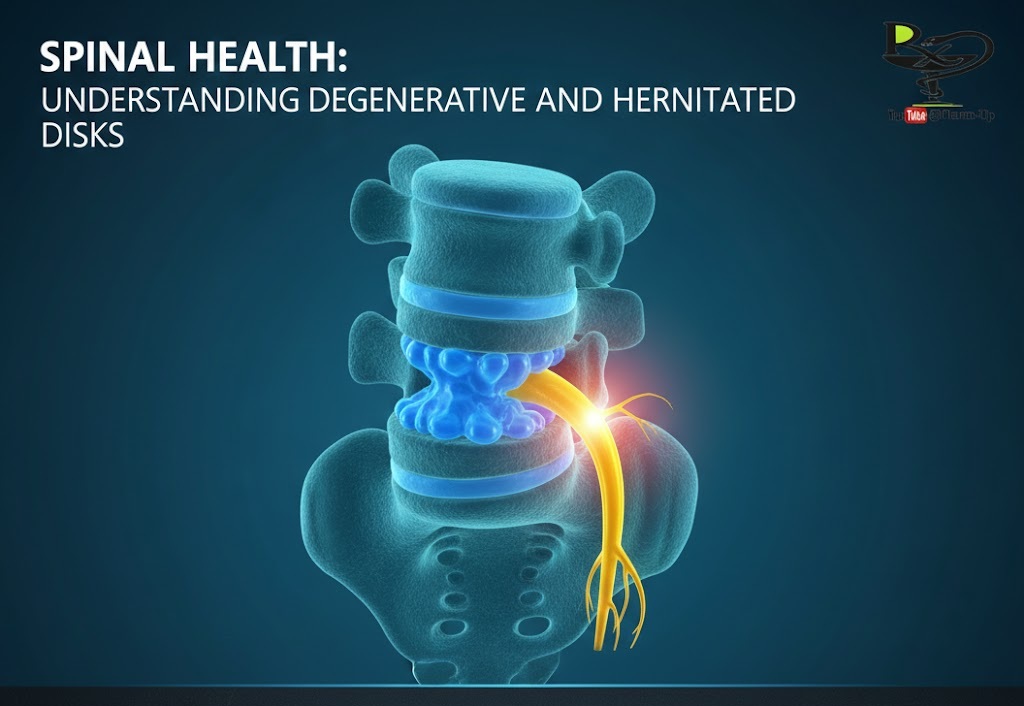
Your spine is a marvel of engineering, consisting of 26 vertebrae that provide structure while allowing for incredible flexibility. The “unsung heroes” of this system are the intervertebral disks—the soft, jelly-filled shock absorbers that prevent your bones from rubbing together.
The Anatomy of a Disk Injury
As we age, these disks undergo natural wear and tear, a process known as disk degeneration. When a disk is pushed to its limit through injury or age, two main issues can occur:
- Degeneration: The disks lose water content and “thin out,” reducing their ability to cushion the spine. This often leads to generalized back stiffness and aching.
- Herniation (Rupture): The tough outer layer of the disk tears, allowing the soft inner “jelly” to leak out. This substance can chemically irritate or physically compress nearby nerves.
Symptoms and the Sciatica Connection
A herniated disk in the lower back often results in Sciatica. Because the leaked disk material often presses on the sciatic nerve, patients may feel:
- Radiating Pain: Sharp, shooting pain that travels from the lower back through the buttock and down one leg.
- Numbness: A “pins and needles” sensation in the foot or calf.
- Muscle Weakness: Difficulty lifting the foot or standing on toes.
Path to Recovery
The good news is that the body is often capable of reabsorbing disk material over time. Treatment focuses on managing symptoms while the body heals:
| Treatment Type | Purpose |
| Physical Therapy | Strengthens core muscles to take pressure off the spine. |
| Medication | Anti-inflammatories reduce nerve irritation and swelling. |
| Epidural Injections | Delivers targeted medicine directly to the site of nerve compression. |
| Surgery | Reserved for severe cases where nerve damage causes significant weakness. |
About the Author